Drawn · plausible, not surveyed
The farm, in one frame
Five acres,
drawn
पाँच एकड़, हाथ से खींचे गए
Thirteen systems on five acres in the Aravallis. Here is the farm from above, and then the same five acres drawn, because the two do different jobs.
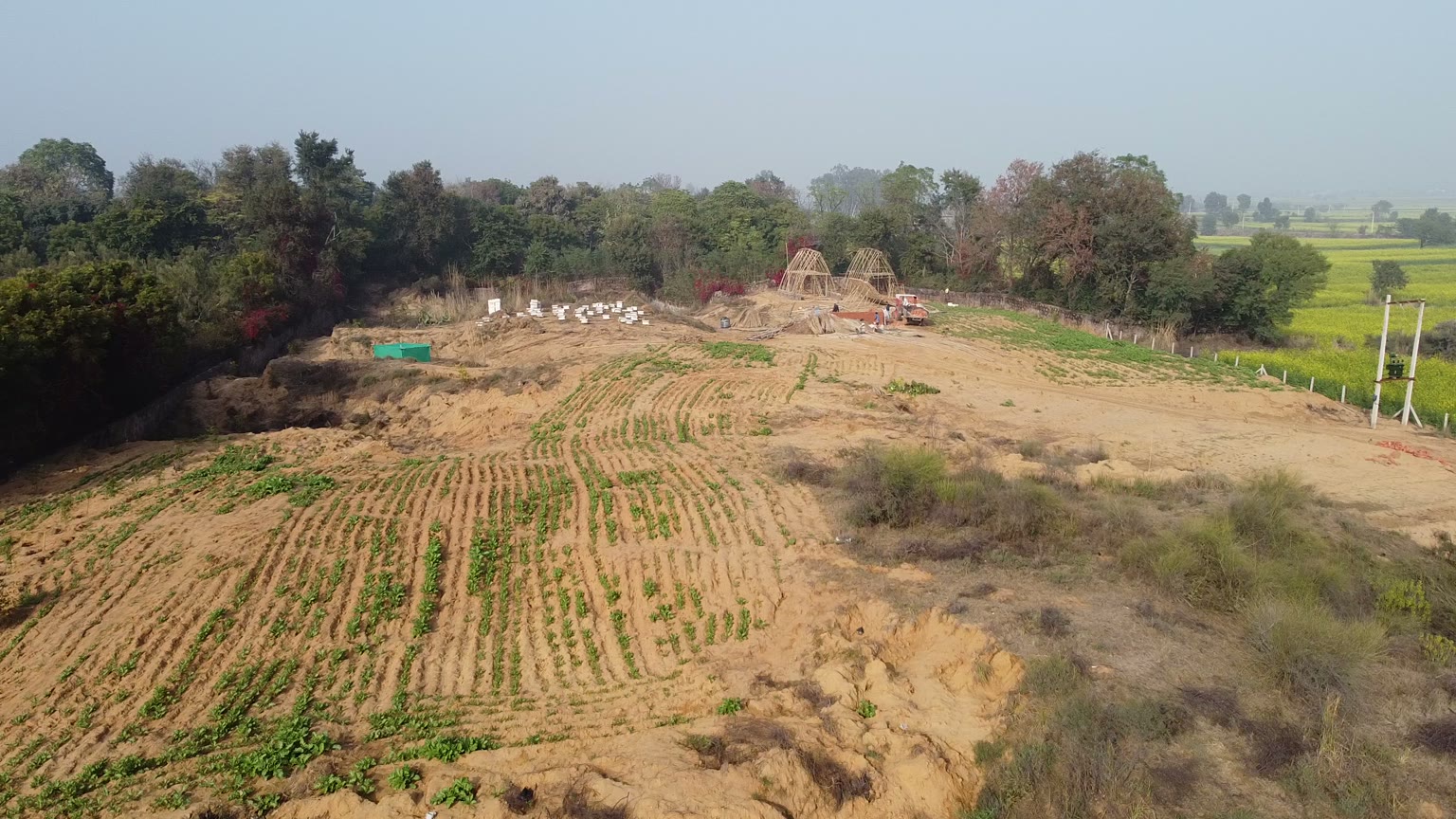
Flown over the farm, early on. Our own footage, so there is no licence question. Look how much of it is still bare ground.
So why draw it as well? Because the view from the air cannot tell you which — which bed, which of the nine zones, where the hives sit inside the citrus. It shows you the shape of the place and nothing you could act on.
Satellite was the other option and it is no use here. Five acres is about a hundred and forty metres across, which free imagery renders at roughly fourteen pixels, and Google's own pictures cannot be used to promote anything. So the labelling is done by hand.
Flown, then drawn
The farm, drawn by hand
Seven photographed · six not · three 360° views still to make
We have a photograph of this We have not photographed this A 360° view, none of them made yet Contours. The ground was kept, not levelled
Every position on this map is plausible, not surveyed. Nobody has traced the farm's real boundary. The outline could be lifted from an image we hold but cannot republish, and that work has not been done. The thirteen markers sit roughly where each system sits. Close enough to walk by, not close enough to measure.
Until somebody traces that boundary properly, do not read any of this as a survey.
Read the farm as a list Thirteen entries in order. Everything on the map is in it, and nothing is only on the map.
Thirteen systems · four photographed
The farm as a list
तेरह हिस्से, एक के बाद एक
Read it top to bottom and you have been round the farm in the order the water runs. Same four photographs, same nine gaps. Nothing is only on the drawing.
-
The orchard
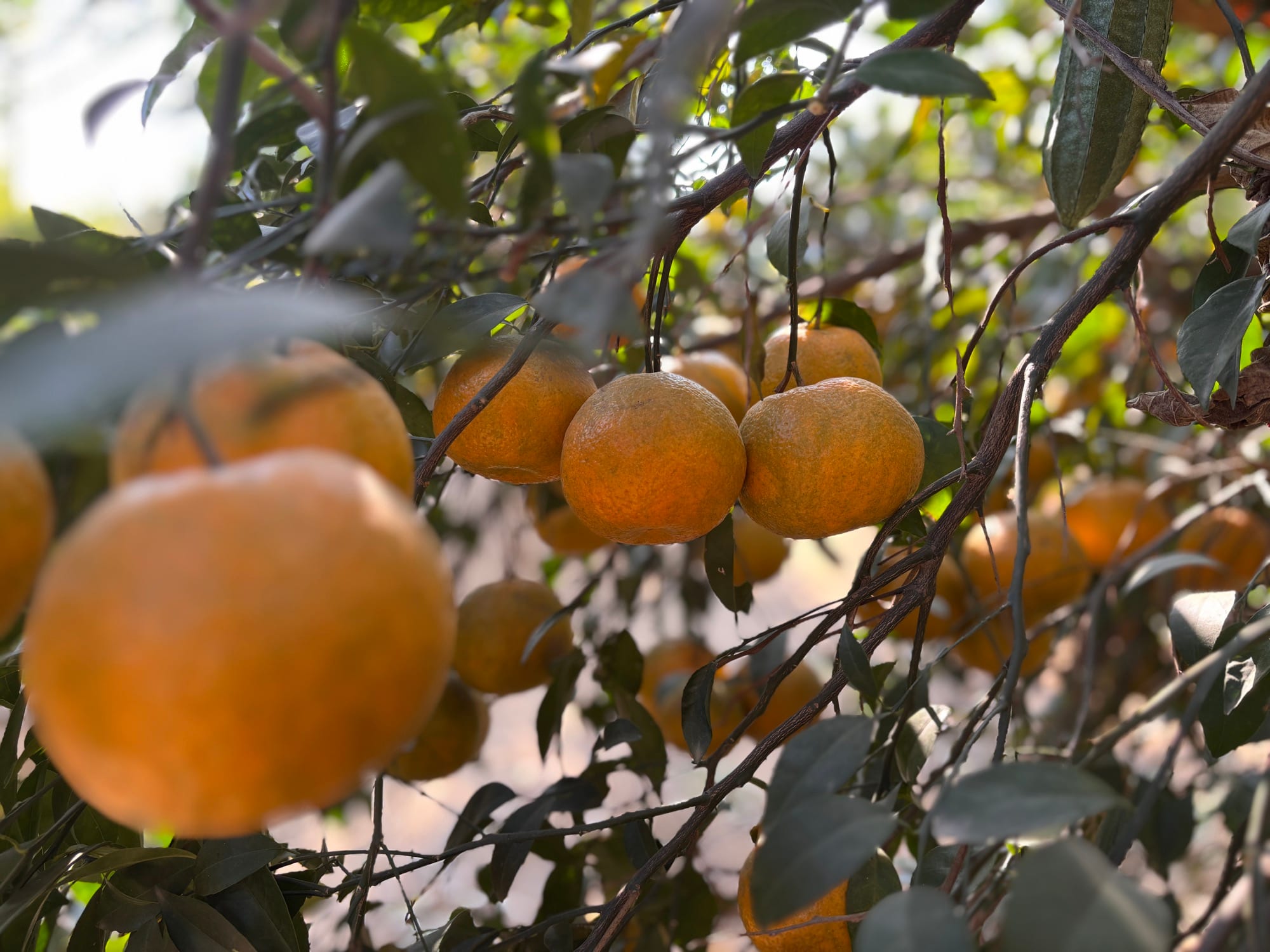
बाग़Eleven fruit species in the citrus strip and the rows behind it. Eight or nine of them flower between January and April, which is also when Kinnow is ready, so one window holds a harvest and most of a bloom.
-
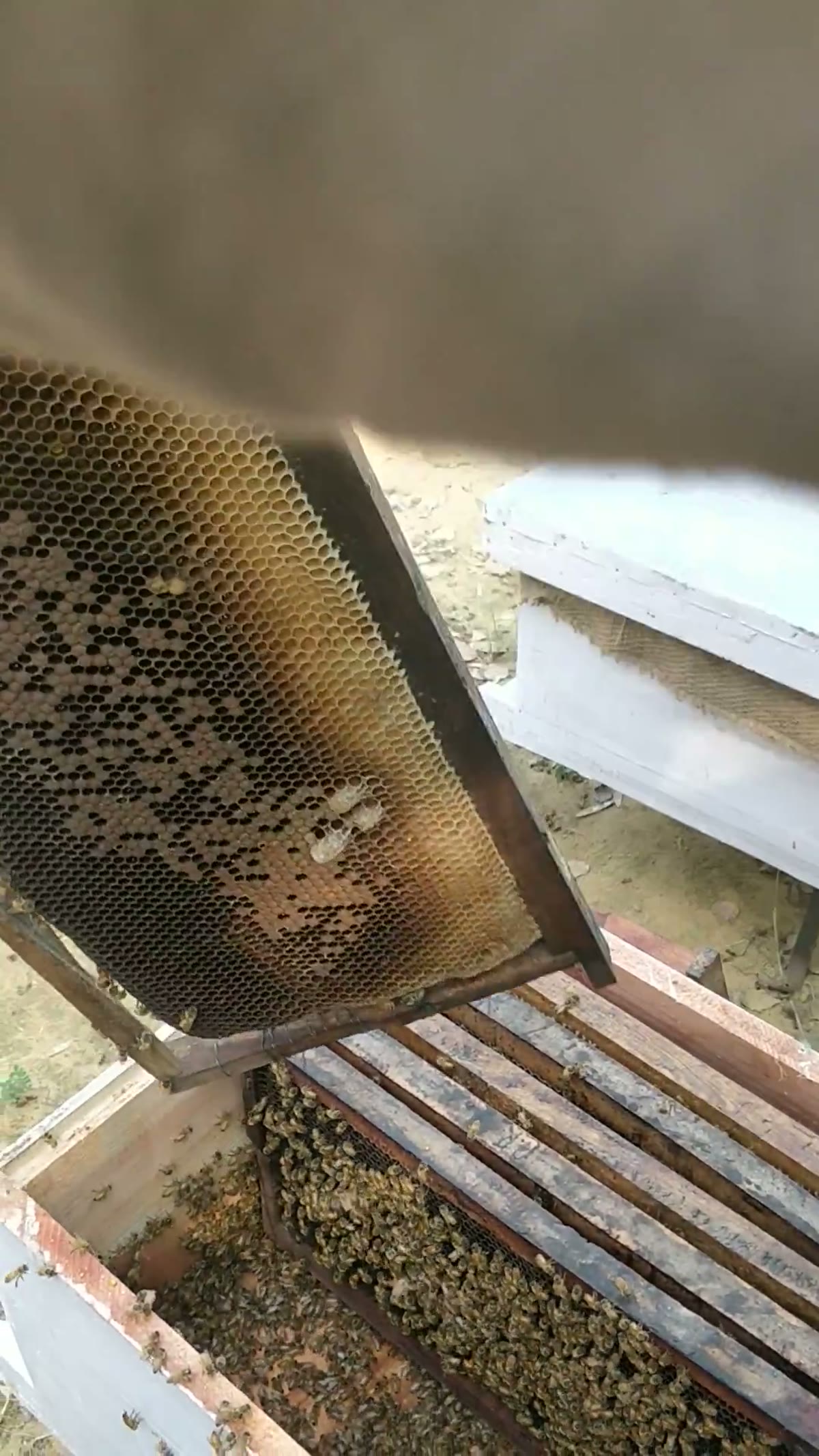
The apiary
मधुमक्खी पालनInside the Kinnow strip, where the bees have the shortest distance to work. It collapsed in summer heat. Ten colonies are alive across about fifty boxes, and the drawn comb standing in the empty ones is worth more than the boxes. Our software will not clear a spray date it cannot square with the hive count.
-
The food forest
खाद्य वनCanopy over fruit over shrub over root, all on the same ground. It is the hardest part of the farm to photograph from above and the easiest to understand from inside.
-
Multi-layer beds
बहु-स्तरीय क्यारियाँThe same idea at bed scale, close enough to kneel at. School groups end up here, because a child can read the arrangement without being told it.
-
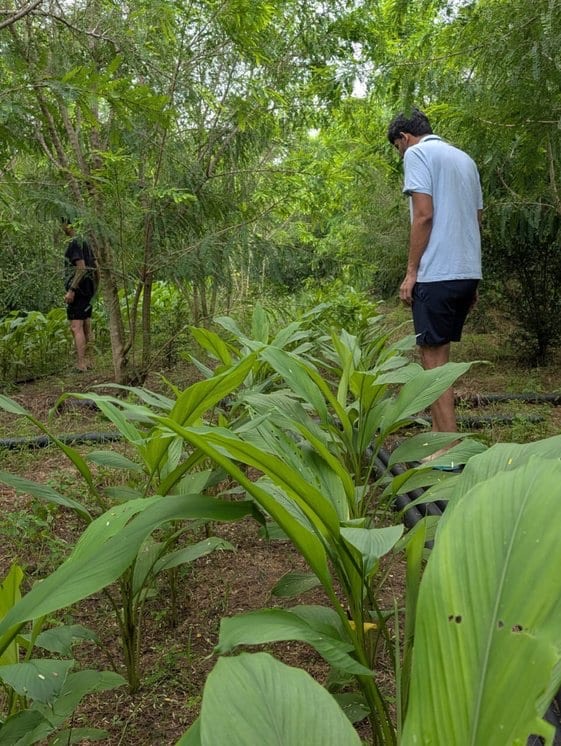
Field crops, turmeric under canopy
हल्दी, पेड़ों की छाँव मेंTurmeric grown under tree canopy rather than in open field, with the other field crops in the rows beside it. People keep taking the one photograph of this for the nursery. It is not.
-
The nursery
नर्सरीWhere planting stock is raised before it goes out. There is no photograph of it at all, and the turmeric picture above is not a substitute.
-
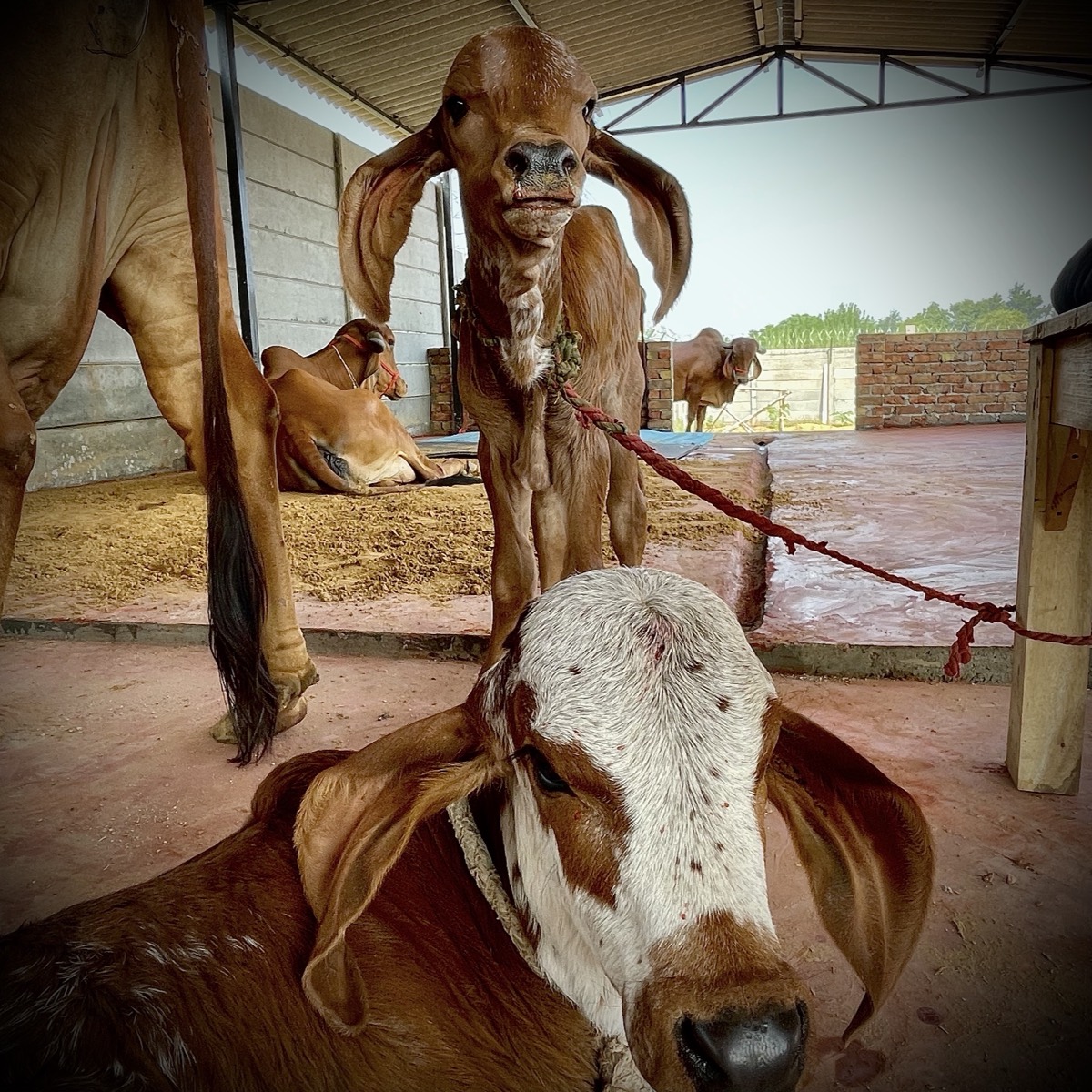
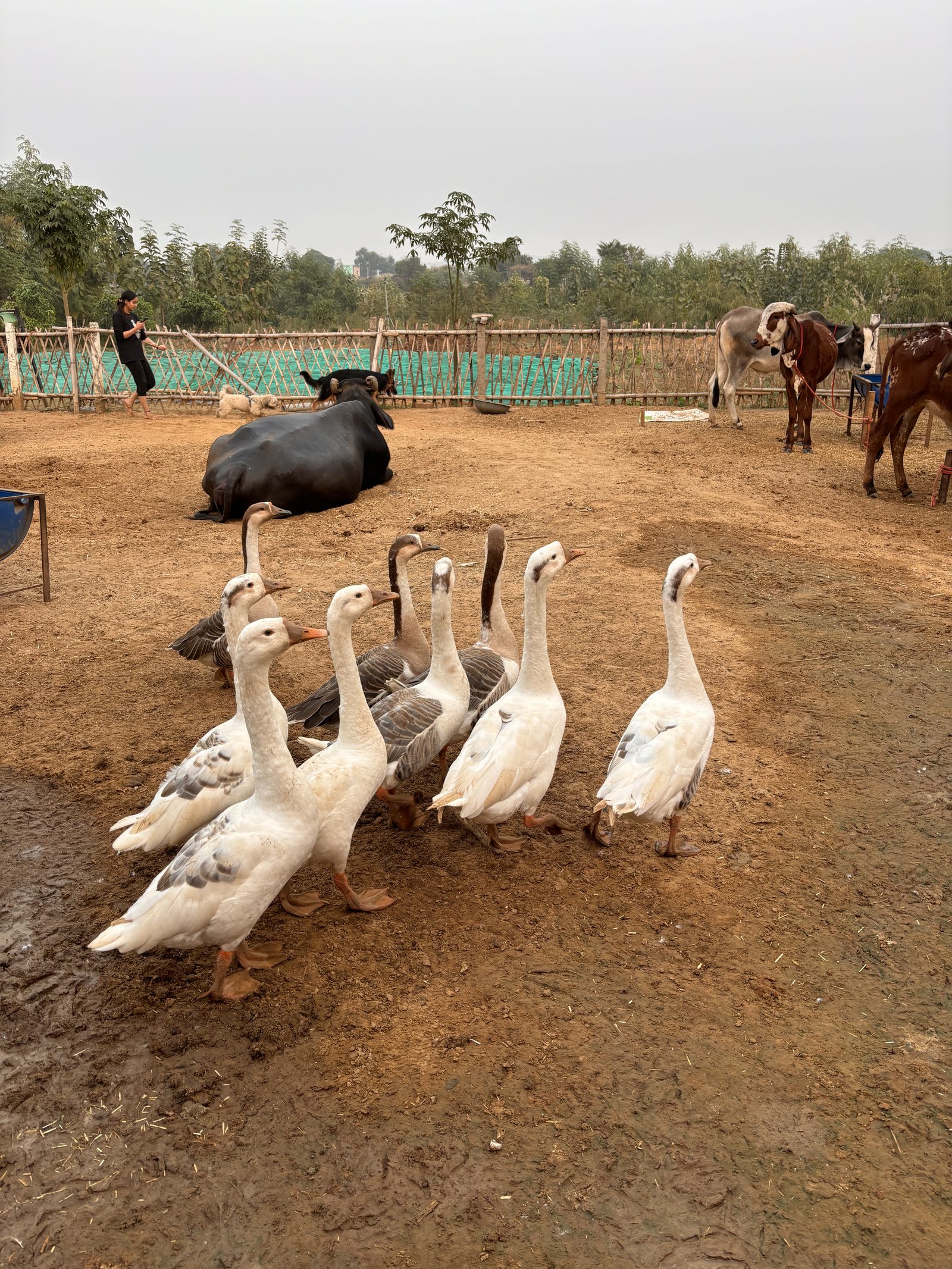
Gir dairy and Bilona ghee
गिर डेयरी और बिलोना घीThe dairy sits near the compost yard, because what leaves one feeds the other. Bilona ghee is made here.
-
Poultry
मुर्गीपालनOn open ground beyond the dairy. We have no photograph of it and no description anybody here has checked, so it gets a marker and a name.
-
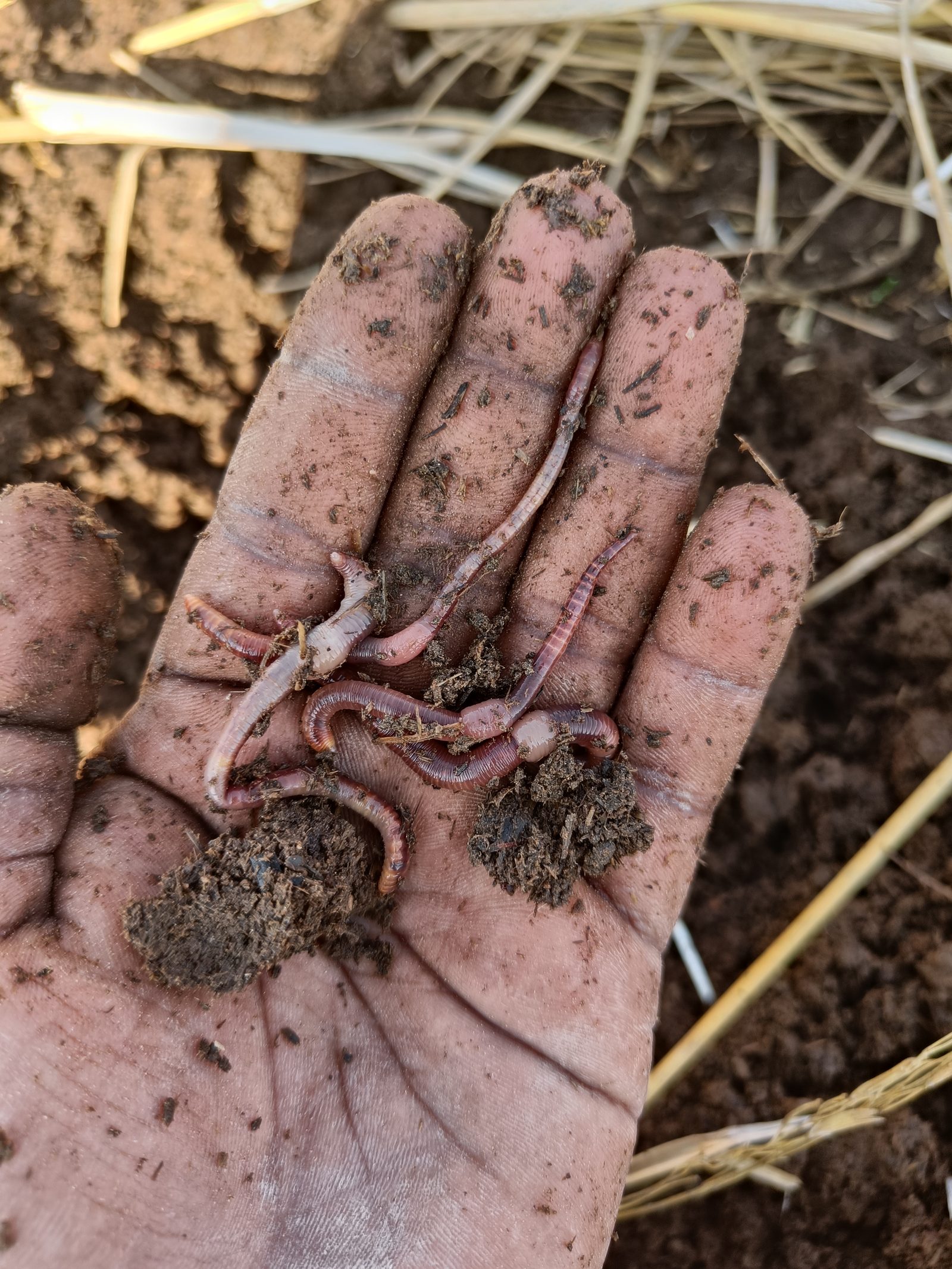
Vermicompost
वर्मीकम्पोस्टTwenty-four beds taking what the farm grows and returning it to the ground it came from. The least photogenic thing here, and the one everything else leans on.
-
Hydroponic fodder
हाइड्रोपोनिक चाराTrays of green fodder grown under cover for the dairy, which is why it sits next to it rather than out in the field.
-
The bio-input station
जैव-निवेश केंद्रWhere we mix and store our own inputs, kept central so nothing has to be carried far. Nothing here is bought in a sack.
-
Irrigation — one borewell, nine zones
नौ सिंचाई क्षेत्र, एक बोरवेलNine zones run off a single borewell, drawn here as nine lines leaving one point. That is the argument we have every week. One well, nine valves, and five acres wanting water.
-
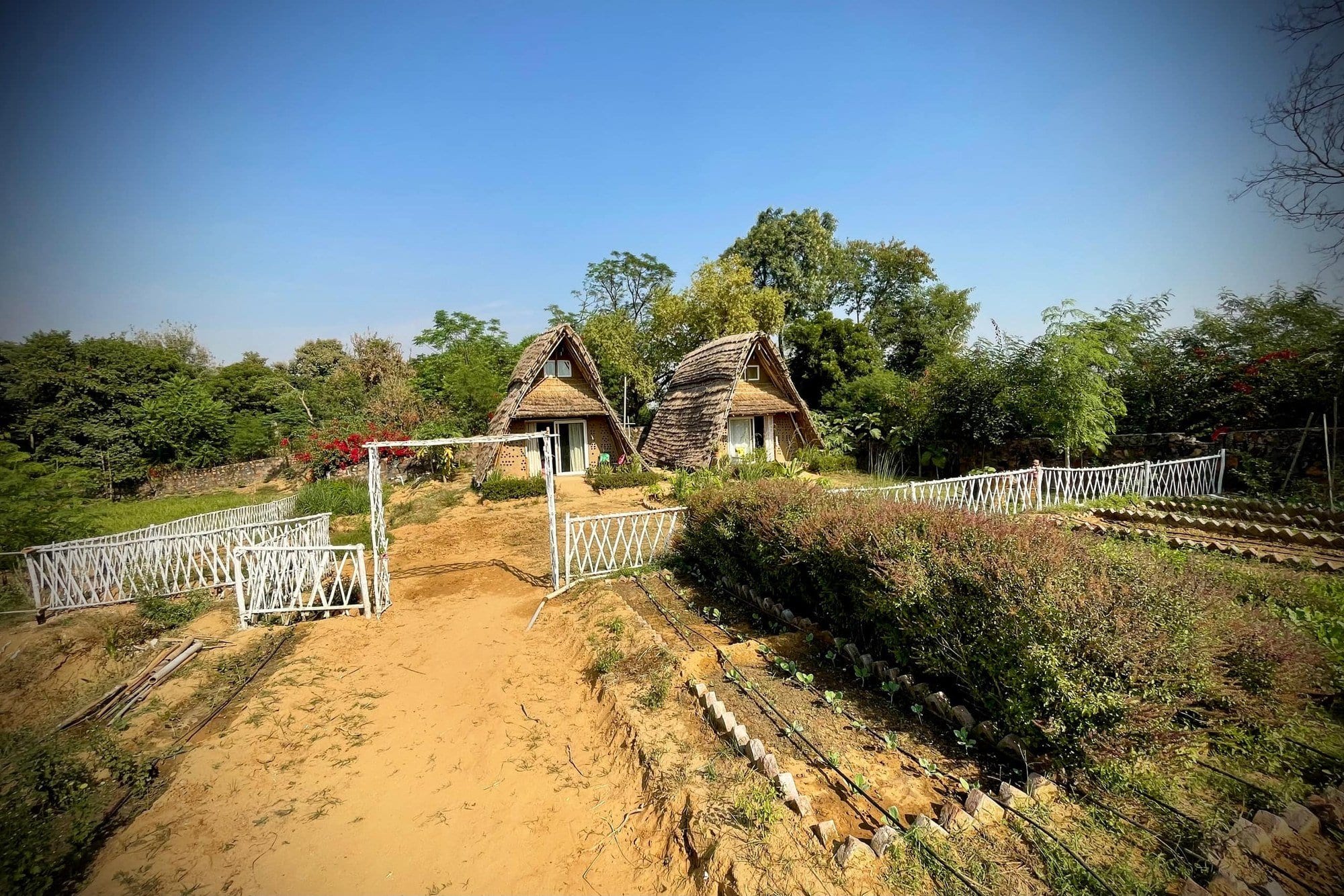
Mud houses and camping
मिट्टी के घर और कैंपिंगOn the high ground at the end of the track, which is the only place on the parcel from which you can see most of the farm at once. The camping site is on the flatter ground below.
None of them made yet
Three places where
standing inside beats
looking down
A 360° view, for the three places where standing inside tells you more than looking down. We have not made any of them. A phone can take the pictures, so it is an afternoon's work whenever somebody gets to it.
Not made yet
Inside the food forest
Standing in the middle of the layers, looking up. Four storeys of planting in one turn, which no overhead drawing can show.
Not made yet
Inside a mud house
The A-frame from the inside, as a room you are standing in.
Not made yet
The camping site after dark
How much sky there is, ninety minutes from Delhi. A daylight photograph cannot carry it.
Not yet drawn
The drawing
we have asked for
The drawing above is a stand-in. A proper one has been commissioned, and these are the three things we have asked of it.
What we asked for
- Layers that come apart. Ground, structures, foliage and bloom drawn separately, so the orchard can be shown in flower between January and April and bare the rest of the year without redrawing the farm.
- A second version drawn for a phone. A wide drawing shrunk down becomes a smudge. The narrow one wants to be taller, with fewer things on it and the same thirteen places marked.
- The boundary, once somebody traces it. The parcel has never been traced, so the outline here is guesswork. The drawing is waiting on that.
The way out
Come and
walk it
आकर ख़ुद देखिए
A drawing is the second-best way round five acres. Ninety minutes from Delhi, and better in the cool months.