Swechha Farm Ladpuri · Khairthal-Tijara · Rajasthan

One photograph · nothing sold here

Produce and traceability

What leaves
this farm

यहाँ से क्या जाता है, और कैसे उगा

If you scanned a code on a jar, this is where it lands. Not a shop. What was grown, where on the five acres, what went into the ground and what did not.

We sell nothing here. Buying happens on a separate marketplace. This page stays up afterwards. A listing disappears when the stock runs out, and this should not.

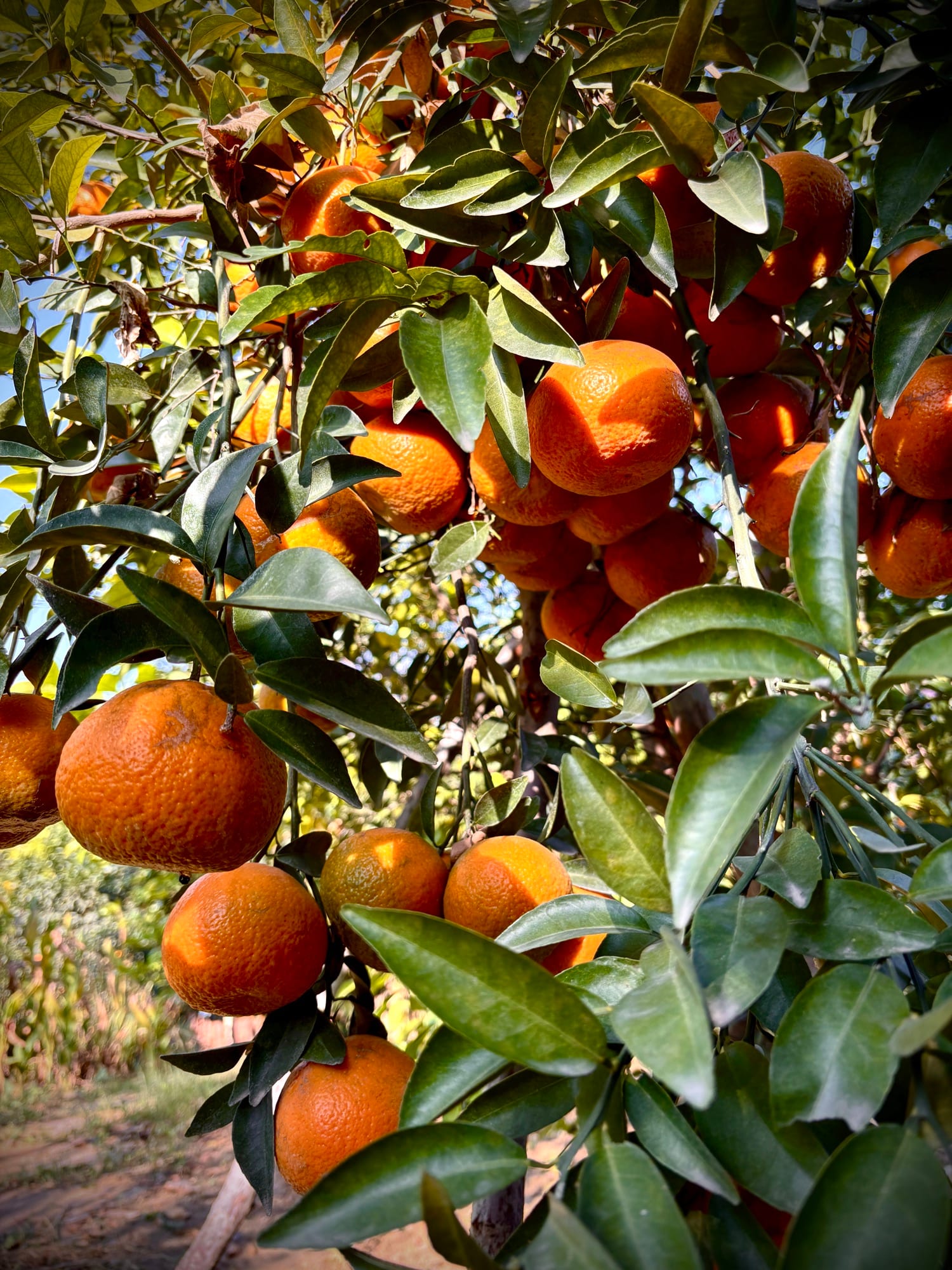
Kinnow hanging in dense clusters on the tree, dark leaves, daylight behind

Only what we have written down

Four things, and how
much is recorded

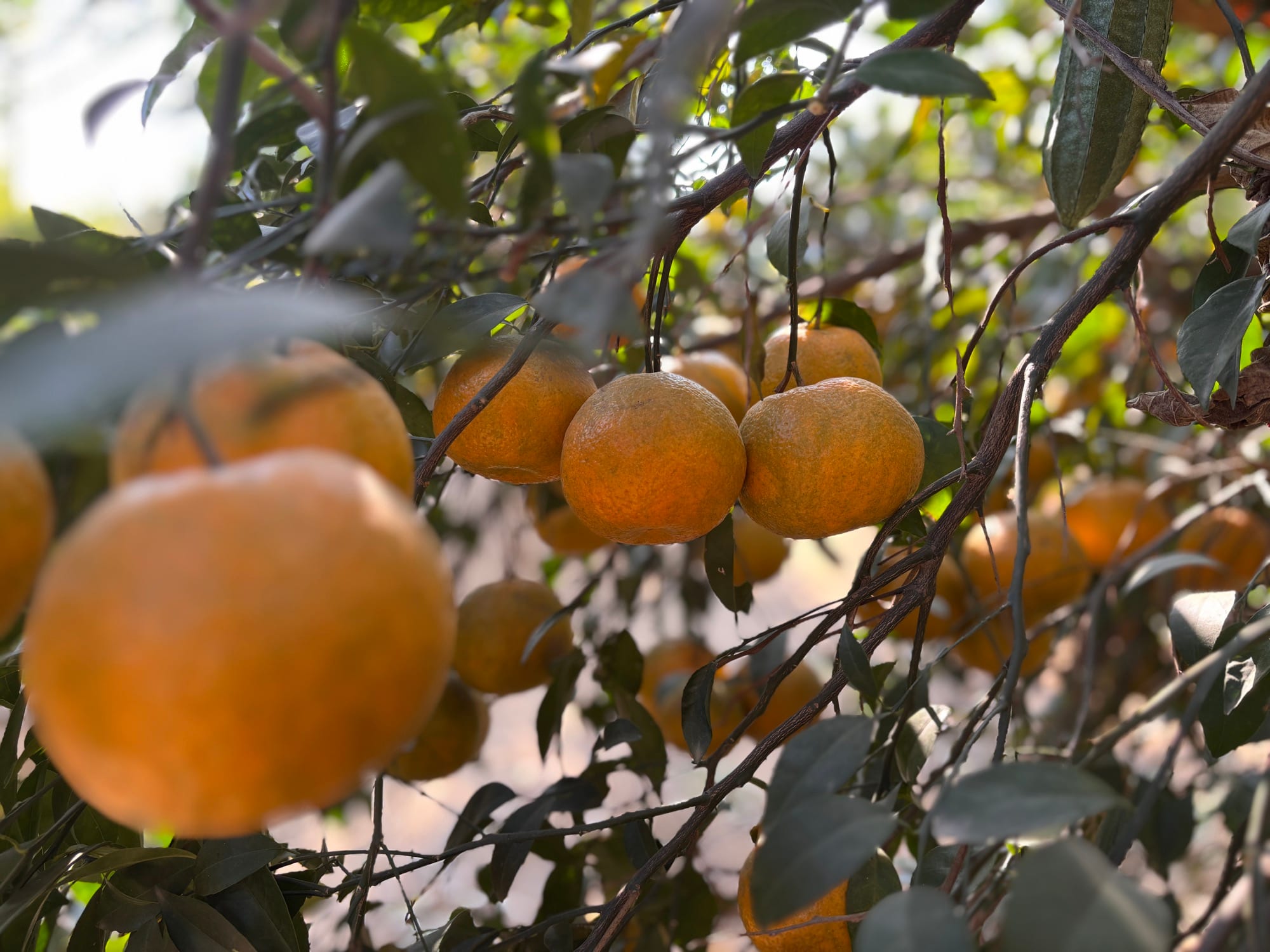
A branch of Kinnow backlit, warm light through the canopy

Kinnow. Ready in January, from the orchard rows. Eleven fruit species grow there; eight or nine flower January to April. Grown on compost from the farm's own beds, with no synthetic inputs applied.

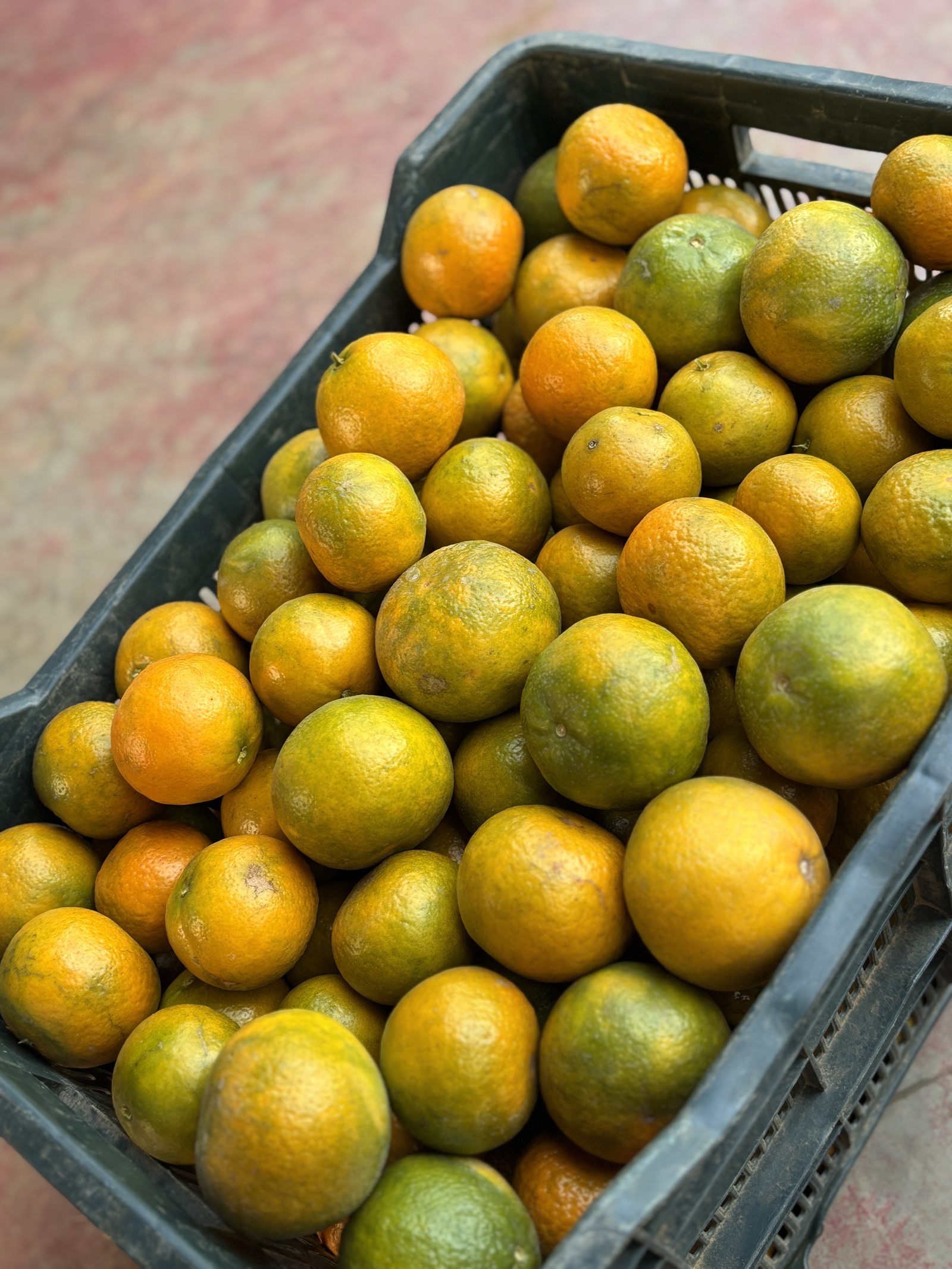
A crate filled with picked Kinnow standing on a red floor, fruit orange and green

Picked, into the crate. What a batch code would be printed against.

No photograph of turmeric lifted

The rhizome out of the ground, washed, before drying.

Turmeric. Grown under tree canopy rather than in open field. We have pictures of the plot, none of the turmeric once it is lifted.

No photograph of the churn

Bilona churning in use, and the finished ghee in the jar it ships in.

Bilona ghee. From the farm's Gir dairy, made by the bilona method.

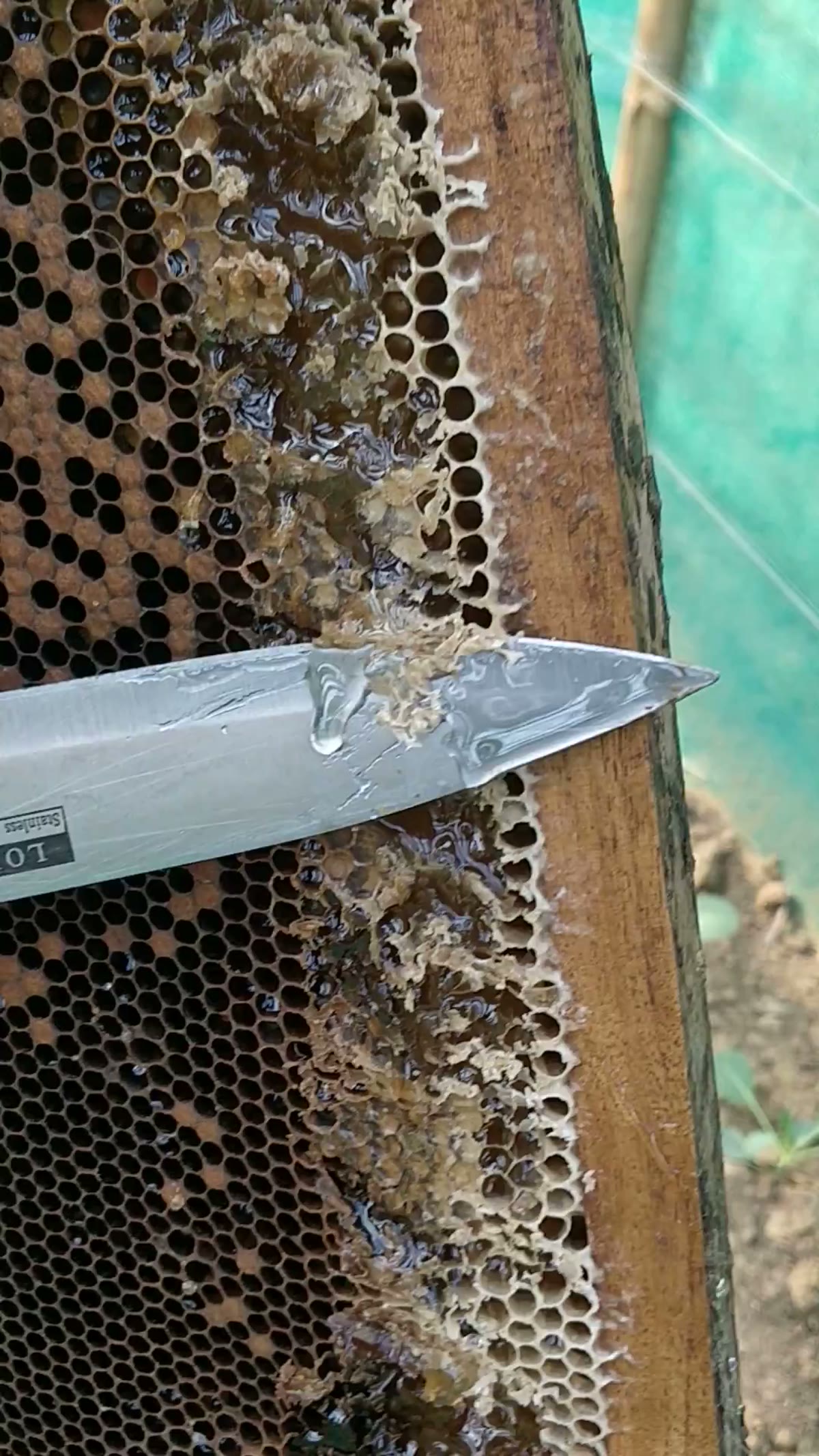
4 Feb 2021 · 10s A knife drawn along a frame of capped honeycomb, wax cappings lifting and honey showing wet underneath

Honey, uncapped. A knife along the comb, February 2021. The apiary sits inside the citrus strip. It collapsed in summer heat; ten colonies are alive across about fifty boxes. Whether any honey actually leaves the farm, we have not said yet.

The produce year

Two rows are recorded. Four are not.

Kinnow ready in January and the orchard in flower January to April are recorded. Turmeric, ghee, honey and compost windows are not recorded.
  JanFebMarApr MayJunJulAug SepOctNovDec
Kinnow ready
Orchard in flower
Turmeric lifted
Ghee made
Honey extracted
Compost screened

Ready to pick Orchard in flower Not written down — people here know it, nobody has written it

Four dashed rows is the real state of our calendar.

Law, not taste

What this page
may claim

Claim practice, not product status. Describe what was done, and let the reader conclude.

“Organic” is a reserved term in Indian food labelling and this farm holds no certification, so it must never appear as a product claim — nor “certified”, nor “pesticide-free”, nor “chemical-free” as a claim about the thing in the jar. “Natural”, “pure” and “fresh” are restricted. No certification mark goes on this site without the document behind it.

What is left is better anyway. “No synthetic inputs were applied to this block” is a statement somebody can be held to. “Organic” is a word somebody else owns.

Words that must not appear as product claims anywhere on this site:

  • Organic
  • 100% organic
  • Certified
  • Pesticide-free
  • Chemical-free
  • Natural
  • Pure
  • Fresh

An open question, for a professional to answer

The small-producer exemption may not survive selling through a marketplace

India's organic food regulations exempt small producers from certification where they sell directly to the end consumer. Selling through a separate company's marketplace may not meet that condition. This page does not answer the question and nothing on this site depends on the answer — the claims rule above holds either way. It needs a food-law professional, before a code goes on a jar.

A record that refuses

Traceability

Most records describe.
This one refuses.

जो रिकॉर्ड मना कर सकता है

Nearly every traceability page is written after the fact. Somebody picks, somebody packs, and afterwards a form is filled in to describe what already happened. A form like that cannot be wrong, because nothing was riding on it.

We have one record that is not like that. Our software will not clear a spray date it cannot square with the apiary record. It does not warn and proceed. It refuses, and somebody has to clear it by hand or not at all. Eight or nine of the eleven fruit species flower between January and April, the apiary sits inside the citrus strip, and ten colonies are alive across about fifty boxes. In that window a spray is not a small decision, and the system makes you argue for it.

It is the only claim on this page that has cost us anything. Every batch record below carries it.

How the spray gate works

Four classes · one spine

Four products,
four shapes

Fruit, ghee, honey and compost are not the same kind of thing, so they do not go in the same form. A fruit batch has a block and a picking window. Ghee has a churn. Honey has a flow and an extraction. Compost has a bed and a maturation. Each one is tracked through a different number of steps, listed across the top of its record. Three for fruit, five for ghee, four for the other two.

The spine

Eight fields every record carries, whatever the product

Product
The stable product name, which never changes and is never reused
Batch reference
The code printed on the jar or crate
Origin
Swechha Farm, Ladpuri, Khairthal-Tijara, Rajasthan — five acres in the Aravallis
Practice
What was done to grow or make it. Never what the result may be called.
Input and spray record
What was applied, or that nothing was. Cleared against the apiary record, or not cleared.
Recorded by
A named person on the farm. A record nobody signed is not a record.
Recorded on
When it was written, which is not the same as when the thing happened
Certification
None held, and none claimed

Two of the four, side by side

Both are made up. No batch of either description exists, and no date below came from our records.

Kinnow · fruit Example

swechhafarm.in/t/kinnow/2026-04

Three steps · fruit

  1. Grown
  2. Picked
  3. Packed
Block and row
Citrus strip, the rows named on the farm map
Irrigation zone
One of nine zones, all off a single borewell
Practice
No synthetic inputs applied to this block. Ground fed from the farm's twenty-four vermicompost beds.
Spray record
No spray date cleared in this window. The system would not clear one against the apiary record; the citrus strip was in flower.
Apiary at the time
Ten colonies live, across about fifty boxes
Picking window · recorded per batchOpened and closed, written at the time rather than reconstructed afterwards.
Packed on · recorded per batchThe packing date, and who packed it.
Quantity · recorded, not publishedWe have to decide how we record quantity. No figure goes up until we do.
Certification
None held, and none claimed
Bilona ghee · dairy Example

swechhafarm.in/t/bilona-ghee/2026-02

Five steps · dairy

  1. Milked
  2. Cultured
  3. Churned
  4. Clarified
  5. Jarred
Milk source
The farm's own Gir dairy. No milk bought in for this batch.
Method
Bilona — cultured, churned, and the butter clarified. Not cream-separated.
Practice
Fodder grown on the farm, including the hydroponic trays beside the dairy. Bedding returned to the compost beds.
Input record
Nothing added to the milk, the culture or the ghee
Collection dates · recorded per batchThe days the milk for this batch was collected.
Churn date · recorded per batchThe day of the churn, which is the date a buyer actually wants.
Clarified and jarred onTwo dates, and who did each.
Animal welfare statementWhat we are prepared to say about how the animals are kept. Written once, not per batch.
Certification
None held, and none claimed

What the other two add

Four steps · apiary

  1. Flow
  2. Drawn
  3. Extracted
  4. Jarred
Flow
Which bloom the colonies were working — the citrus strip between January and April, or whatever was open
Apiary
Named area only. The citrus strip. Never a position, never a box number — see the rule below.
Colonies at the time
Ten live, across about fifty boxes. The drawn comb in the empty ones is worth more than the boxes.
Drawn and extracted onThe two dates, and whether the comb was returned to the colony.

Four steps · compost

  1. Filled
  2. Matured
  3. Screened
  4. Bagged
Bed
One of the farm's twenty-four vermicompost beds, identified by its own number
Feedstock
What went in: prunings, bedding, and the parts of a crop nobody eats. All of it from this farm.
Practice
Nothing bought in. Nothing from outside the five acres enters a bed.
Filled, matured, screened onThree dates. Maturation is the one a grower buying it actually needs.

Four products, four chain lengths, eight fields they all share. A fifth product needs its own steps worked out and nothing more.

A jar outlives a listing

The address
on the jar

A code printed on a jar is a permanent address. The jar sits in somebody's kitchen for a year, and the farm has no way to reach it. So the rule is that nothing under /t/ is ever deleted, redirected or reused. A record goes quiet; it never goes missing.

Proposed, not yet settled

Product identity
A short stable name: kinnow, bilona-ghee, honey, vermicompost. Chosen once, never changed, never reused for a different thing.
Batch identity
Year plus a sequence that restarts each year — 2026-04. Short enough to write on a label by hand, and unambiguous to a human reading it aloud over a phone.
The batch address
swechhafarm.in/t/kinnow/2026-04
The product address
swechhafarm.in/t/kinnow — the practice record for the product itself, with no batch. If the code is smudged, torn or misread, this one still works, so print both.
When a batch sells out
The record stays, marked closed with the date it closed. It is a record, not a listing. The marketplace link is removed; the record is not.
When a product is retired
The product address stays, marked no longer grown, naming the last batch year. Never a 404, never a redirect to the homepage.
If the record is not ready
The address goes to a page saying what is missing and when it will be filled in. It does not go nowhere.

What we are trying to avoid is a dead link on a jar in somebody's kitchen eighteen months from now. It reads as a farm that stopped existing.

Withheld on purpose

What a public record
must not carry

Traceability pulls towards publishing everything, and some of it should not be published. We write these down as rules rather than quietly leaving them out, so nobody later mistakes the gap for an oversight and fills it in.

Hive positions
A honey record names the area — the citrus strip — and never a position or a box number. Hives are stolen, and a disturbed apiary with ten live colonies is not a thing to risk for a map pin.
Animal detail
No individual animal identifiers, and nothing that locates the dairy or the night housing precisely on a farm that takes visitors.
People
“Recorded by” is a name on the farm's own record. It is published only with that person's consent, and no photograph of anyone appears without written permission.
Sensitive ground
Nesting sites and any protected-species sighting stay off the public record and off the map, at whatever resolution.
Service points
The borewell head and the bio-input store are named as systems, not located precisely.

None of this weakens the record. A buyer needs to know the flow the bees were working, not where the boxes stand.

Not yet true

Before a code
goes on a jar

There is no working shop behind this page yet. A code printed today would land a customer somewhere that cannot do its job, so here is where that stands.

The marketplace, as it stands today

It is live and has published nothing in twenty-one months. It carries stock listed in 2020. Inventory is configured so that almost every item reports as available whether or not it is. Exactly one of its hundred and thirty products mentions us — and one product's title carries the words “100% Organic”, which falls squarely inside a 2025 regulator advisory against such claims in promotional material.

  1. 1The /t/ addresses exist and resolveIncluding a batch with no stock, and a product with no batch. Tested before anything is printed.
  2. 2Every batch record is signed and dated by a person“Recorded by” and “recorded on”, filled at the time. A record nobody signed cannot be relied on and should not be published.
  3. 3The “100% Organic” title is gone from the storeAnd every other reserved-term claim with it. The claims rule on this page is worth nothing if the shop beside it says something else.
  4. 4Inventory reports real availability, or the page stops linking to itSending a customer to a listing that says “available” when it is not is the quickest way to lose the trust this whole record is built to earn.
  5. 5A food-law professional has answered the exemption questionWhether selling through a separate company's marketplace keeps the small-producer exemption. The answer changes nothing on this page; it may change the shop.
  6. 6The spray-gate record is exportable per batchIt is the claim the whole record rests on. If it cannot be pulled out for one batch, it cannot be printed on one jar.
  7. 7Somebody owns thisOne named person who writes the records and answers when a buyer asks.

Seven things to do before anything is printed.

The door

Buying happens
somewhere else

यहाँ कुछ नहीं बिकता

Prices, availability and ordering live on the marketplace. This page stays up after the stock has gone.

The marketplace The orchard The farm map Write to the farm

The marketplace link stays unset until the seven conditions above are met. A link to a stale shop is worse than no link.