Photographed · recounted on foot
A system of the farm
The orchard
बाग़ — साल के चार महीने सबसे ज़ोरदार
Eleven fruit species grow on five acres at Ladpuri. Between January and April, eight or nine of them flower at once, and for those four months the orchard is the loudest part of the farm.
Written by the farm
What is actually planted
Eleven fruit species share this ground. They went in over several seasons rather than all at once, and they are not laid out in blocks. A row may carry one species for twenty metres and then change, because the planting followed what was available and what survived its first summer, not a drawing made in advance.
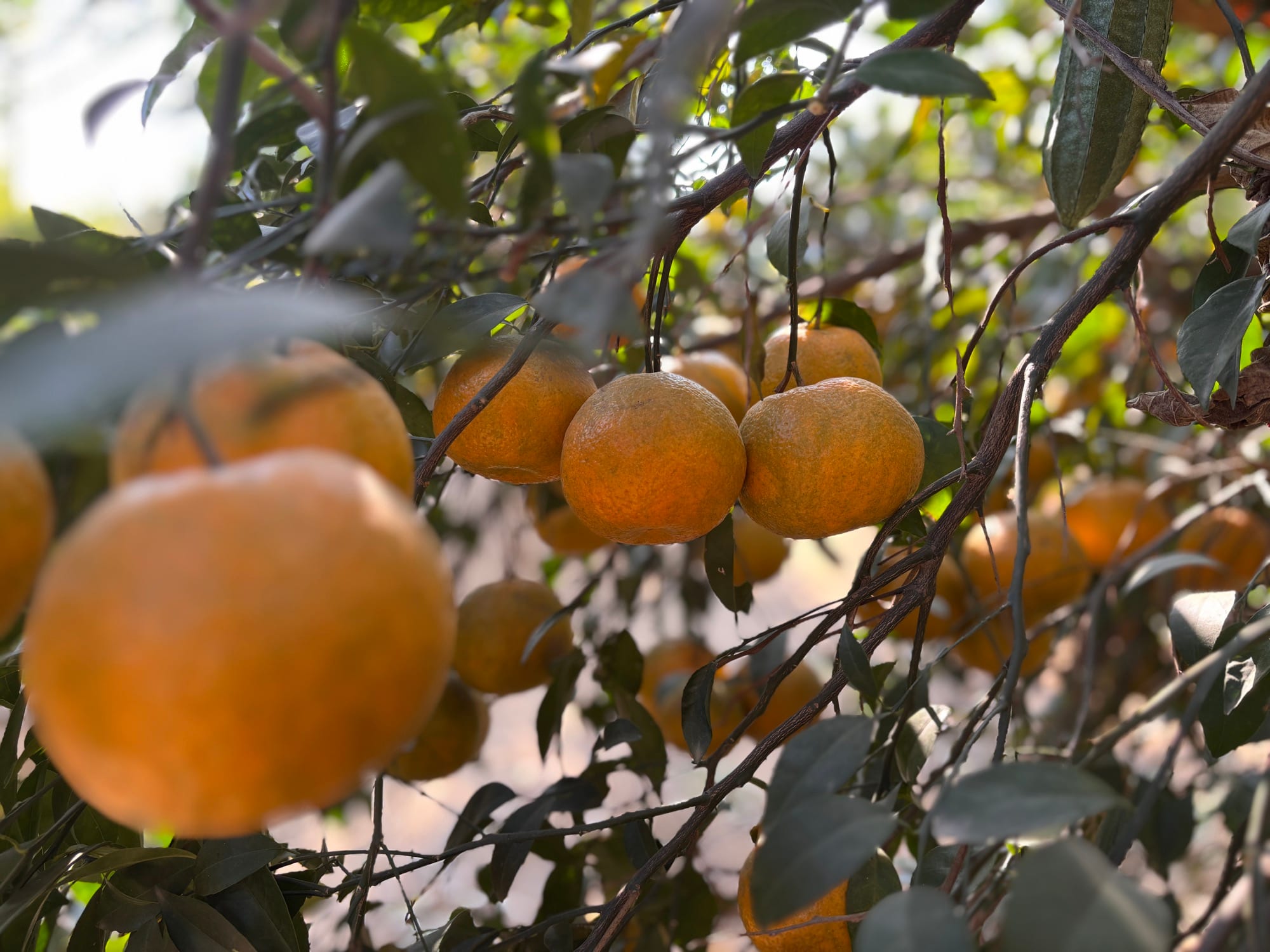
Kinnow is the one most people arrive knowing. It comes ready in January — which is also when the orchard begins to flower, so the same four months hold one species being picked and most of the others opening. If you want to understand this farm in a single visit, come in that window and walk the rows slowly.
One tree, and then eleven species
This land was bought with a single tree standing on it. More than five thousand grow on the five acres now, and the orchard is only one part of that — the rest is food forest, the beds and the boundary planting.
Eleven species in one orchard was a decision. A block of one species can fail in a single season to a single thing. A mixed one does not. It costs us, though. Eleven species means eleven separate moments of attention and no single harvest week to organise labour around. It also means more to keep track of than we have managed, which is how the tree count came to be wrong.
The count that went down
For years the orchard was described by the number of trees that had gone into the ground. Then somebody walked the rows and counted what was standing, and the number came down.
A planting figure tells you what went in. A standing figure tells you what is alive, and the two drift apart every season through losses nobody wrote down. We report the standing figure. It is the smaller number.
Water, and the nine zones
Nine irrigation zones run off a single borewell. In practice that is a weekly argument. One well, nine valves, and somebody deciding which part of five acres gets water. In a dry spring the orchard and the field crops want it at the same time, and the orchard does not always win.
What goes back into the ground
Twenty-four vermicompost beds take what the farm grows and return it to the ground it came from. Prunings, bedding, the parts of a crop nobody eats. The beds are not much to look at, which is probably why we have plenty of pictures of fruit and none of a bed opened up.
The bees, and the gate they put on the calendar
The apiary collapsed in summer heat. Ten colonies are alive now across about fifty boxes. The drawn comb standing in the empty ones is worth more than the boxes. Comb costs a colony a season of work to build, and a colony moving into drawn comb starts a season ahead of one building from nothing.
Eight or nine of the eleven species flower in the same four-month window, so anything sprayed then is not a small decision. We put a gate on it. Our own software will not clear a spray date it cannot square with the apiary record. It does not warn and then proceed. It refuses, and somebody has to clear it by hand or not at all.
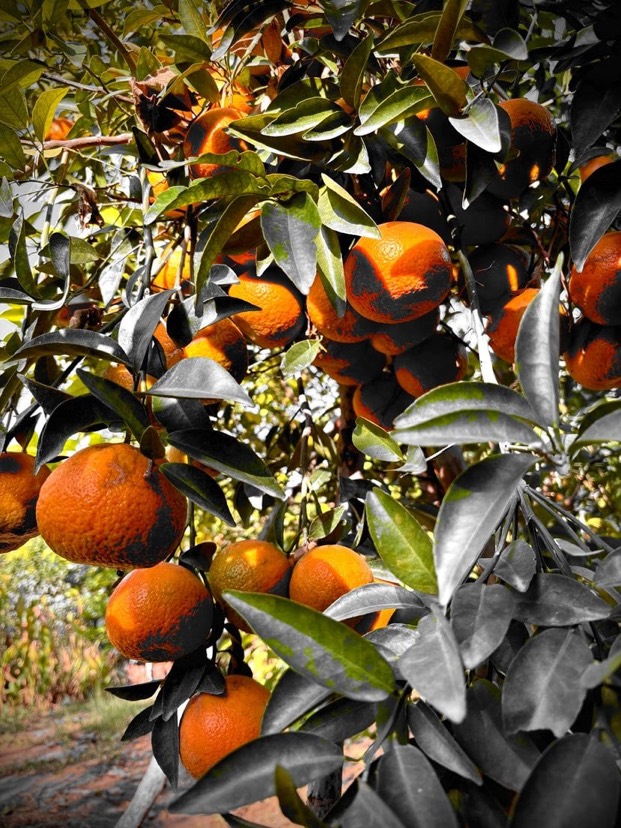
Kinnow on the tree. The leaves have been pulled down in the colouring and the fruit pushed up.
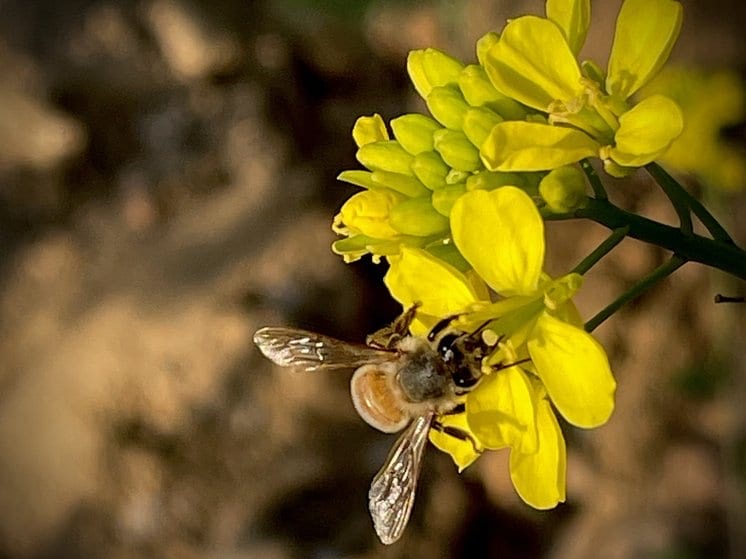
A bee on mustard. The apiary itself is below.
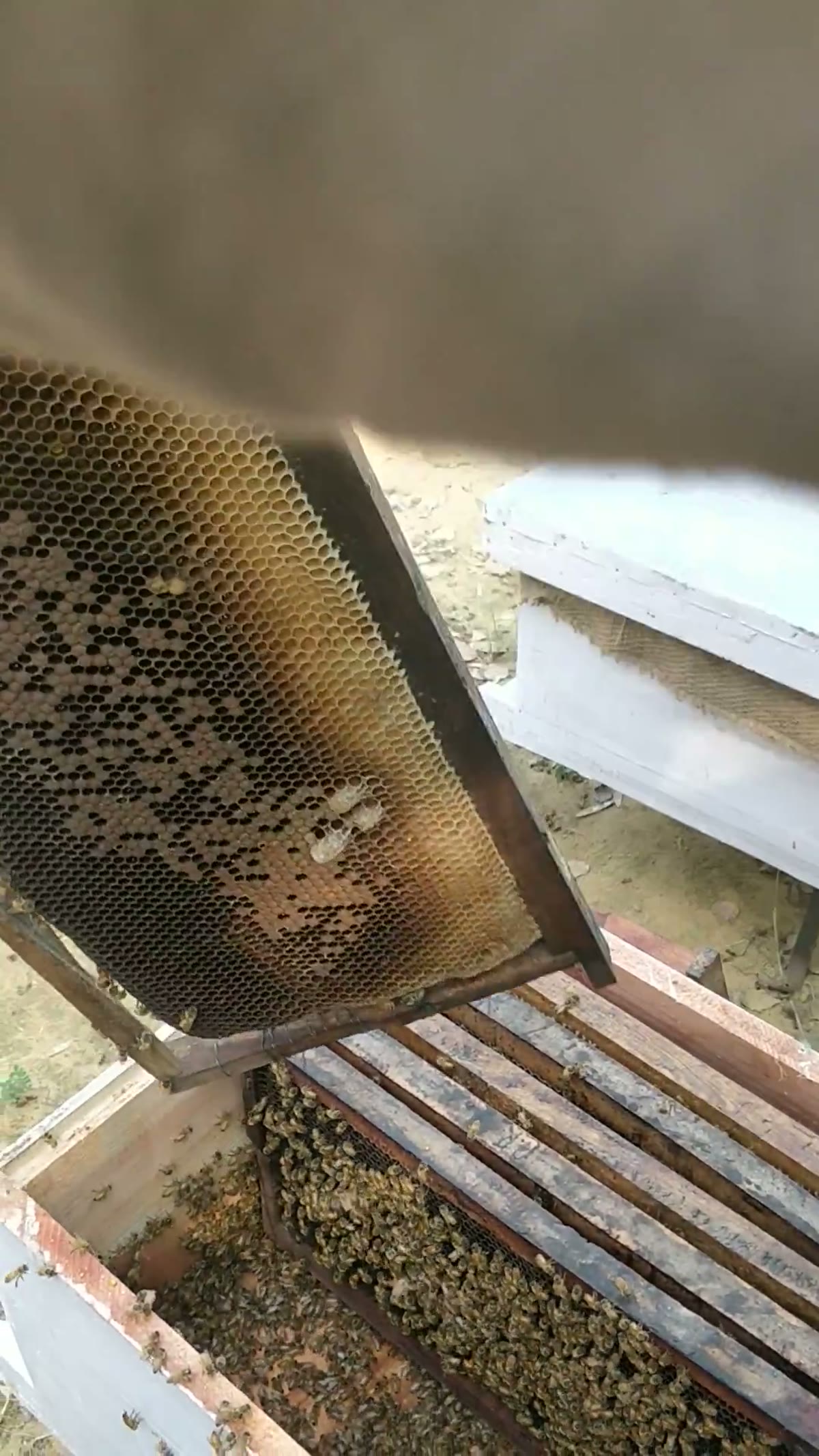
A hive open, February 2021. The apiary sits inside the citrus strip, which is the shortest distance the bees can travel to work.
Photographed · December into January
What four months
of this looks like
Kinnow colours through December and is ready in January. These are from the rows, in the weeks it happens.
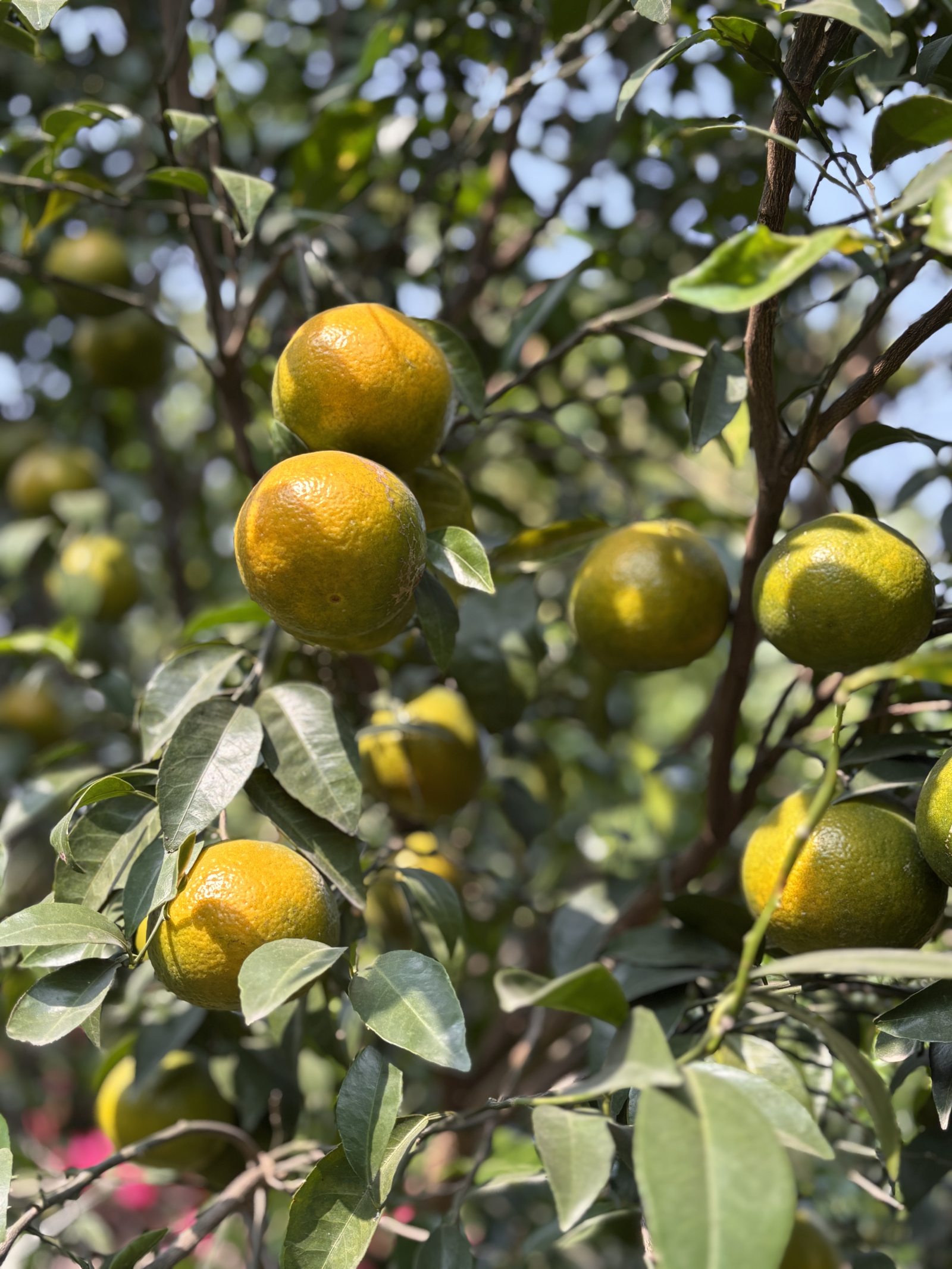
Up into the canopy. October, still green at the edges.
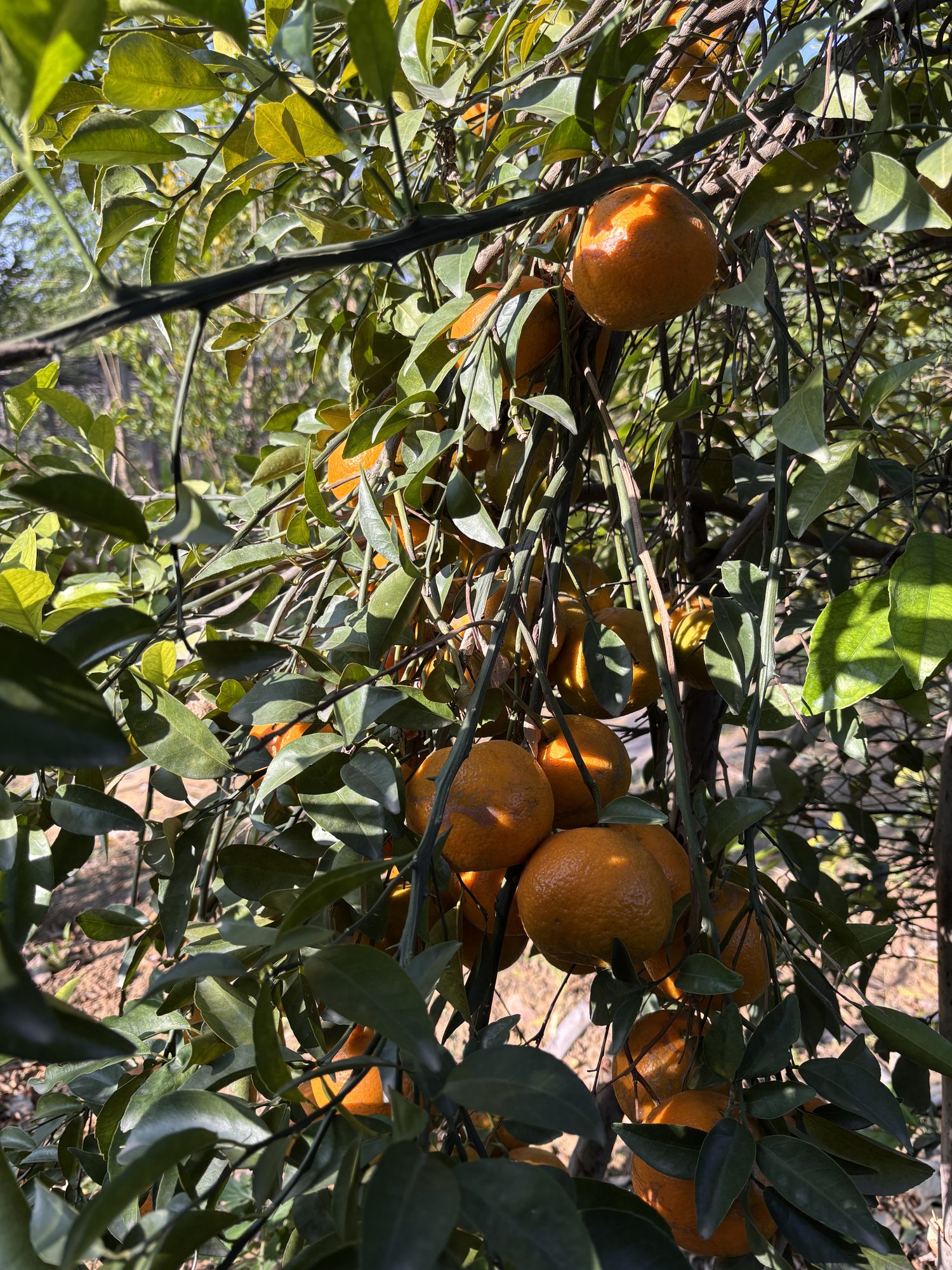
11 December 2025. Colouring. Another few weeks.
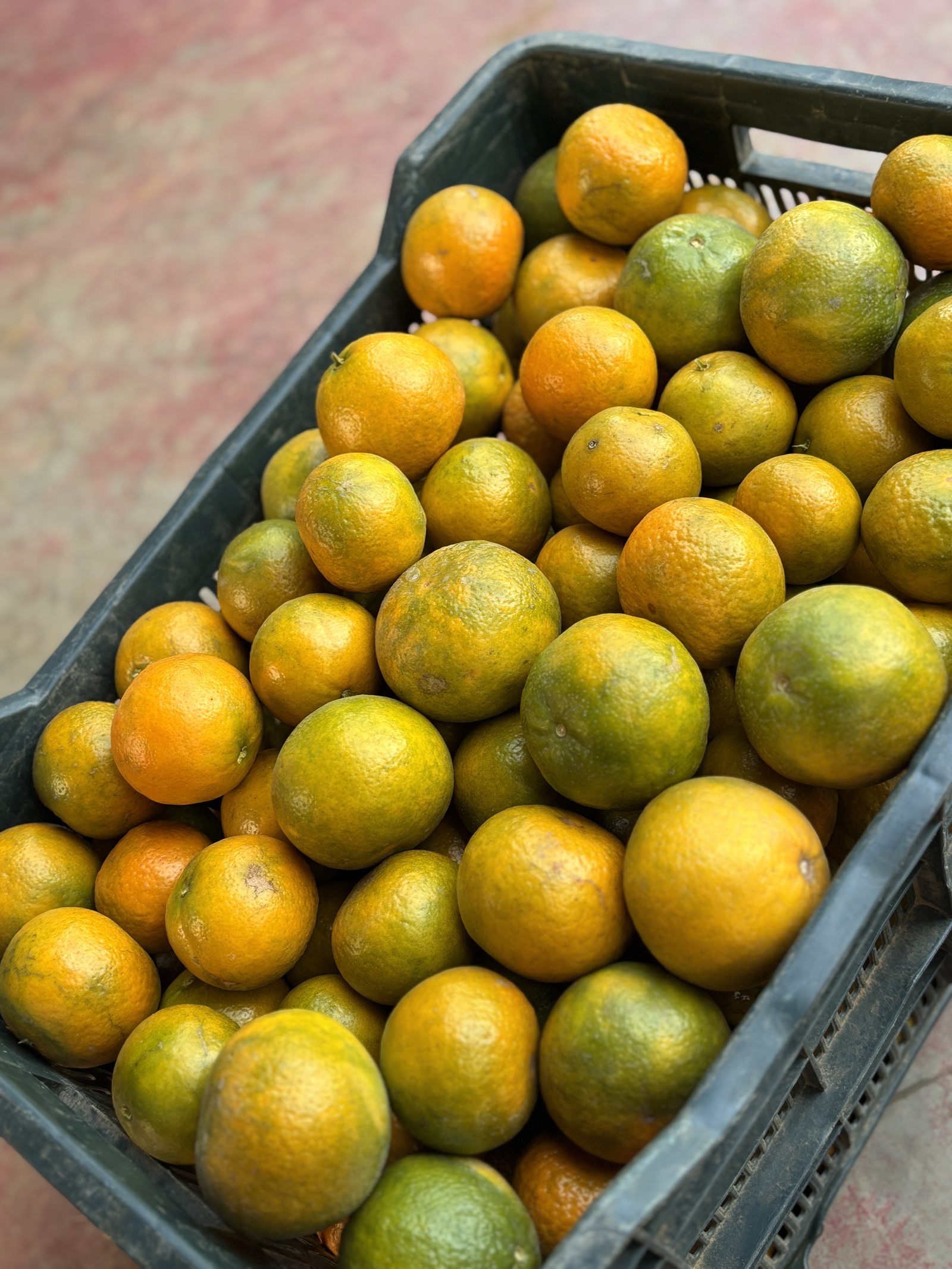
Picked, in the crate. This is the whole point of the four months.
Eleven species grow here and only one of them is photographed like this. The other ten we can describe and not show.
Only what we have written down
The orchard year
What this farm can actually put on a calendar
| Jan | Feb | Mar | Apr | May | Jun | Jul | Aug | Sep | Oct | Nov | Dec | |
|---|---|---|---|---|---|---|---|---|---|---|---|---|
| Flowering | ||||||||||||
| Kinnow ready | ||||||||||||
| Spray gate shut |
Eight or nine of the eleven species in flower Kinnow ready to pick No spray date clears against the apiary record
Not written down yet Harvest windows for the other fruit species, and the order they ripen in. People here know it. Nobody has written it down, so we are not printing it.
Three rows, because three rows are all we have written down.
Where this goes next
The count
went down
गिनती घटी, और यही असली कहानी है
The recount has its own page. What the orchard produces, and how a jar of it gets traced back to a row, is on Produce.