No photograph of the beginning
Stage IThe beginning
One tree
standing
एक पेड़ खड़ा था — बाक़ी का कोई रिकॉर्ड नहीं
This is the story the whole farm rests on, and it opens with a hole in the record. The land was bought with one tree on it. More than five thousand grow on the five acres now. There is no photograph of the first state.
No photograph of this exists
One tree was standing on five acres
पाँच एकड़ ज़मीन, और उस पर एक पेड़
That sentence is all that survives of how this land began. No photograph of it exists anywhere we have looked. Nothing of the parcel at purchase, nothing of the tree. Rather than fake one, we have left the space empty. What we have instead of a before photograph is that sentence.
Near, and not it
The nearest things,
and why none of them is it
Three things we hold look, at a glance, like they might be the beginning. We name them here rather than quietly leaving them out, because the temptation is obvious. One of them is genuinely this land, genuinely early, and still not the beginning.
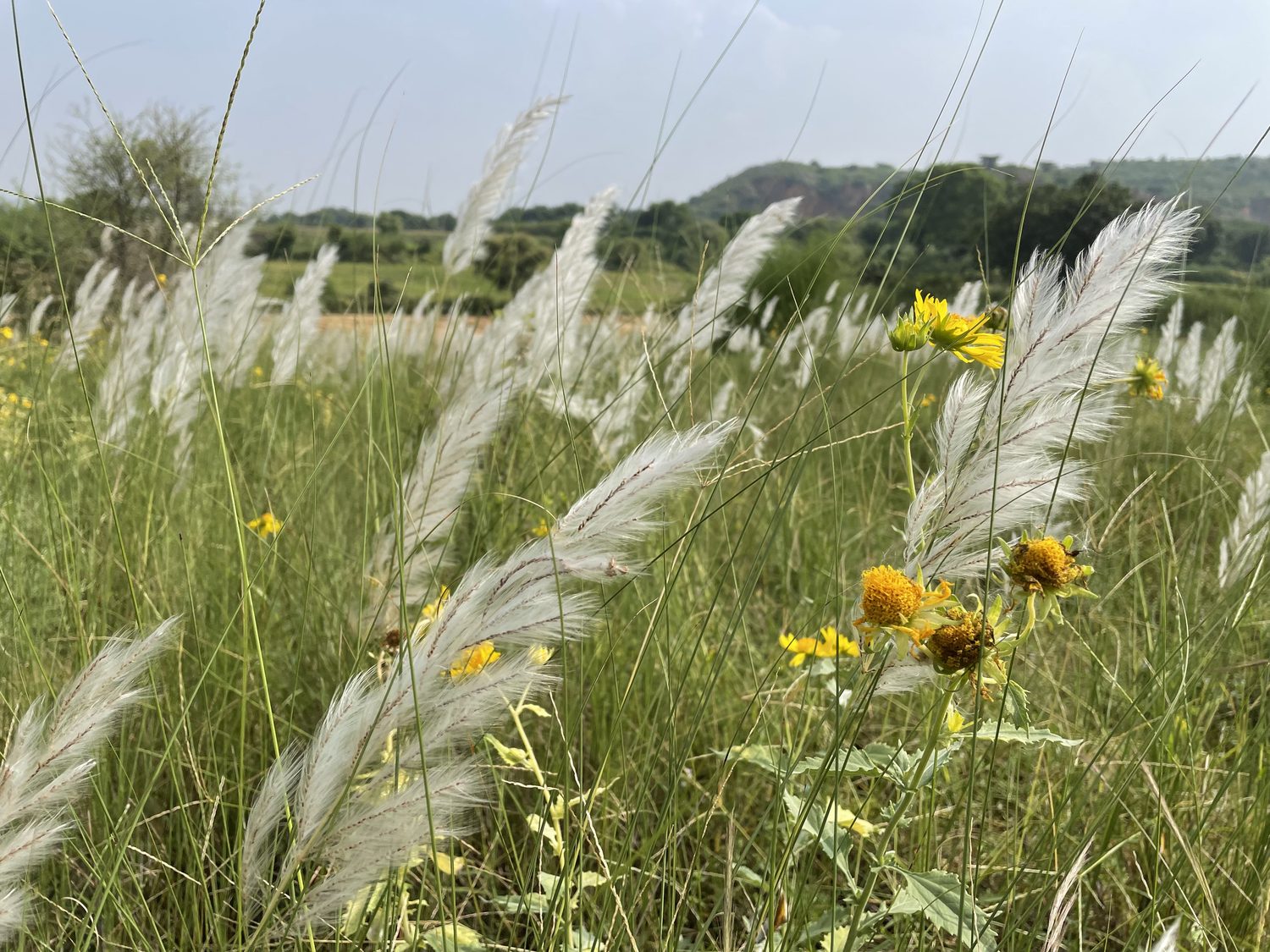
25 September 2021. The earliest photograph of this land we hold. Kans grass over open ground, nothing worked, nothing planted. Seven weeks later the machines were on it.
Why this is still not the beginning
It is dated, it is this land, and it is before any of the work. It is also the earliest thing in two hundred and eighteen photographs, which is not the same as the earliest thing that happened.
Nobody has told us when the land was bought. So we cannot say whether this is what it looked like at purchase, or what four years of nobody touching it looked like. Until somebody who was there says which, it is a photograph of September 2021 and nothing more.
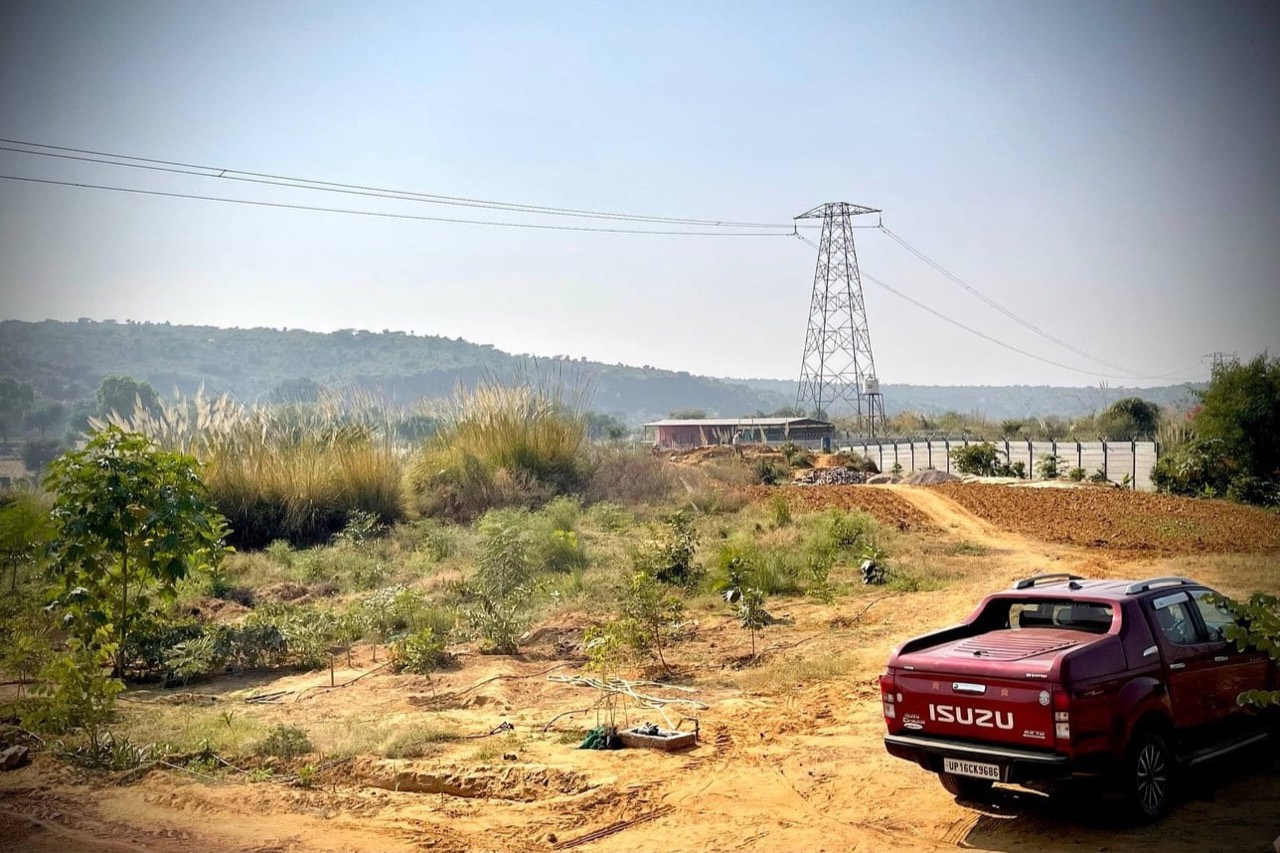
Scrubby, part-cleared ground at the edge of the farm. Undated. There is no tree in it, a transmission pylon stands near the centre, and a pickup with a legible plate is in frame — that plate would have to be obscured before this is published anywhere. It must never be captioned “before”. It is the nearest thing we have and it is not the thing. Nobody knows when it was taken, or whether it predates a single planting.
Four files that are not what they look like
They look like a historical aerial sequence of the farm, and they are not one. They are screen captures of someone else's satellite imagery, with a copyright line and a watermark burnt into the pixels, framing a whole village of which this farm is a fraction.
Unusable at any size, in any crop, under any caption. We do not treat them as if that sequence exists. A historical sequence would have to be sourced properly. Two possibilities are at the end of this page.
Order, not dates
Stage IIThe work
A sequence,
not a chronology
Nobody wrote the work down. Not the purchase, not the first planting, not the borewell. So this is the order the work had to happen in, which the ground itself proves. Every date is left open rather than estimated. A year nobody can source is worth less than a blank.
What we do have is photographs, and photographs carry their own dates. They do not date the decisions — only the moments somebody happened to be holding a camera. Two of them were taken from the air.
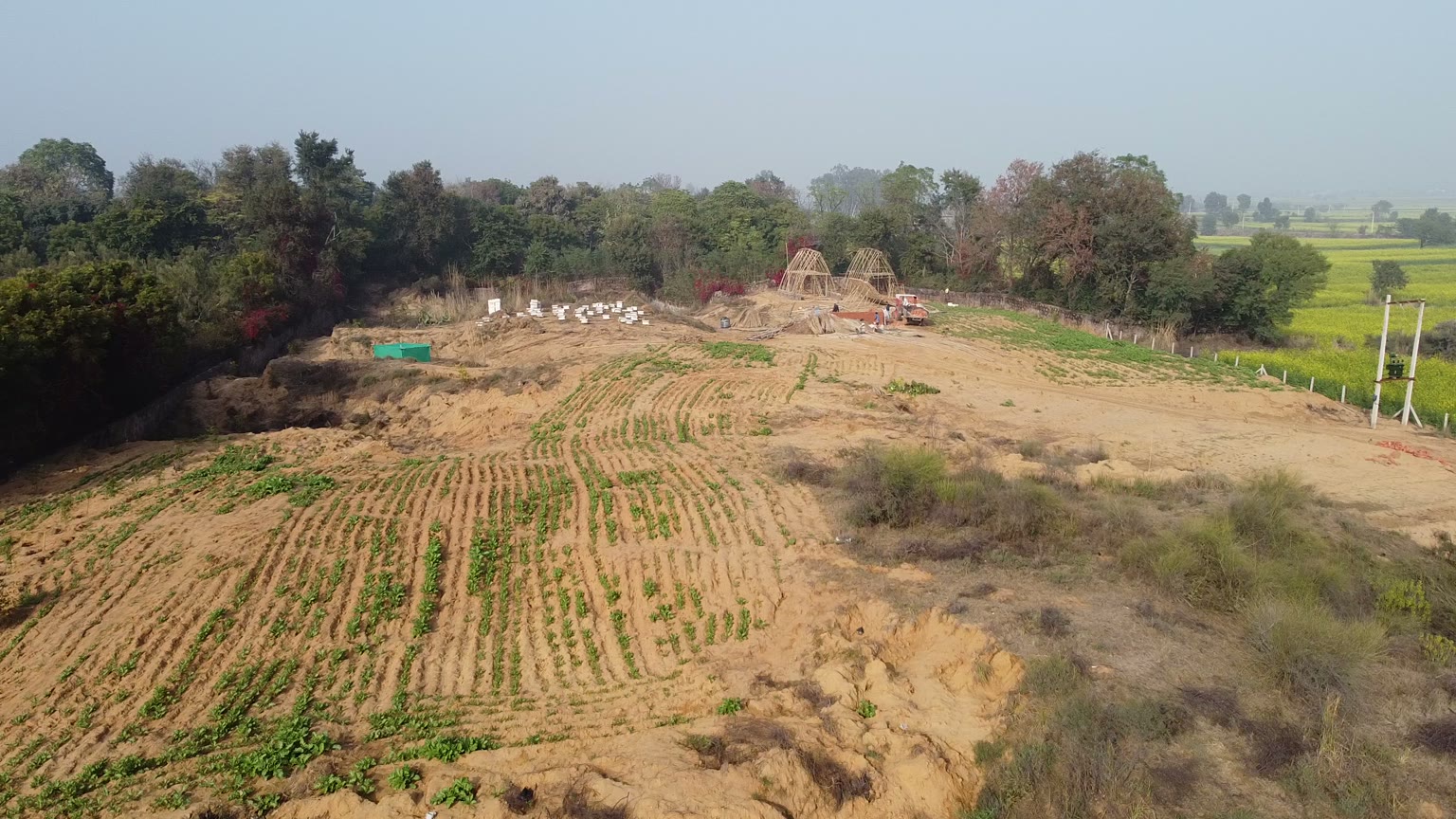
Mostly bare ground, with rows already in it. The planting has started and the land has not caught up.
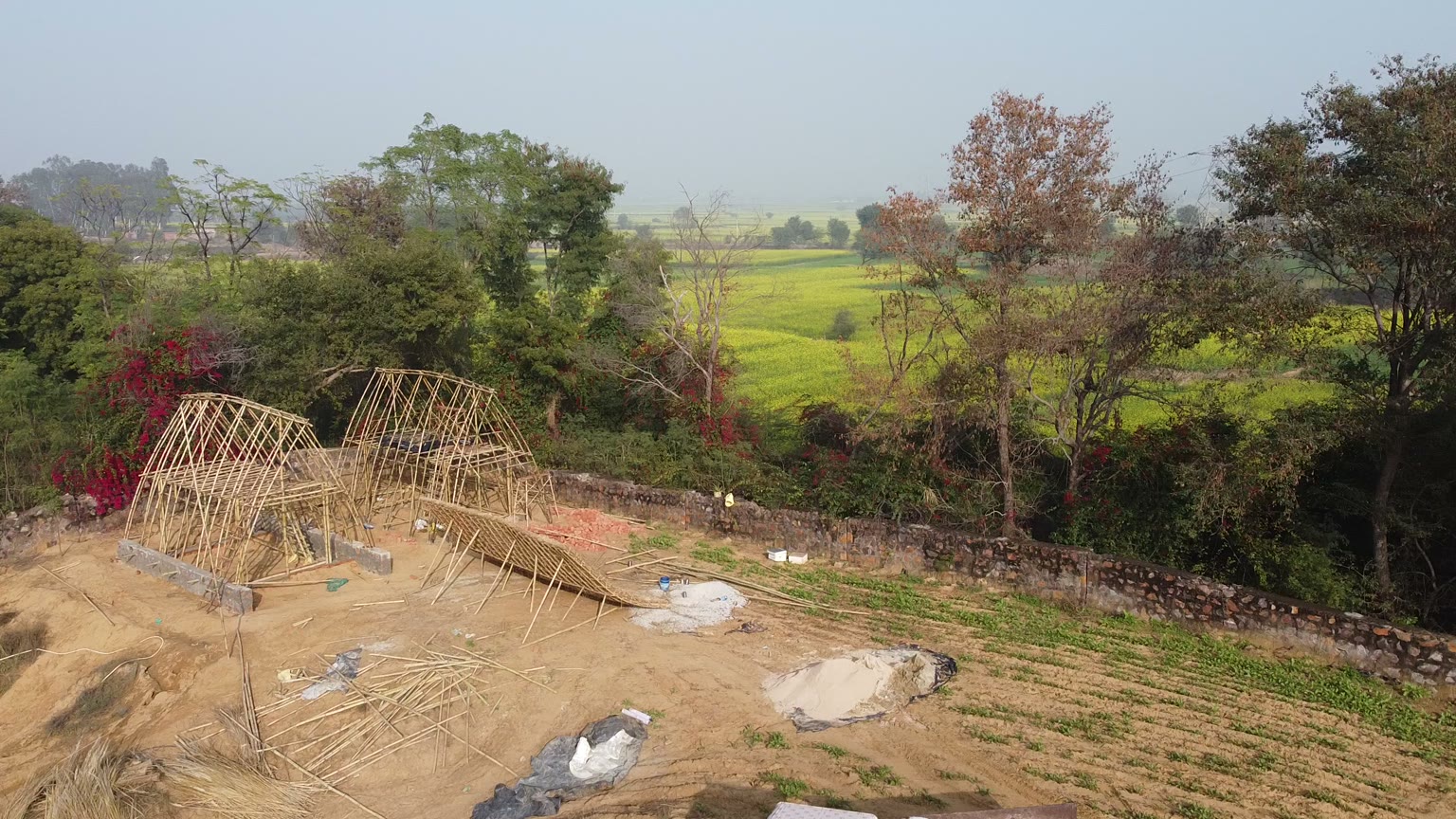
The two houses, still frames. Bare earth around them, bougainvillea already in on the boundary.
Neither of these is the beginning. Both are already the work. The earliest thing we hold is a farm partly made — which is its own answer about how much was never recorded.
-
16 November 2021Dated by the photograph, not by a record
The ground was read before it was changed
The contours were kept rather than levelled. Levelling is easier with a machine, and it is what you do when the plan matters more than the place. Everything afterwards follows from that one decision. Where the water runs, where the beds sit, where the houses went.
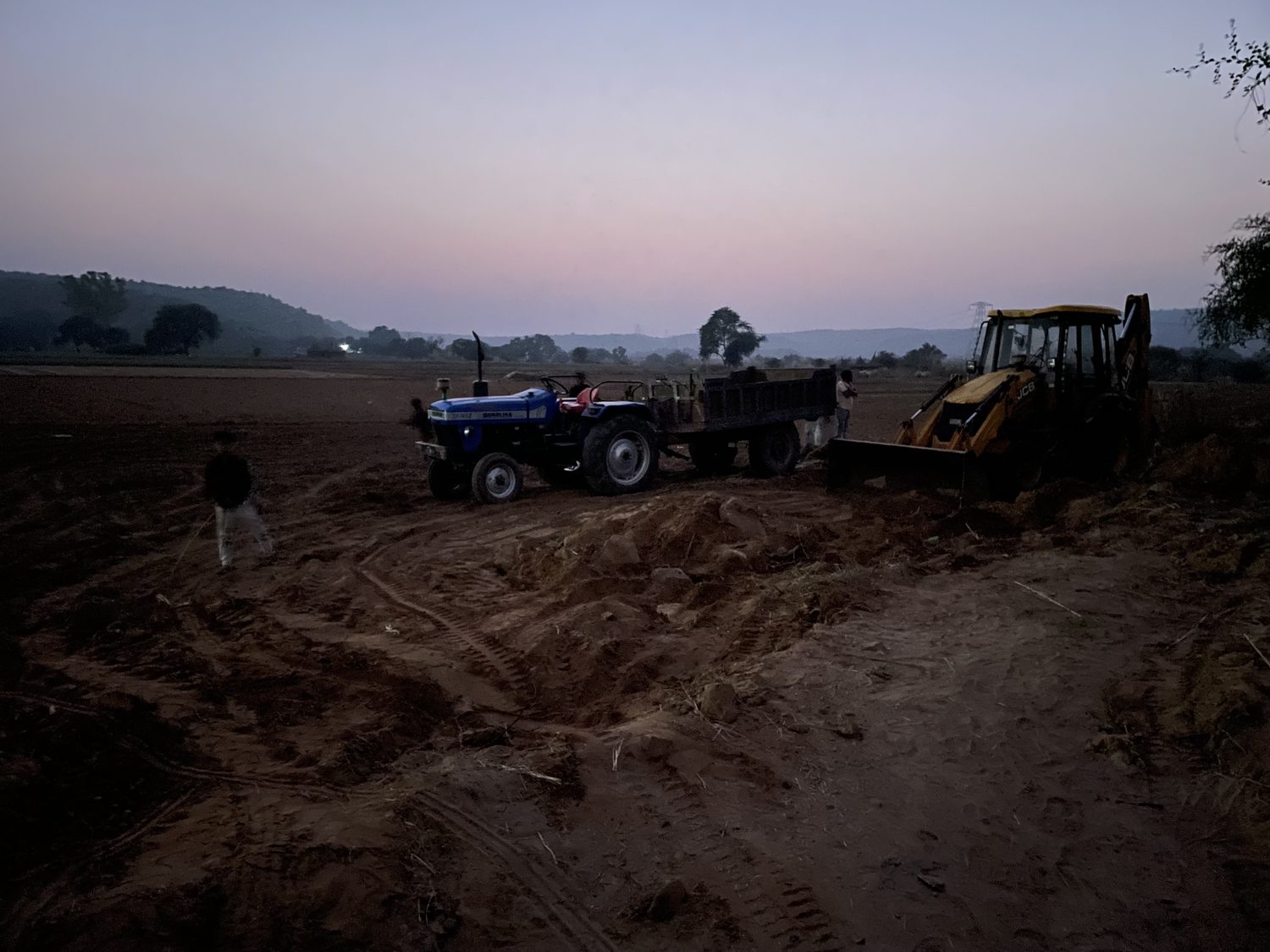
A tractor and a JCB, last light. This is the machine work that could have levelled the ground and did not.
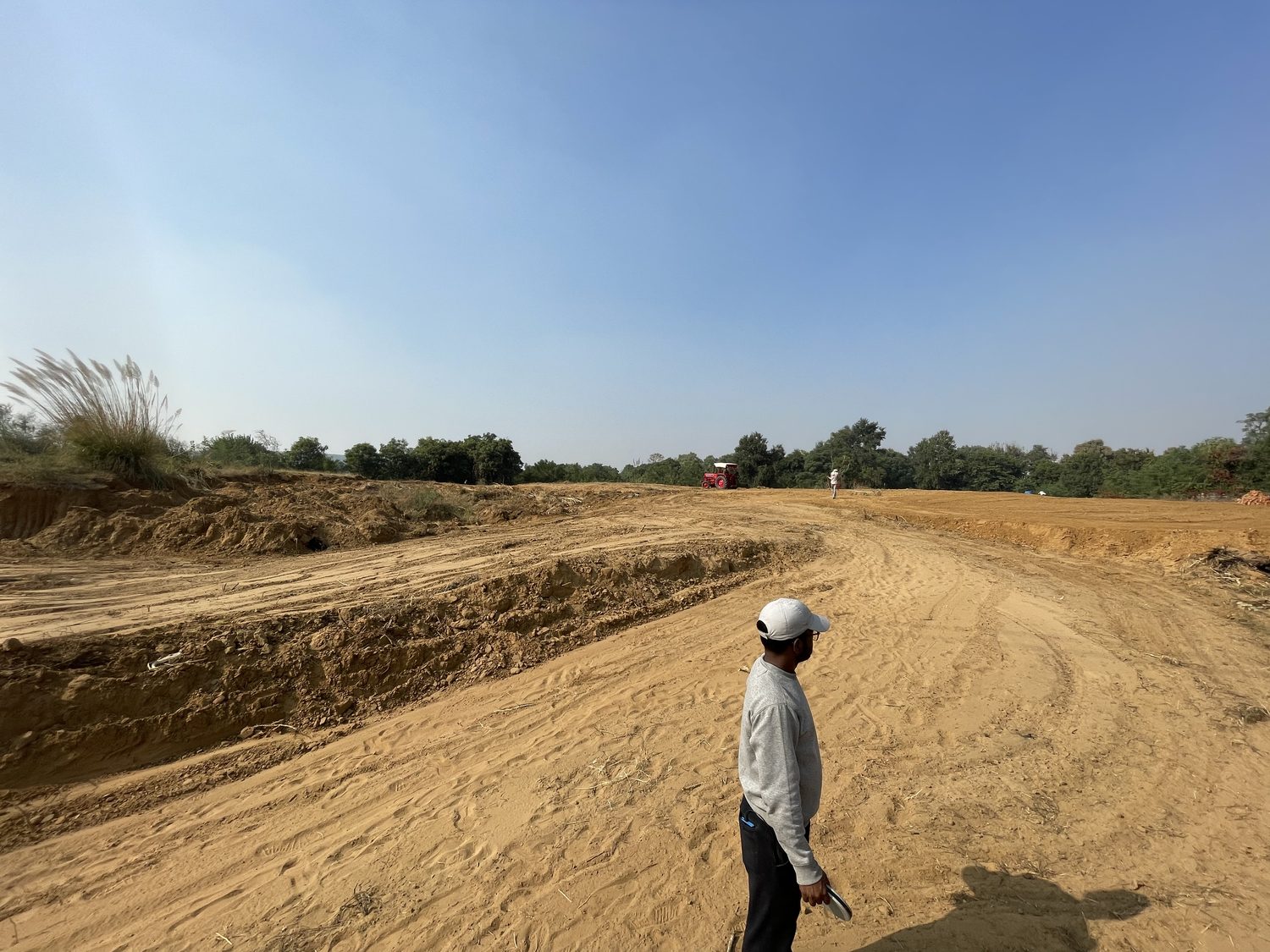
The cut, with somebody in it for scale. The bank follows the fall of the land rather than crossing it.
-
16 November 2021Dated by the photograph, not by a record
Water before planting
A single borewell, and nine irrigation zones laid out to follow the ground rather than cut across it. Nothing could be planted at scale until this existed, which is why it must have come first, and why the weekly argument on this farm is still about which of the nine gets the water.
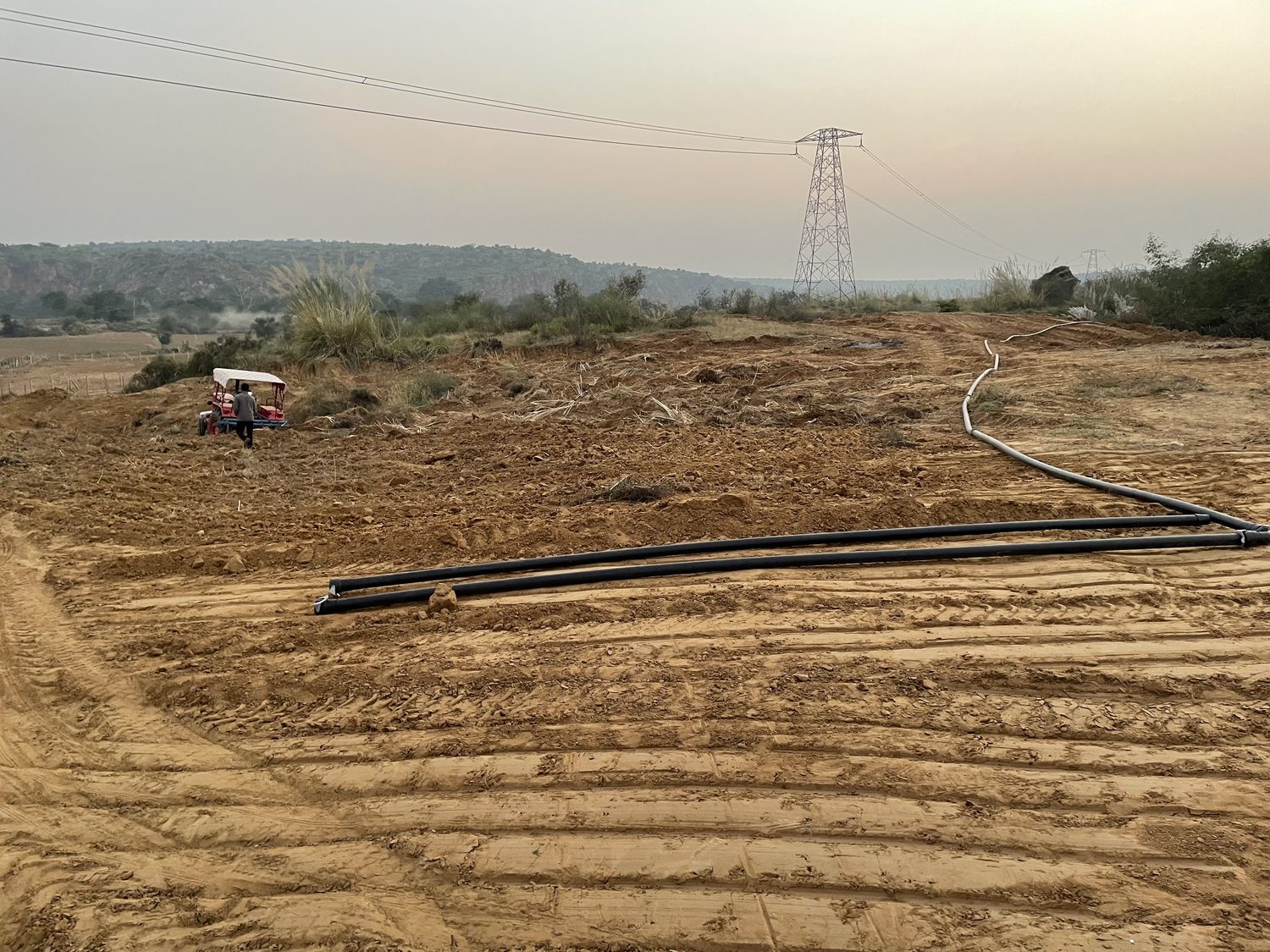
Pipe on the ground before anything is in it. The same day as the earth was being moved.
-
Date not recordedNobody wrote it down
Eleven species, not one
The orchard went in over several seasons rather than all at once, following what was available and what survived its first summer. Eleven fruit species, not in blocks — a row may carry one for twenty metres and then change. Eight or nine of them flower between January and April.
-
Date not recordedNobody wrote it down
The loop was closed
Twenty-four vermicompost beds take what the farm grows and return it to the ground it came from. This could only come after there was something growing to return, which fixes it in the sequence even though nobody wrote down the year.
-
Date not recordedNobody wrote it down
The systems arrived around the planting
Food forest, multi-layer beds, turmeric under canopy, the dairy, the apiary inside the citrus strip, the mud houses on the high ground and a camping site below them. None of it arrived as a plan. It arrived one season at a time, which is also why the record has gaps.
Three dashed date slots down one edge, where there were five. Two of them could be sourced from a photograph. The other three still cannot, and that column is the real state of our own history.
One day
somebody photographed properly
21 January 2022. The two mud houses went up, and for once somebody followed the whole thing with a camera. Nothing else in this farm's history is recorded like this. The orchard went in over several seasons and nobody photographed a single planting.
-
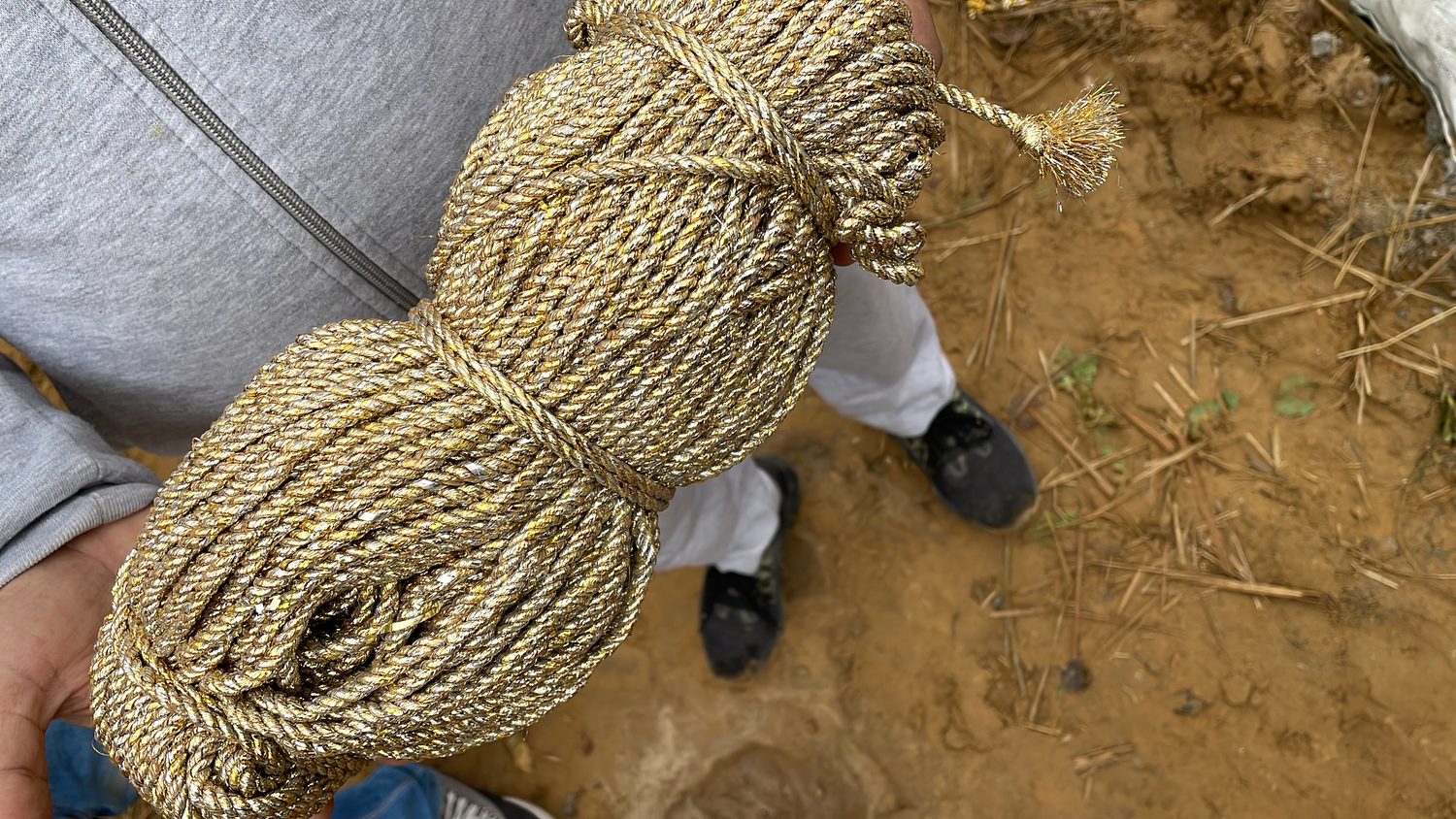
The rope
Twisted grass rope. Every joint in the frame is tied with it; nothing is bolted.
-
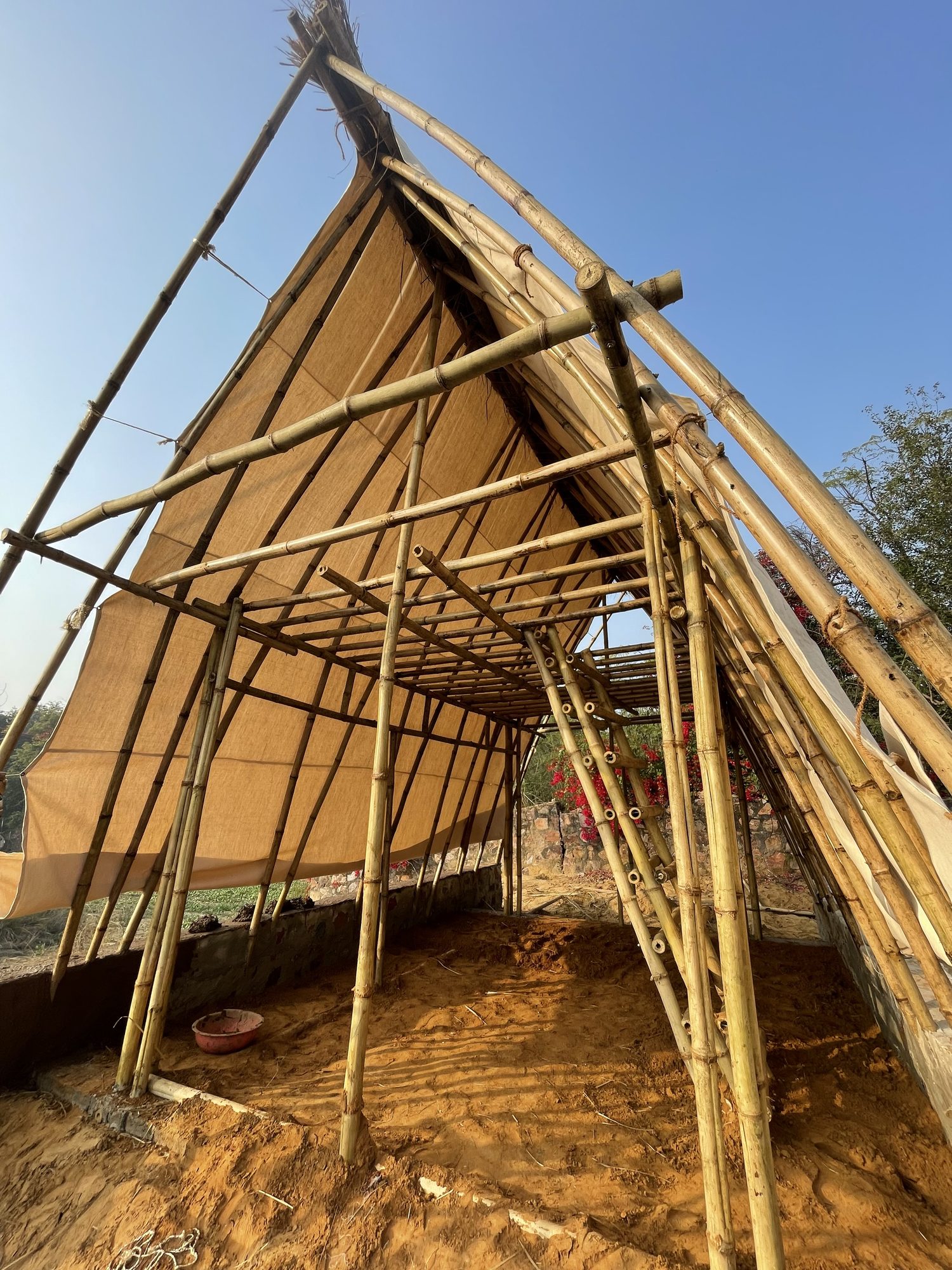
The frame
Bamboo raised to a ridge and lashed. This is the whole structure — the rest is skin.
-
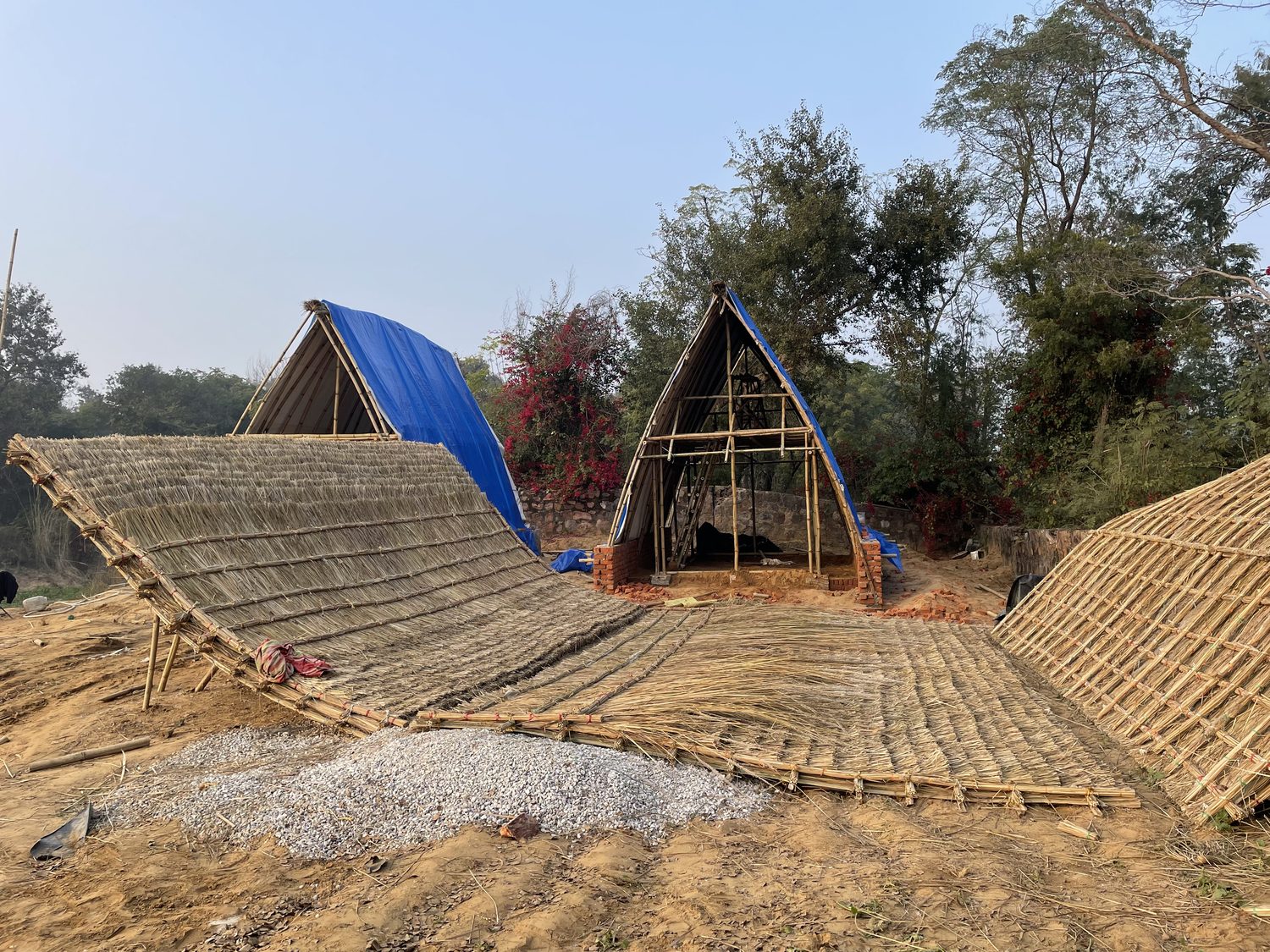
The panels, flat
Thatch woven into panels on the ground, where a person can work sitting down.
-
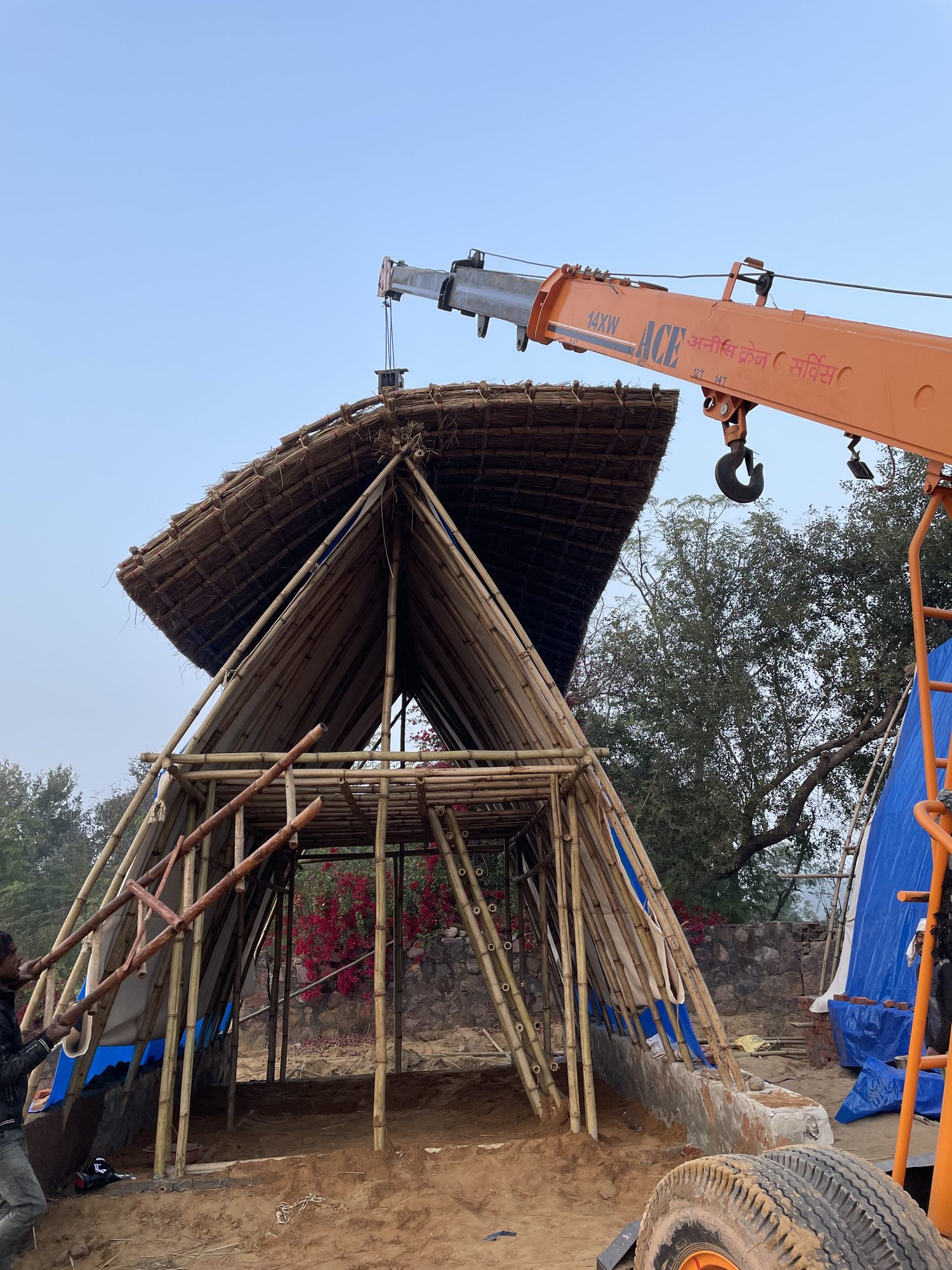
Lifted
A hired mobile crane. The one piece of the build that could not be done by hand.
-
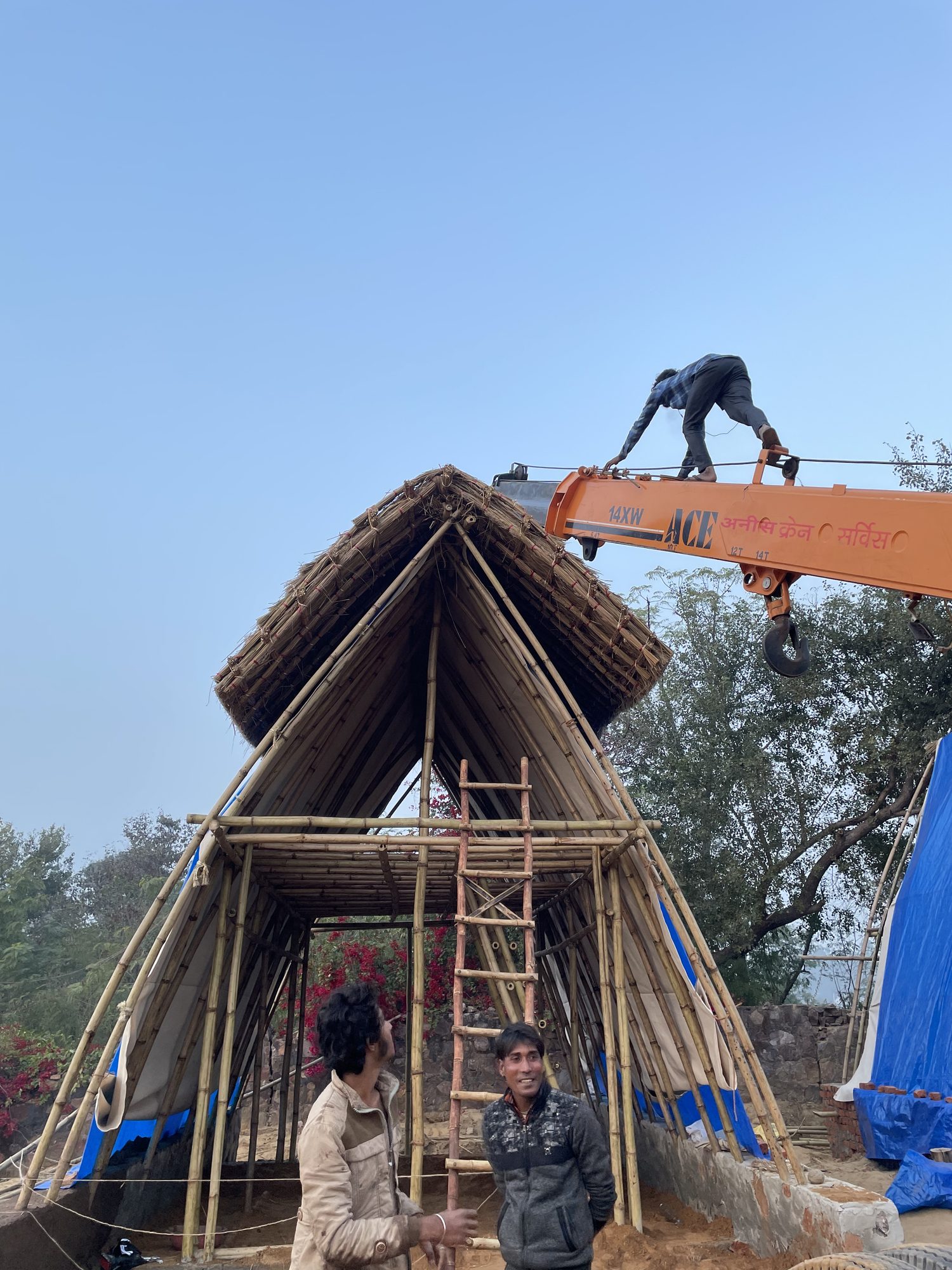
The apex
Closed by hand, standing on it. Both houses were up by the end of the day.
We are not holding this up as proof of anything except that somebody was there with a camera. The farming is the part nobody photographed.
Photographed · the present only
Stage IIIThe living landscape
What is here now,
and can be shown
Four clean photographs exist of this farm, and all four are of now. The past is unphotographed and the present is not, which is what happens when you start keeping a record partway through.
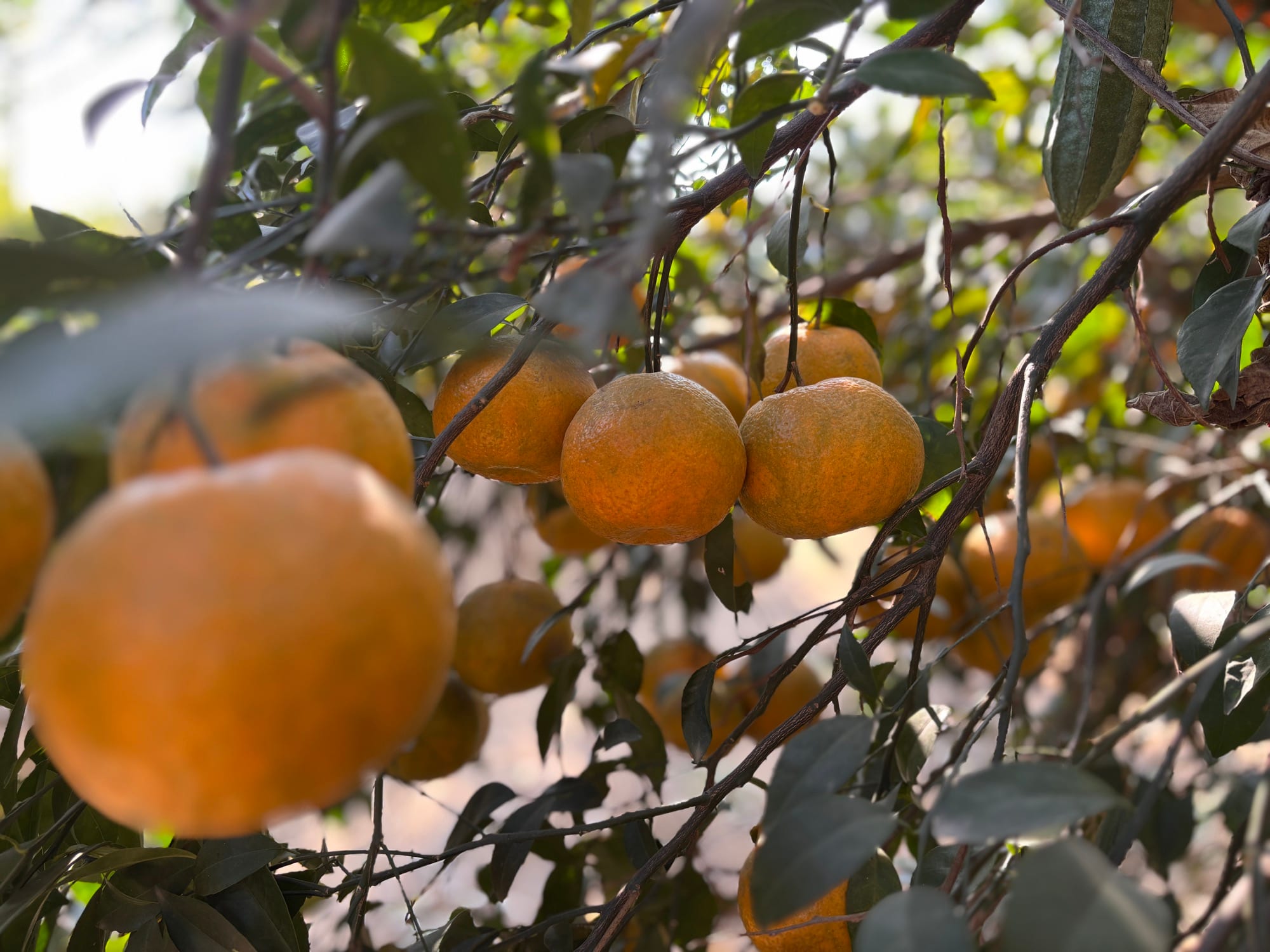
The orchard in fruit. Kinnow is ready in January, which is also when most of the orchard is in flower.
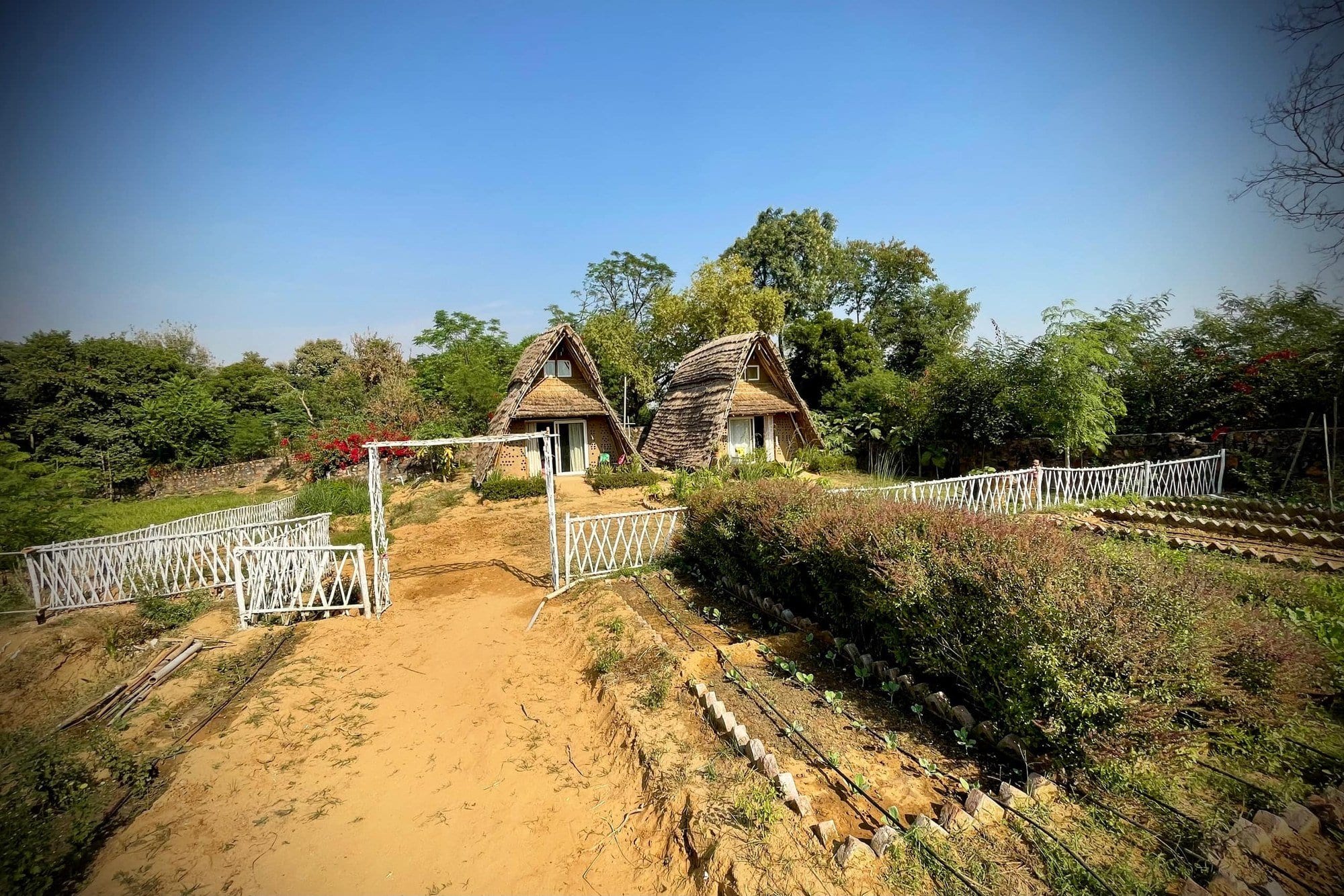
The rise, and the track up to it. The planted beds run along the contour rather than across it.
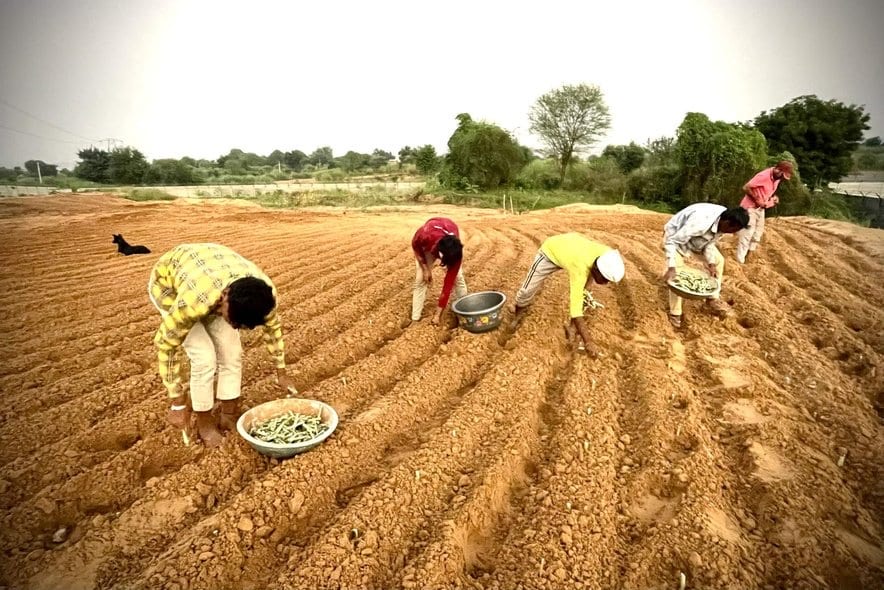
Sowing by hand. No face is readable and nobody in it has been named or asked.
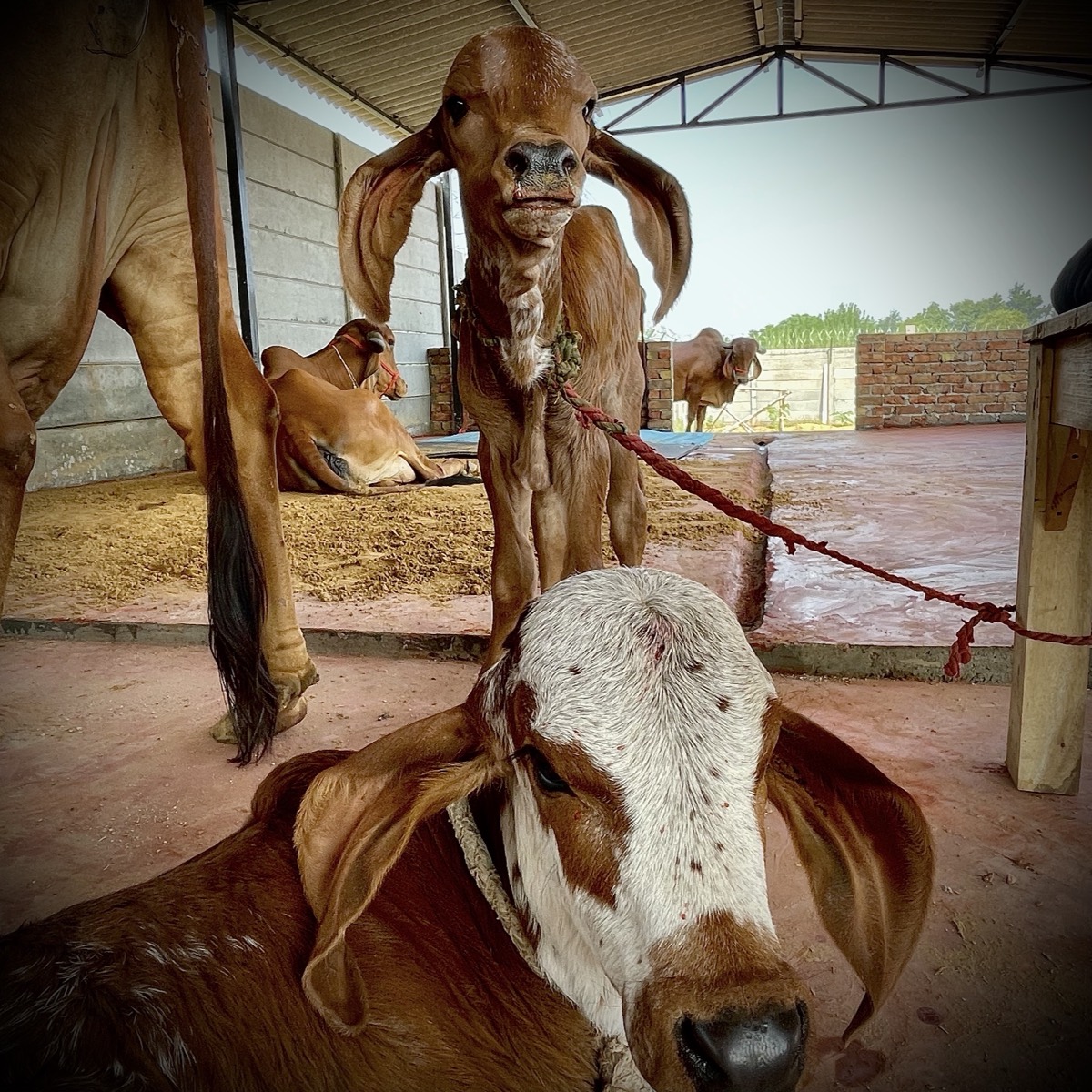
The Gir dairy. Its bedding goes to the compost beds; the beds go back to the orchard.
What can be stated about now
Only what we have confirmed
- Standing
- More than five thousand trees on five acres bought with one
- The orchard
- Eleven fruit species; eight or nine flower between January and April
- Water
- Nine irrigation zones off a single borewell, following the contours
- Ground
- Twenty-four vermicompost beds, fed from what the farm grows
- Shape of the land
- The contours were kept, not levelled
Not finished
Stage IVThe ongoing experiment
The chapter
that is still open
अभी ख़त्म नहीं हुआ
Nothing has supplied an ending to this one. What follows is the current chapter, and it is the part worth reading.
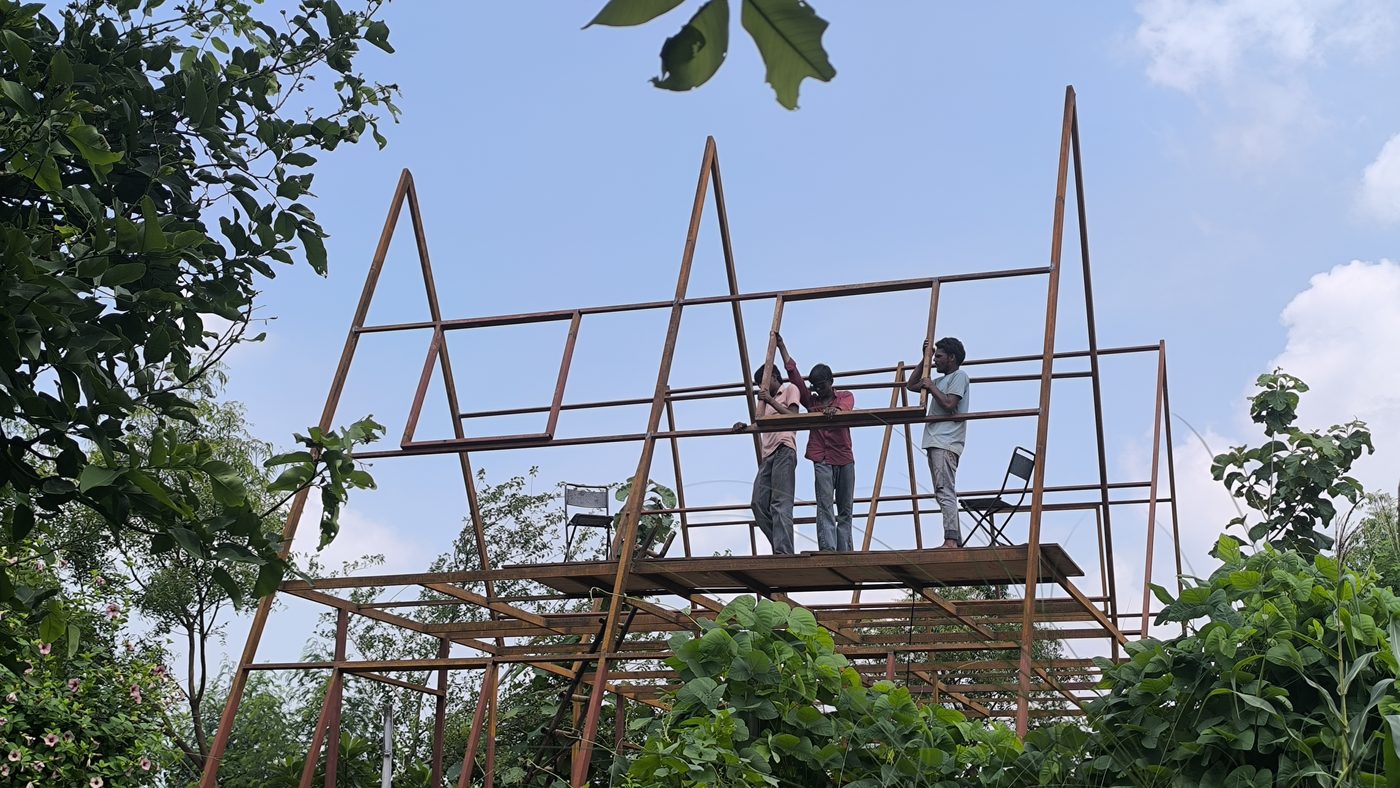
August 2026. New frames going up, in the rain months.
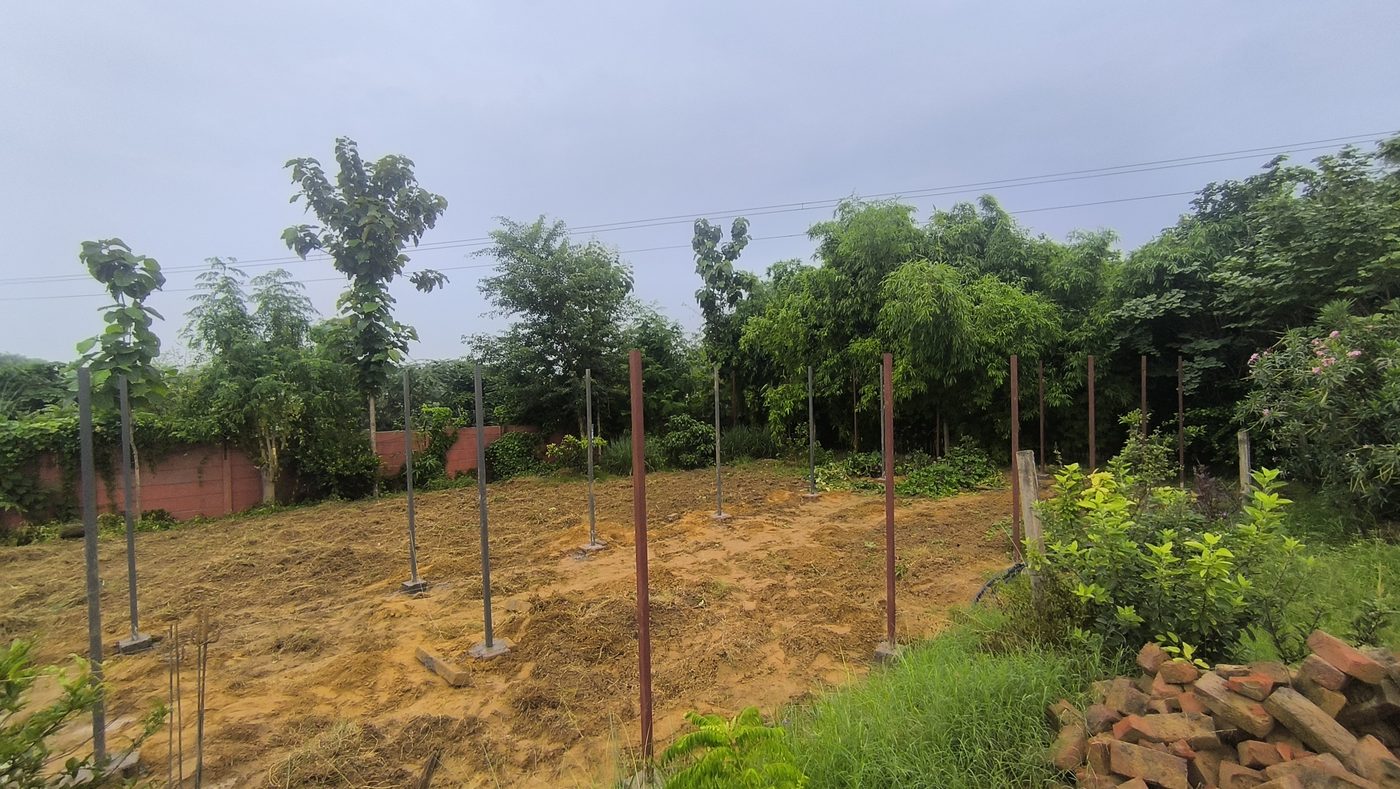
Poles set, nothing on them yet. The multi-layer structure, at the stage where it is only posts.
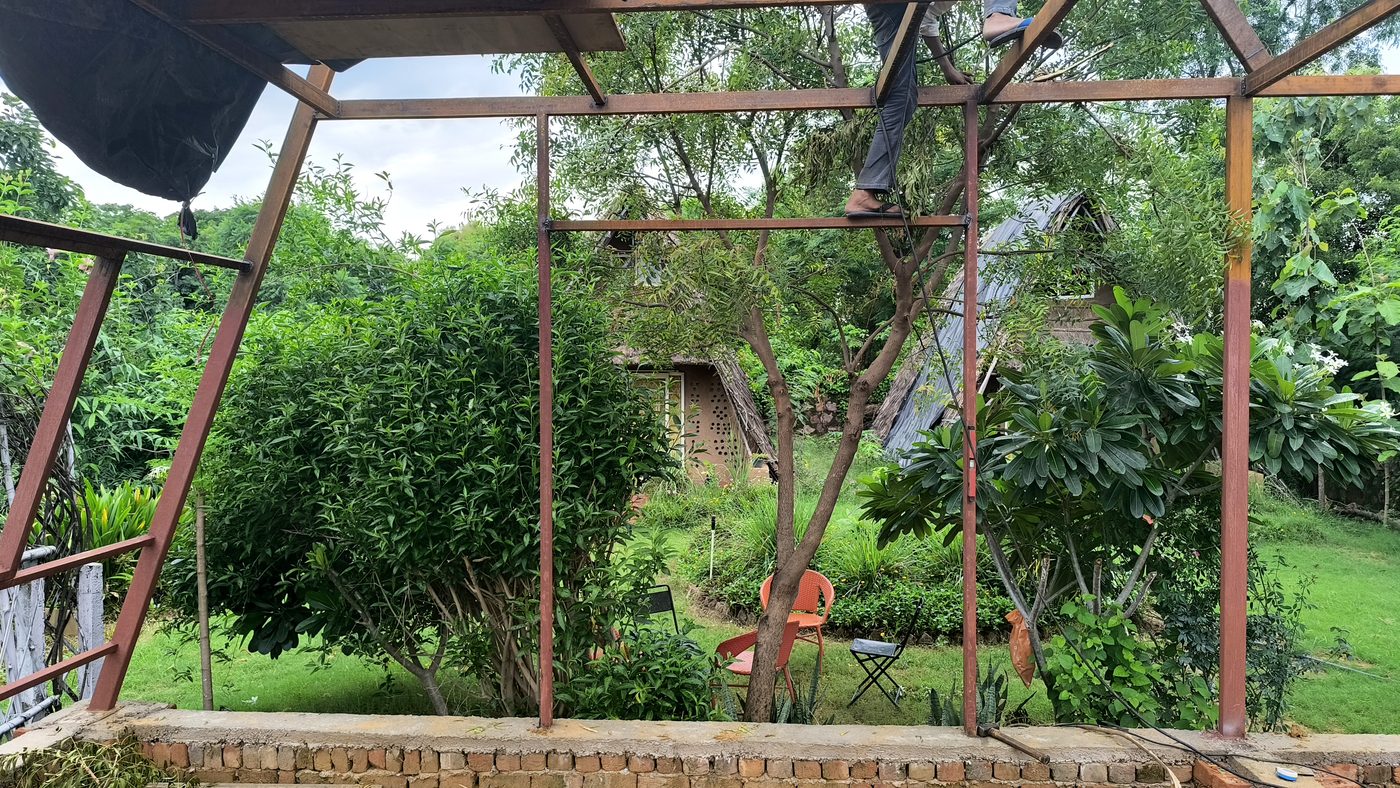
A frame, standing open. The shade over it has not been made yet.
These are six weeks old. Naveen sent them from the farm in August. This stage is dashed on every other page because it has not finished — and this is what unfinished looks like.
-
The apiary collapsed
Summer heat took it. Ten colonies are alive across about fifty boxes. What matters is the drawn comb standing in the empty ones. Comb costs a colony a season of work to build, and a colony moving into it starts a season ahead.
Learned · the heat is the constraint, not the forage
-
The count went down
The orchard was described for years by the number of trees that had gone into the ground. Then somebody walked the rows and counted what was standing, and the number came down. Planting tells you what went in. Standing tells you what is alive.
Learned · prefer the smaller, truer number
-
Six systems have never been photographed
Of thirteen working systems on these five acres, seven have a photograph and six do not. That includes the compost beds the whole loop depends on, and the apiary described above. Each one is named and left empty rather than filled with something else.
Learned · a record kept late is still a record
-
The boundary has never been traced
We do not have the real boundary in any form we own. Every position on the farm map is plausible rather than surveyed, and the map says so. Tracing it is a day's work that nobody has done.
Learned · say plausible, never imply surveyed
-
The farm built something that can refuse it
Because eight or nine of eleven species flower in the same window and the apiary sits inside the citrus strip, our software will not clear a spray date it cannot square with the apiary record. It does not warn and proceed. It refuses, and somebody has to clear it by hand or not at all.
Trying · let the record constrain the behaviour
-
What has not been settled
Harvest windows for most of the eleven species are in people's heads rather than written down. No date in this farm's history is recorded. Nothing here is finished, and we are still arguing about most of it.
Open · and we will say so until it is not
Unchecked · not promised
Two things that
might exist
Neither has been looked for. We write them down as possibilities, so nobody later mistakes them for things we hold.
A search nobody has run Declassified 1960s satellite imagery of this region is in the public domain and freely searchable. At roughly 1.8 m it would render this parcel at perhaps eighty pixels. Nobody has searched for a frame over Ladpuri. If one exists it would be the earliest image of this ground by four decades — and it may equally not exist. Until somebody runs that search, it is a search and nothing more.
A regional view, honestly labelled Public satellite archives resolve this farm at about five pixels — useless for the parcel and perfectly honest for the surrounding Aravalli landscape over thirty years. A regional view is a fair thing to show. Presenting it as a picture of this farm is not, at any crop or caption.
The door
Come and
see the part
that is finished
जो हो चुका है, वह देखने आइए
The beginning cannot be shown and the ending has not happened. The middle is five acres in the Aravallis, ninety minutes from Delhi, and it is open in the cool months.
The farm map The orchard Stay in a mud house Whoever keeps this farm