
The story of the farm
Regeneration
From one tree
to five thousand
Regenerating Aravalli land, one tree at a time: five acres of scrub and dust in the Aravallis, bought with a single tree standing on them. Today: a forest, an orchard, ten colonies of bees, cows, geese, peacocks, and people who come to stay.
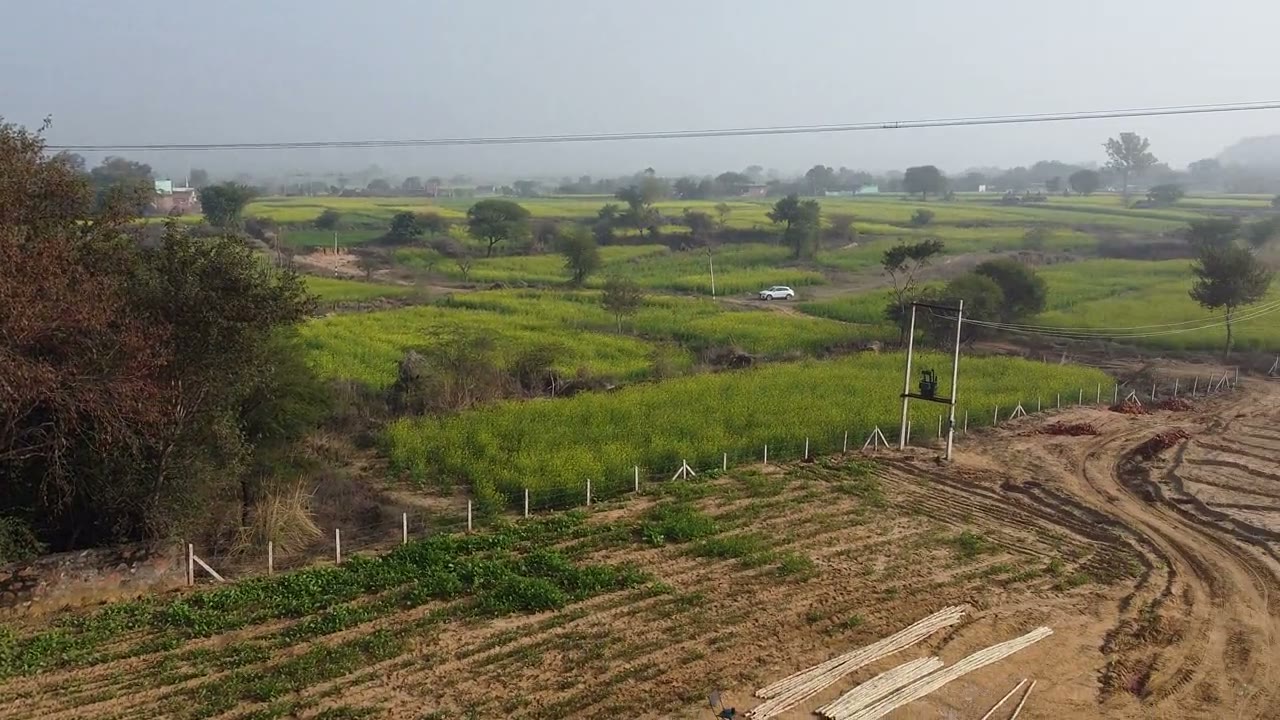
January 2022, from a drone. Bare ground in front, mustard fields over the boundary. This is where it began.
2021
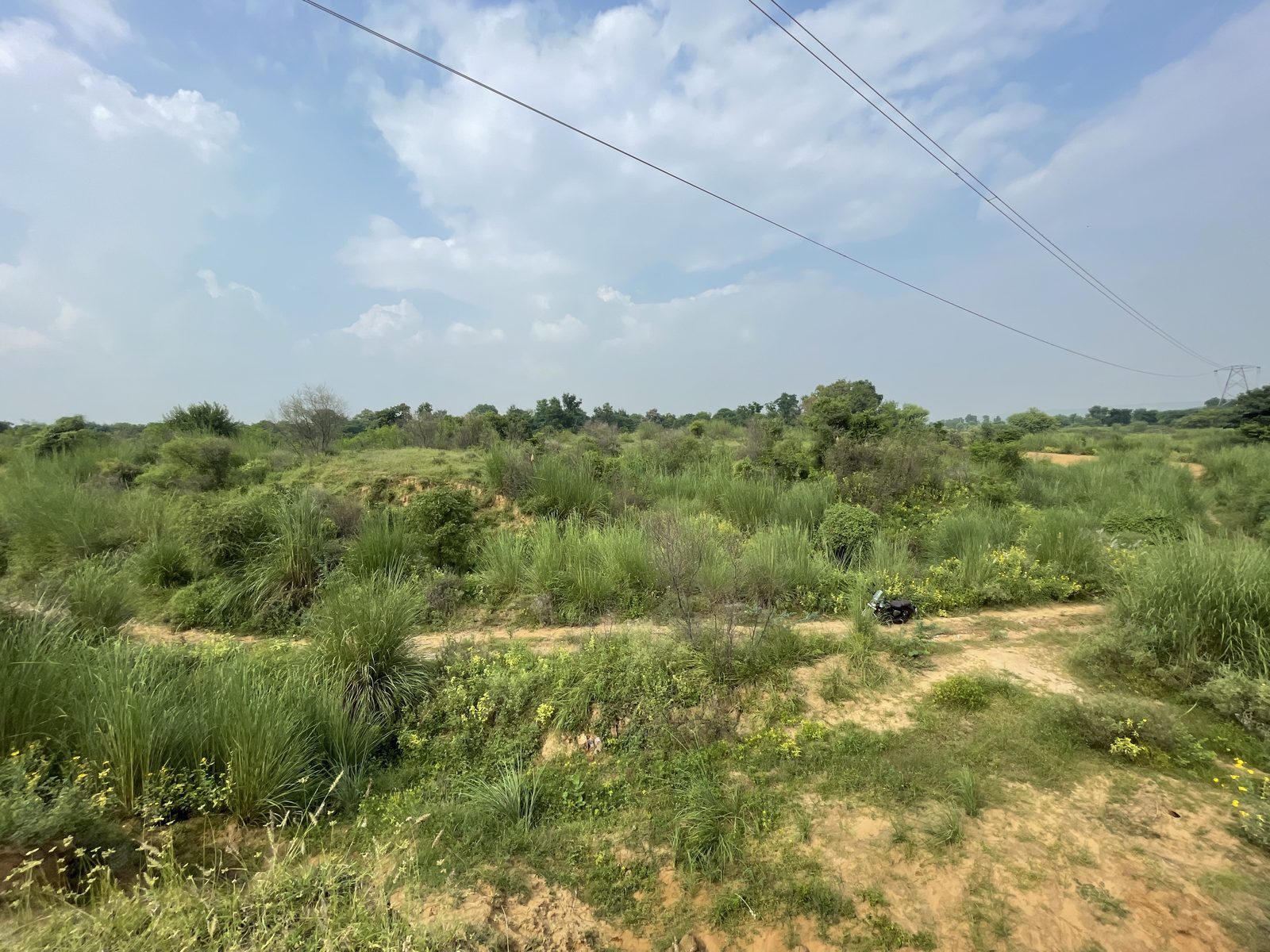
Before there
was a farm
Wind, kans grass and a power line. Open ground, and one tree.
Photographed from September 2021.
2021 to 2022
Early days
Two years,
in the order
they happened
Kans grass in September 2021, a cut bank that November, the first rows from the air, and two huts in a garden by the end of 2022.
September 2021
Wild ground
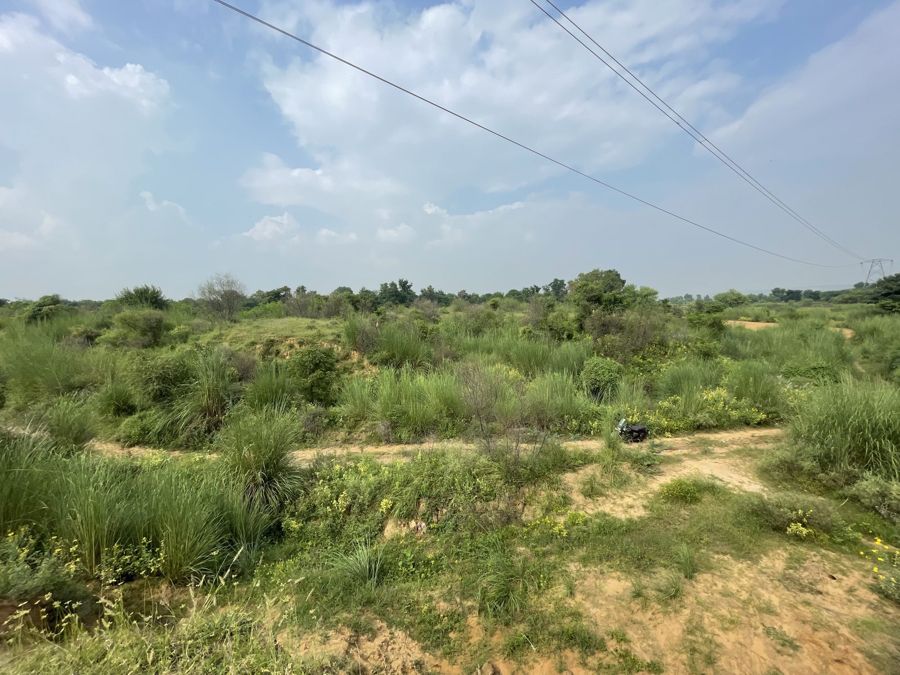
25 September 2021. Open scrub under a power line. Five acres and one tree.
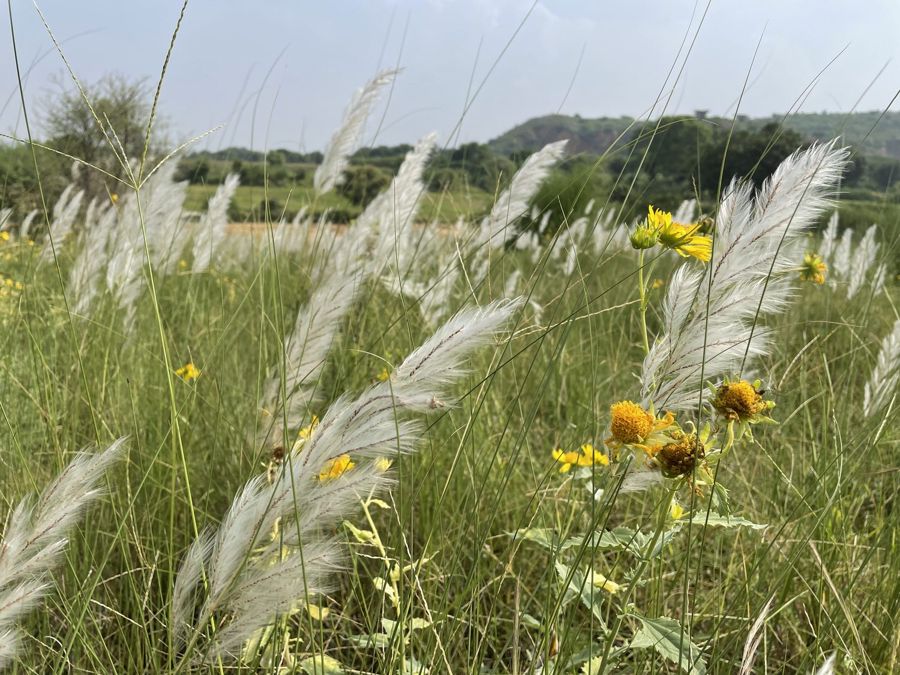
25 September 2021. Kans grass in flower, the Aravalli ridge behind.
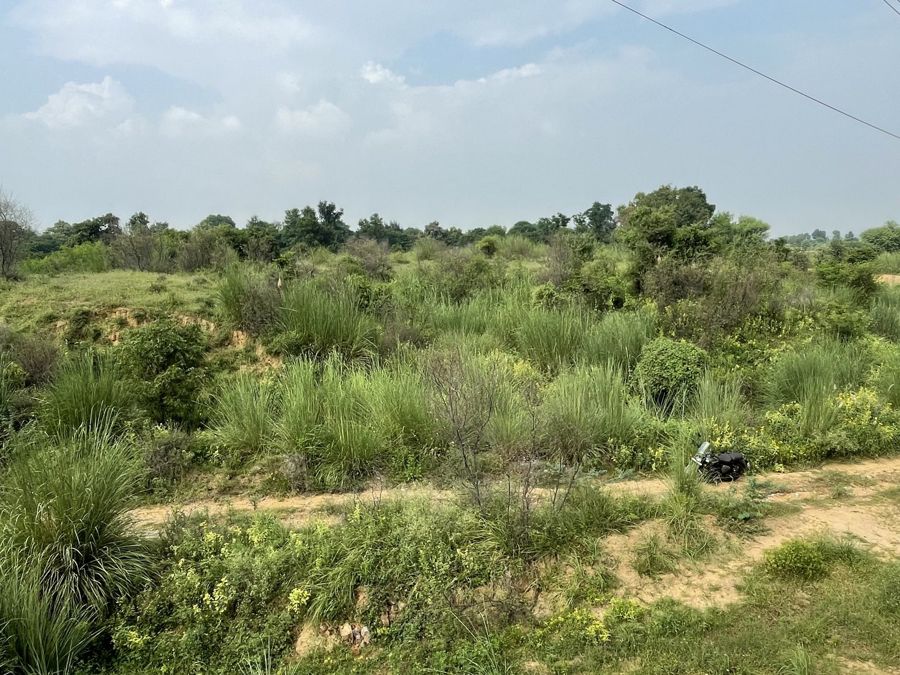
25 September 2021. Scrub and a track, before a single cut.
November 2021
Shaped
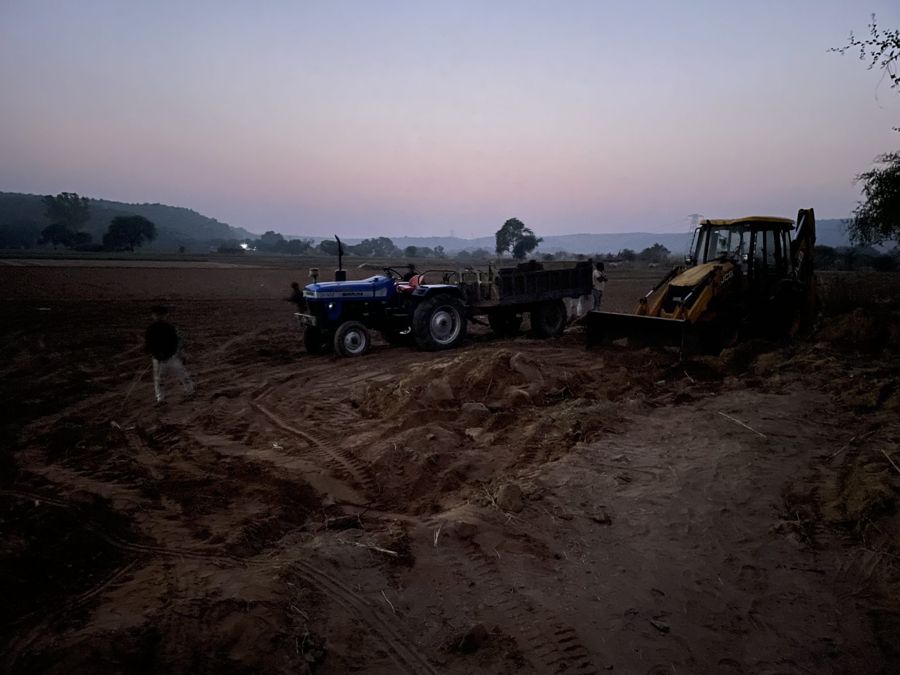
16 November 2021. Dusk, and the machines still at work.
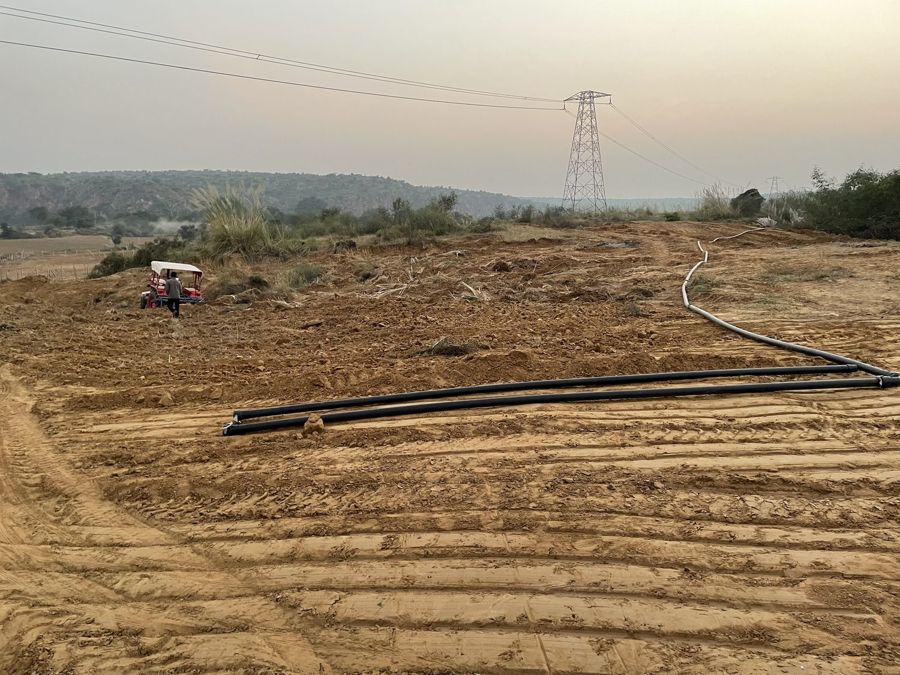
16 November 2021. Pipe laid along the ploughed contours.
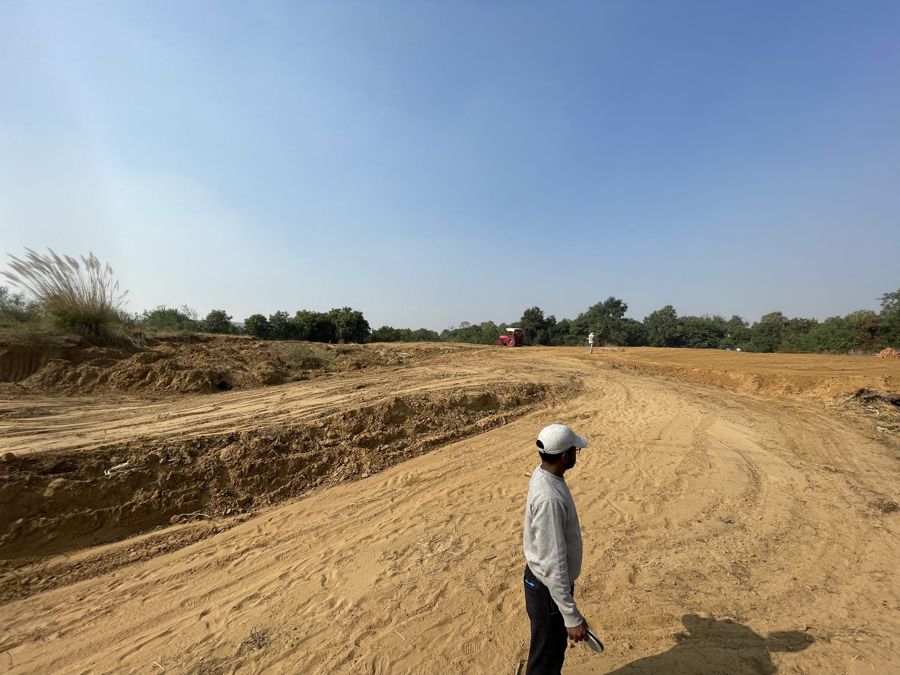
21 November 2021. A new bank, cut to follow the fall of the land.
2022
Raised and planted
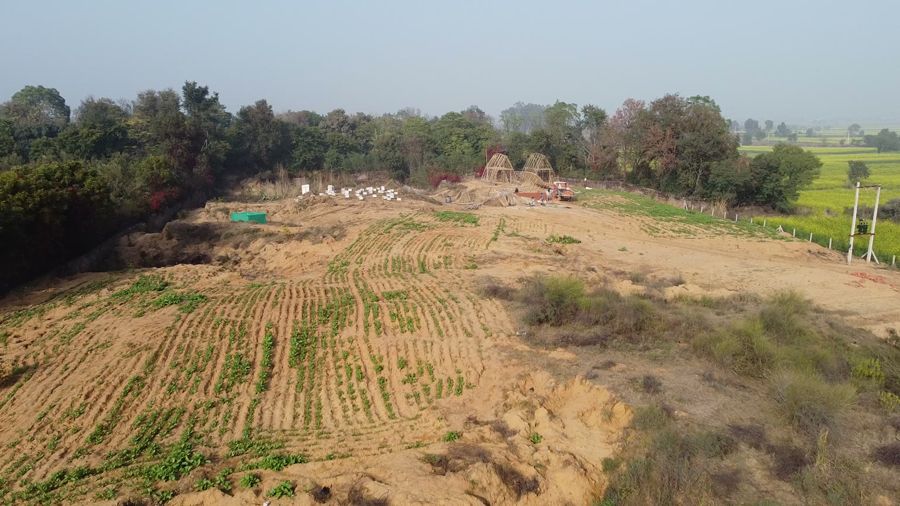
January 2022. The first rows, from the air.
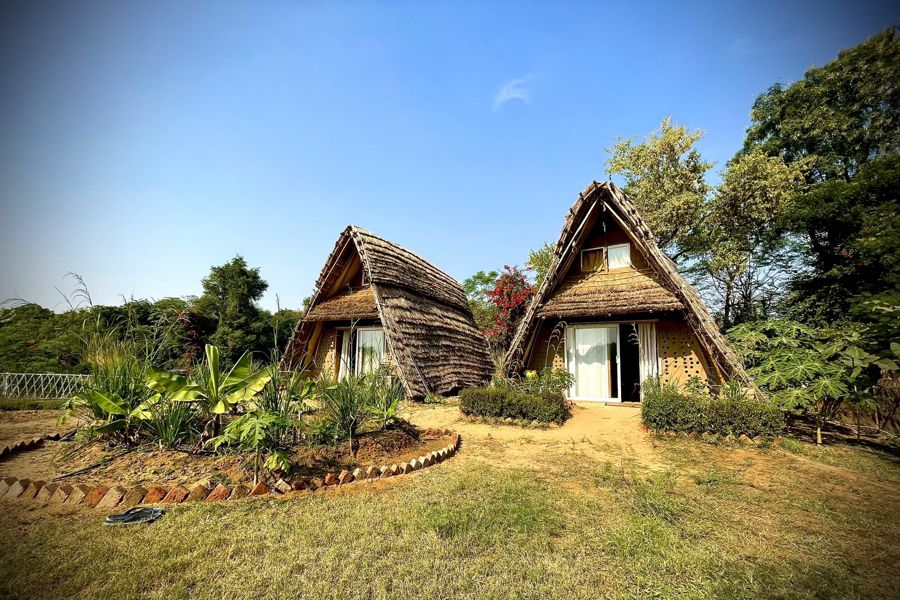
November 2022. Two huts in a garden.
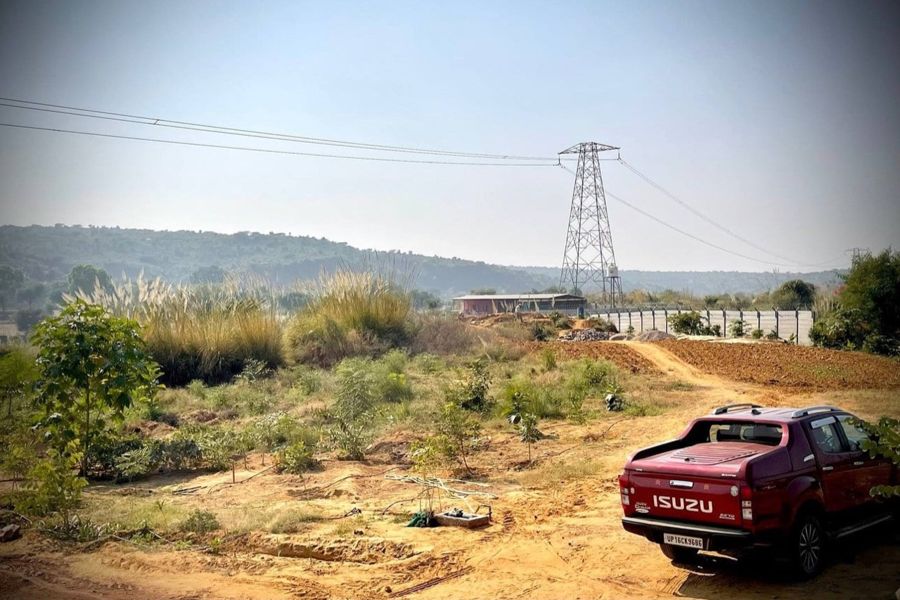
November 2022. Saplings in, and the track leading on.
Swipe, or use the arrow keys.
Built by hand
Two huts,
raised in a day
On 21 January 2022 a crew raised two bamboo A-frames, wove the thatch by hand, and swung each roof into place with a crane.
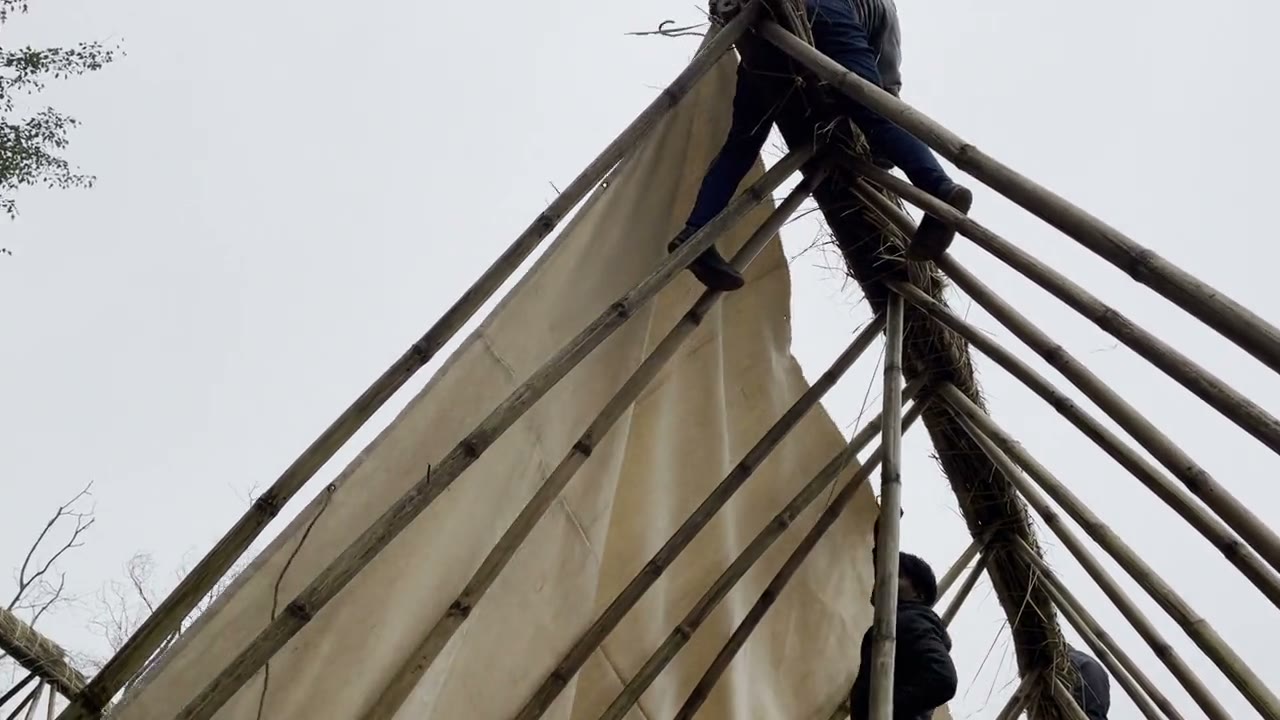
The making of the huts. Bamboo frame, hand-woven thatch, one crane. Press play.
Five steps, one day
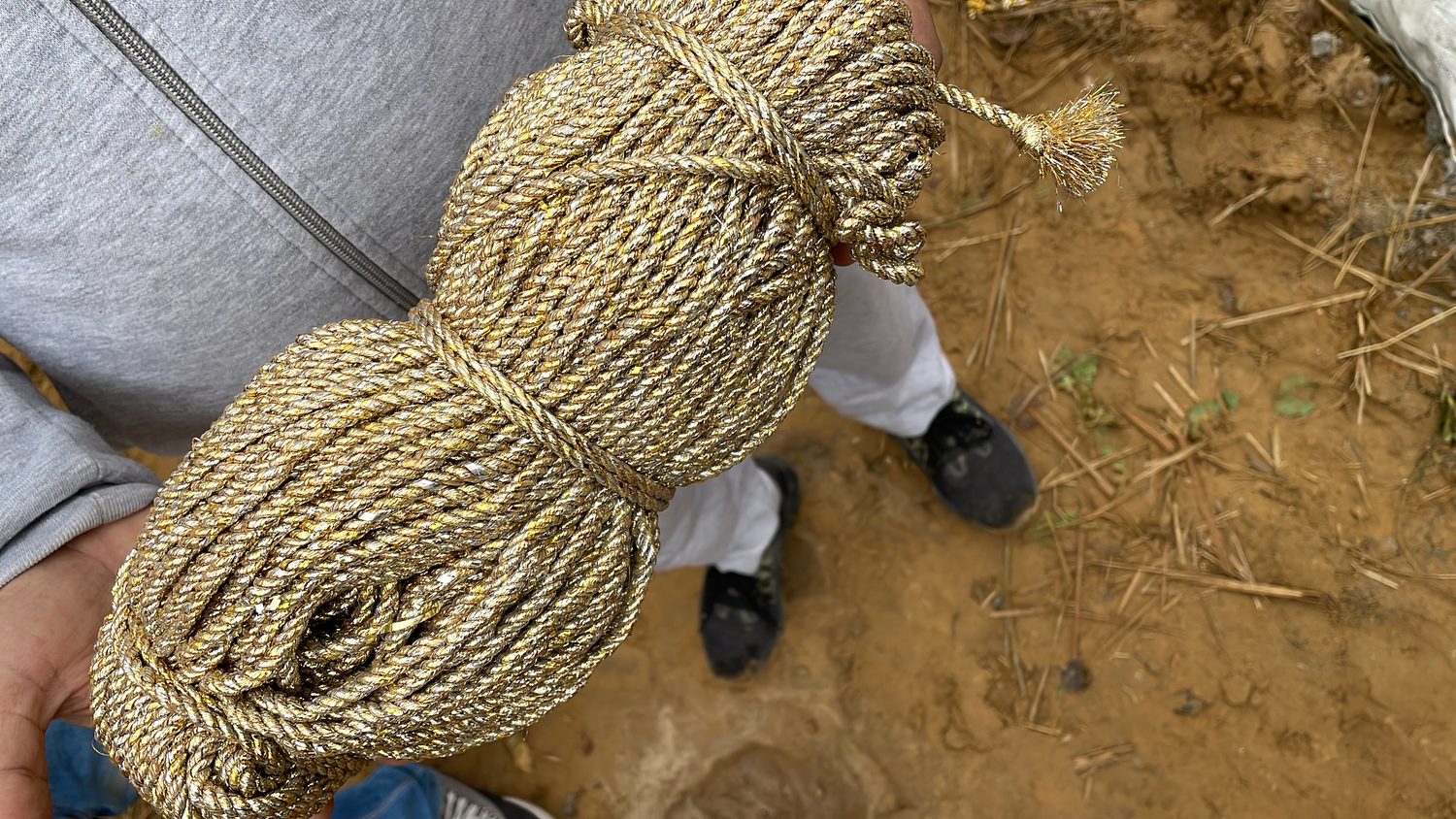
1 · The rope. Twisted from grass. Every joint in the frame is tied with it.
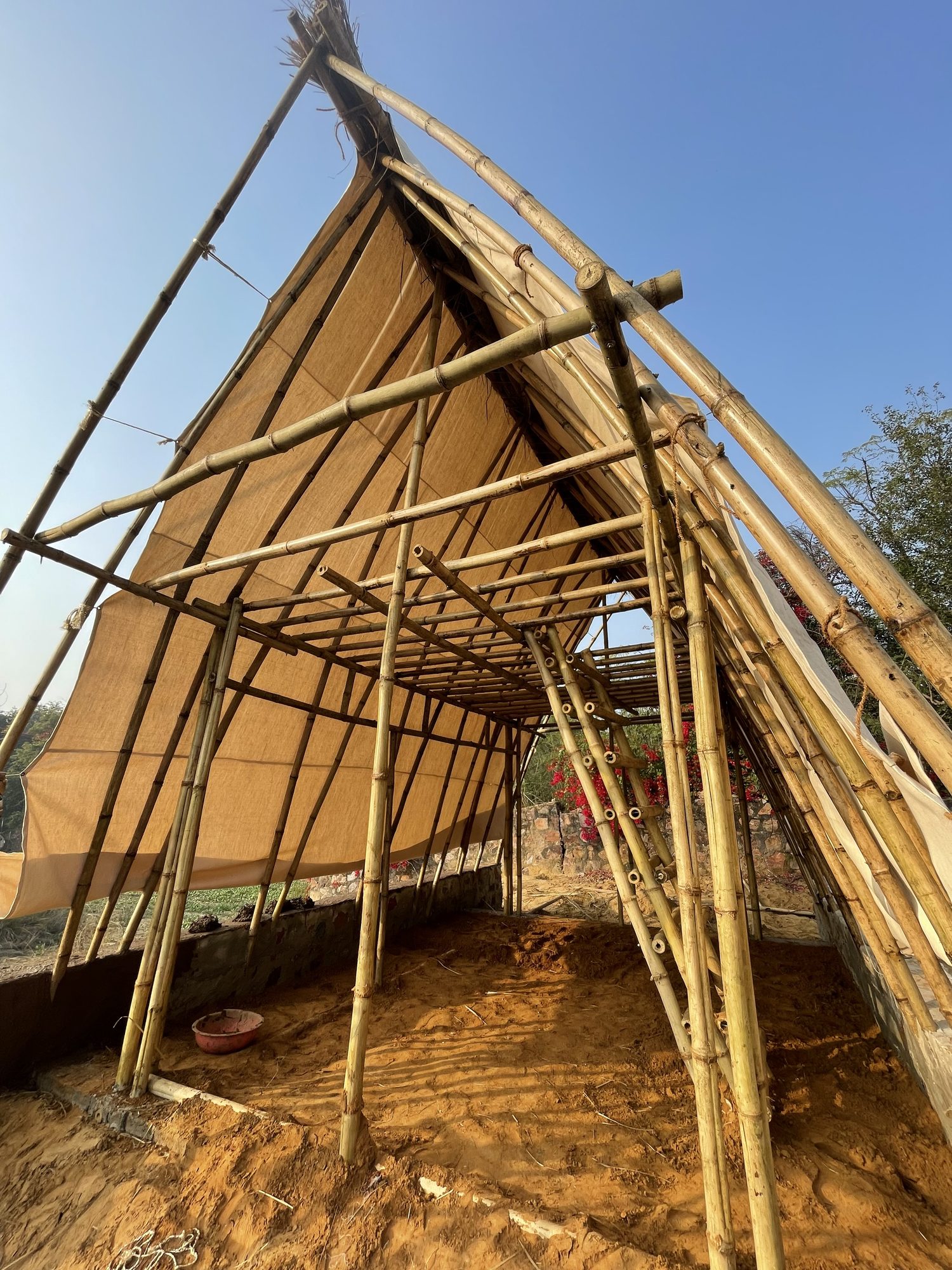
2 · The frame. Bamboo raised to a ridge and lashed. The rest is skin.
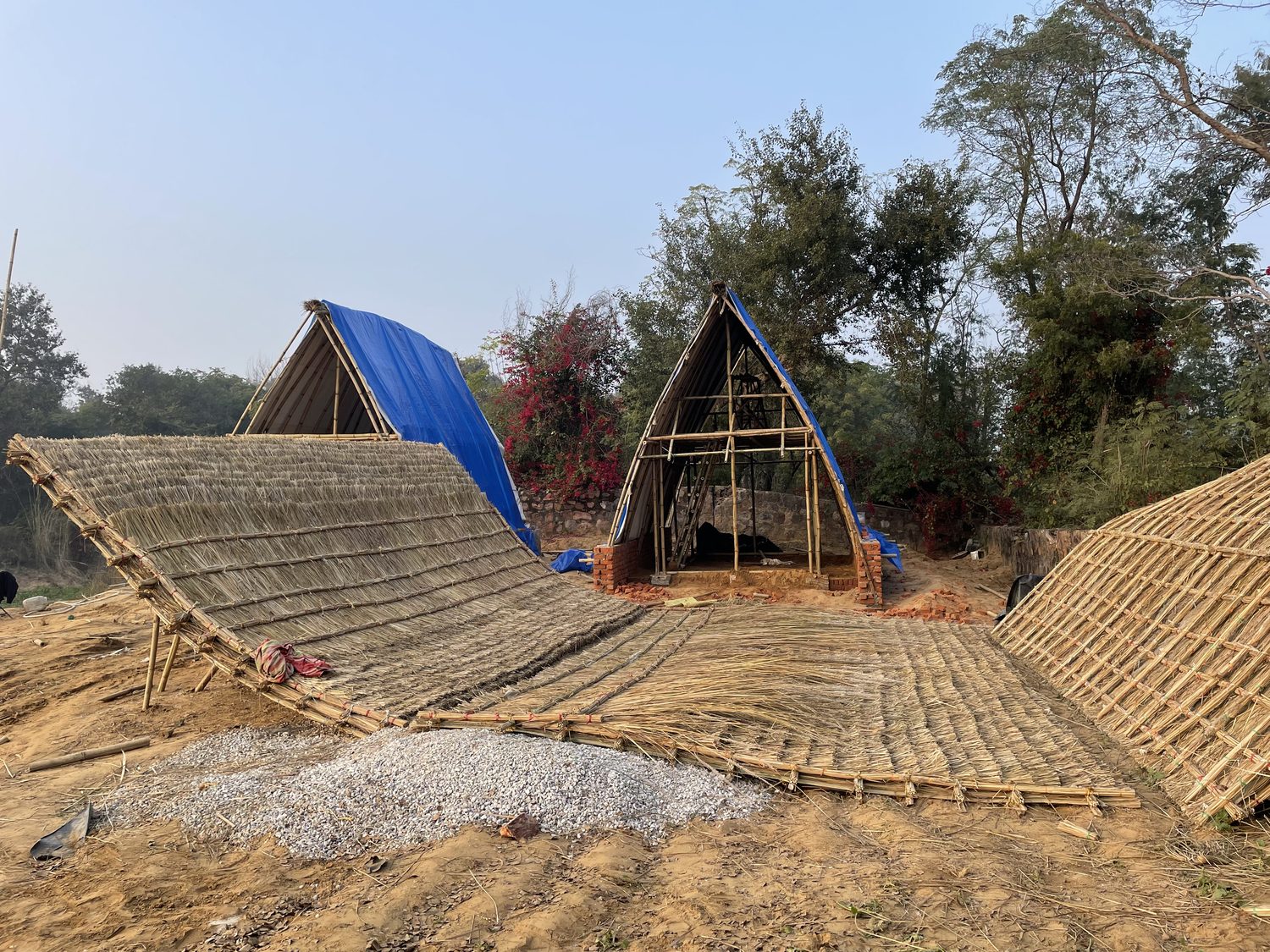
3 · The panels. Thatch woven flat on the ground, where a person can sit and work.
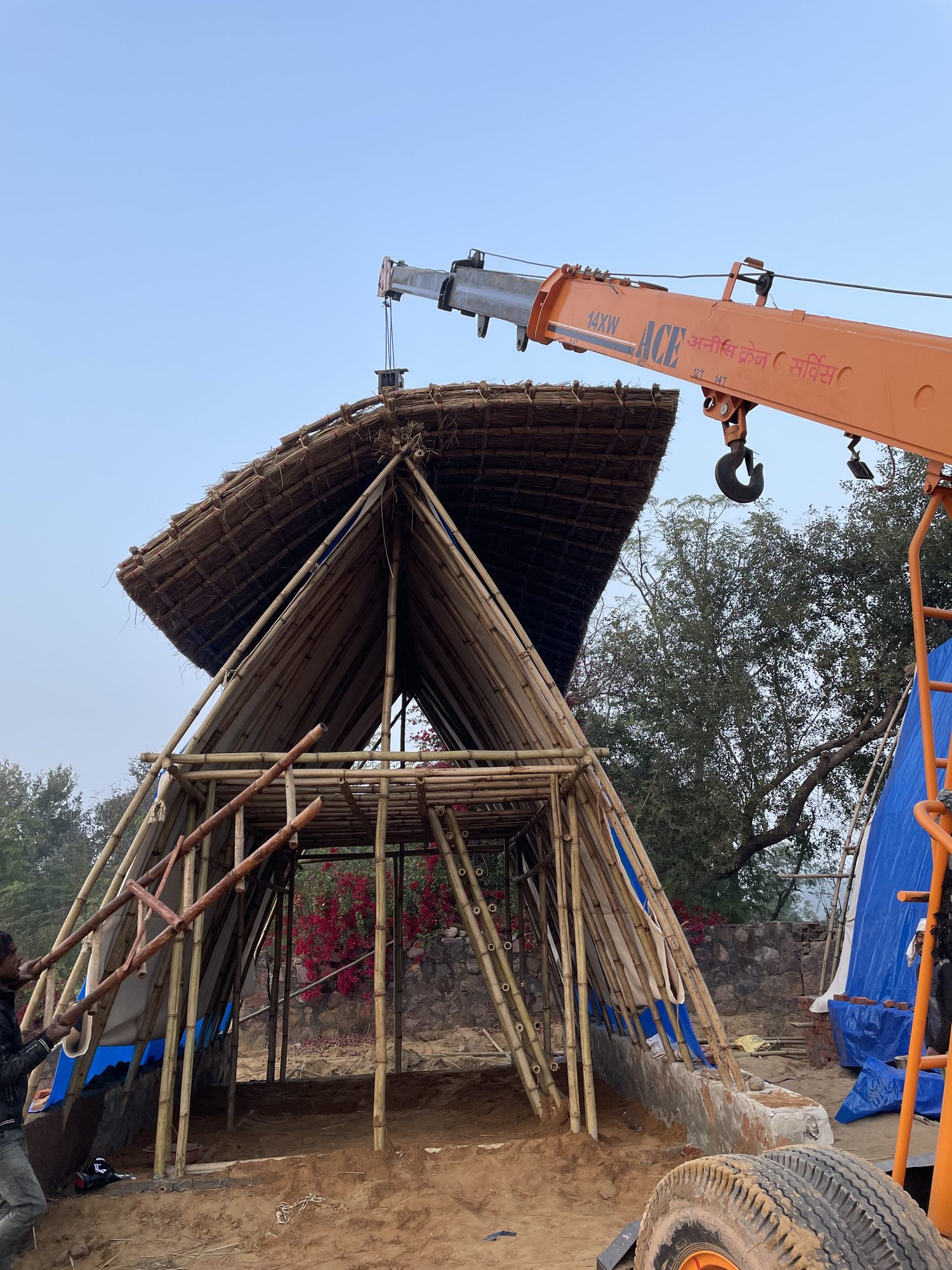
4 · Lifted. A crane swings each roof into place.
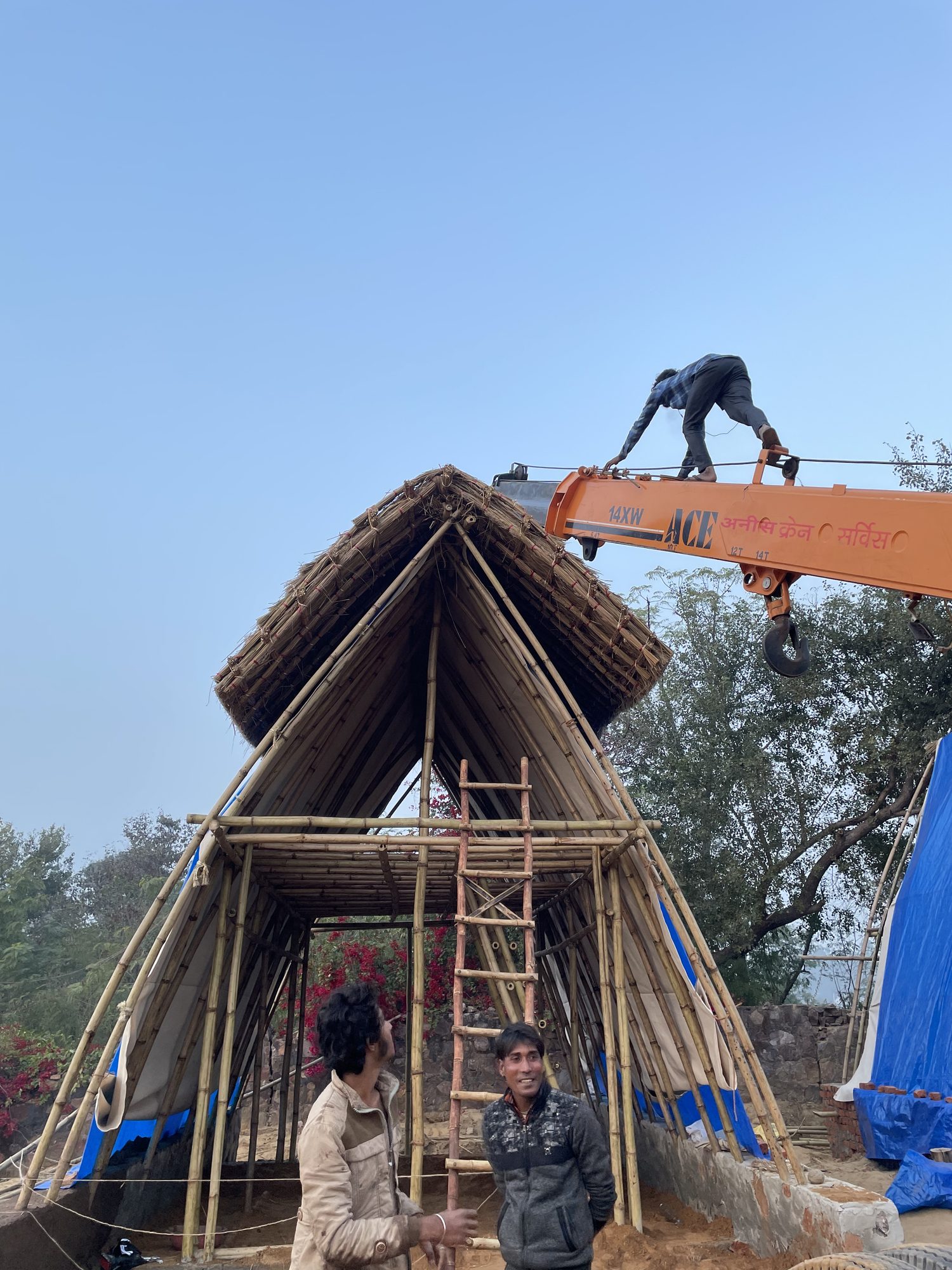
5 · The apex. Finished by hand, standing on it. Both huts were up by the end of the day.
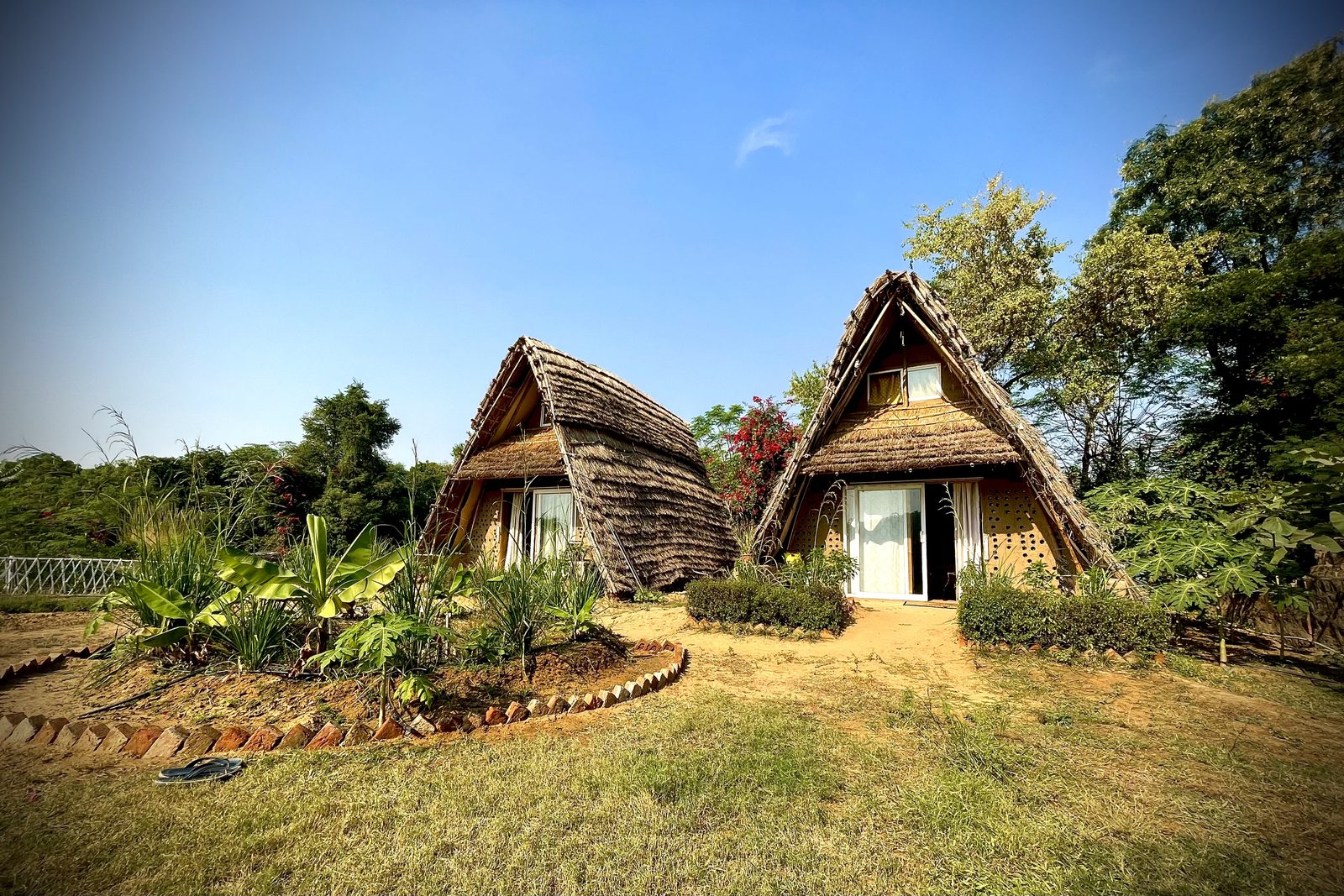
Late 2022. The same two huts, in a garden.
Trees
Then
came the
trees
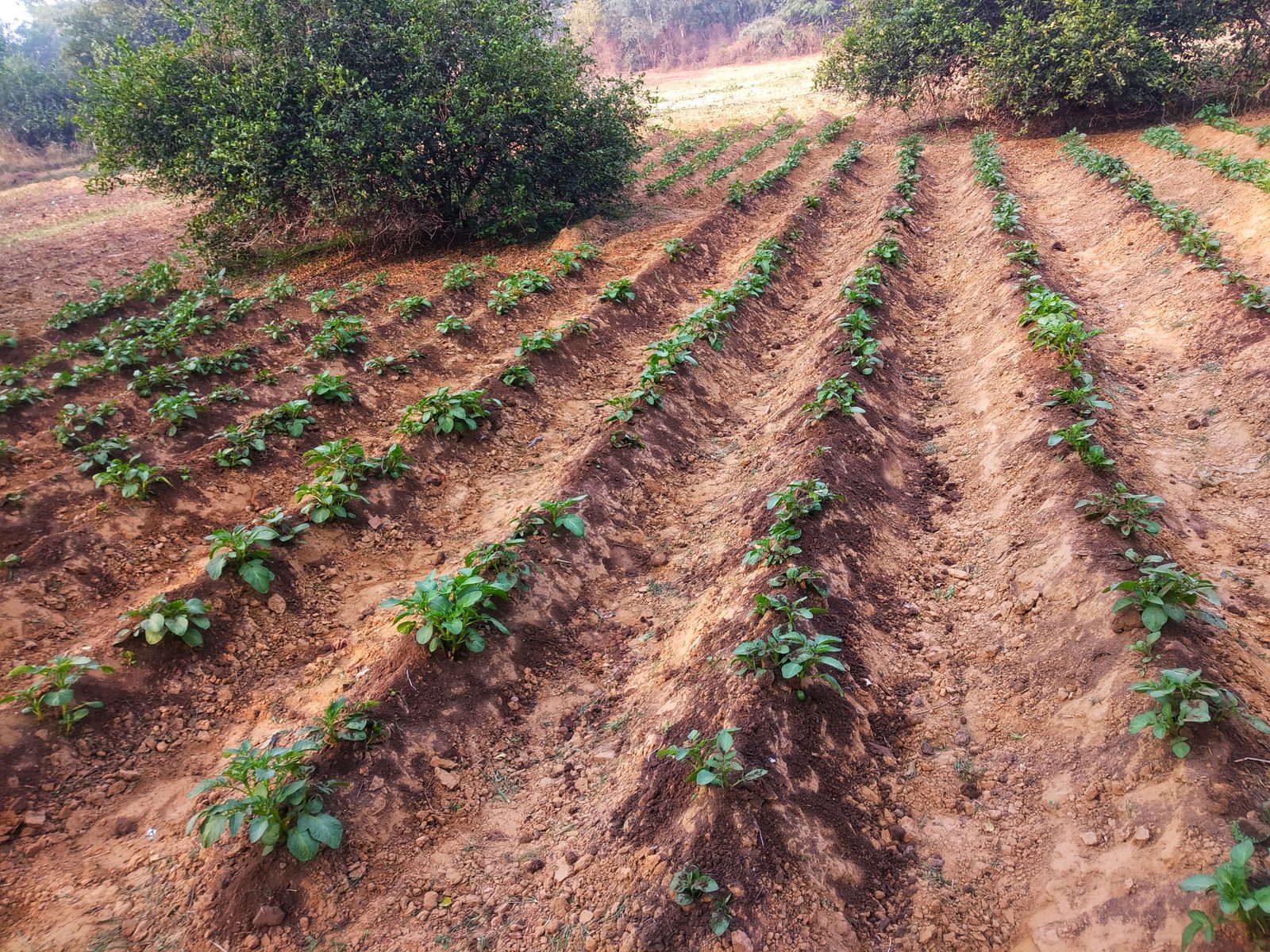
First rows in raw earth. Then citrus, amla, mango, moringa, native forest and a food forest planted in layers, so there is fruit for birds and animals as much as anyone.
Today
Five acres. One tree to start.
Five thousand
trees
5,000Trees, from one
11Fruit species
10Bee colonies
5Acres
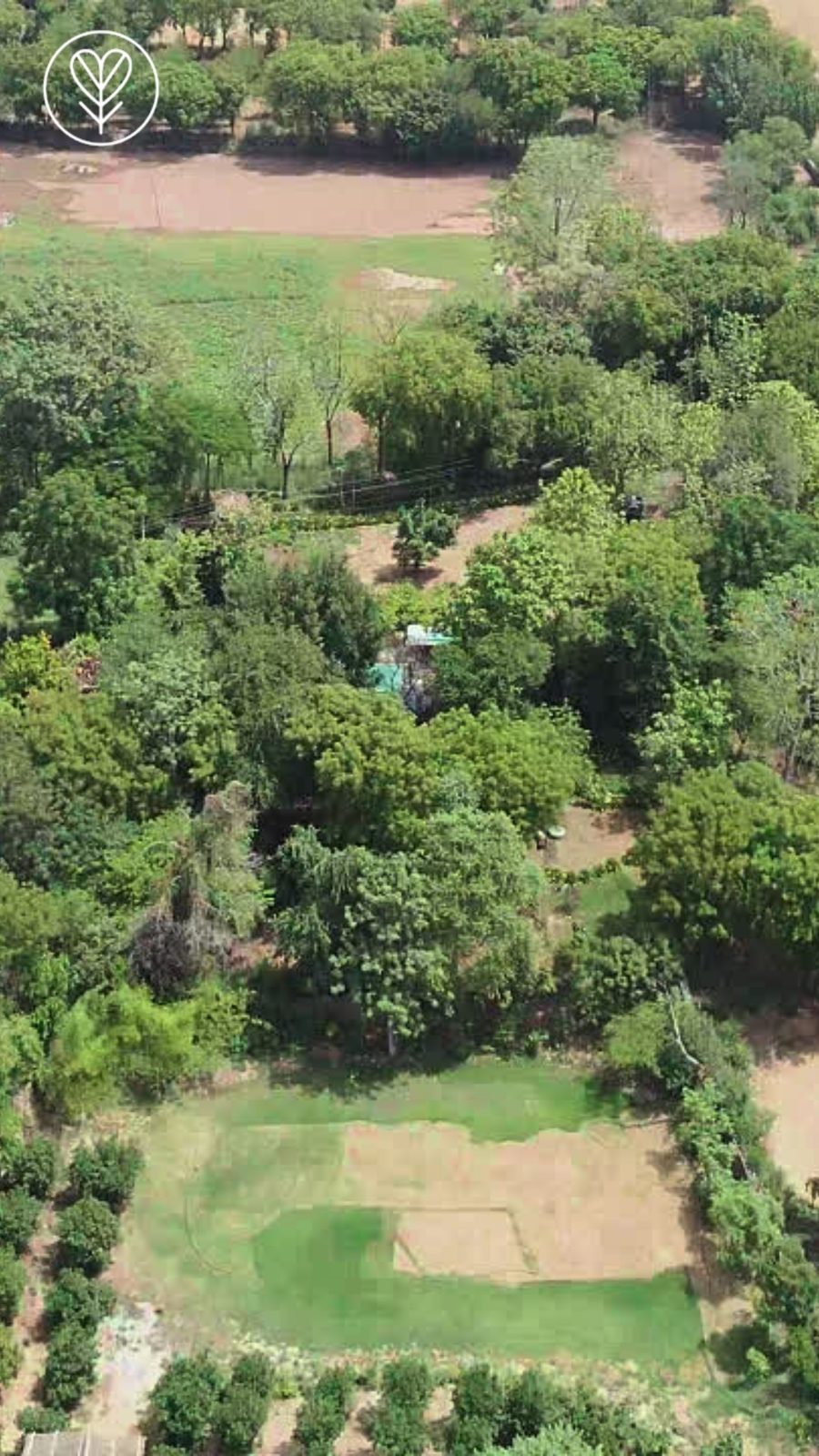
From above, today.
Peacocks on the thatch. Bees in the orange blossom. A farm that was dust is now green from every direction.
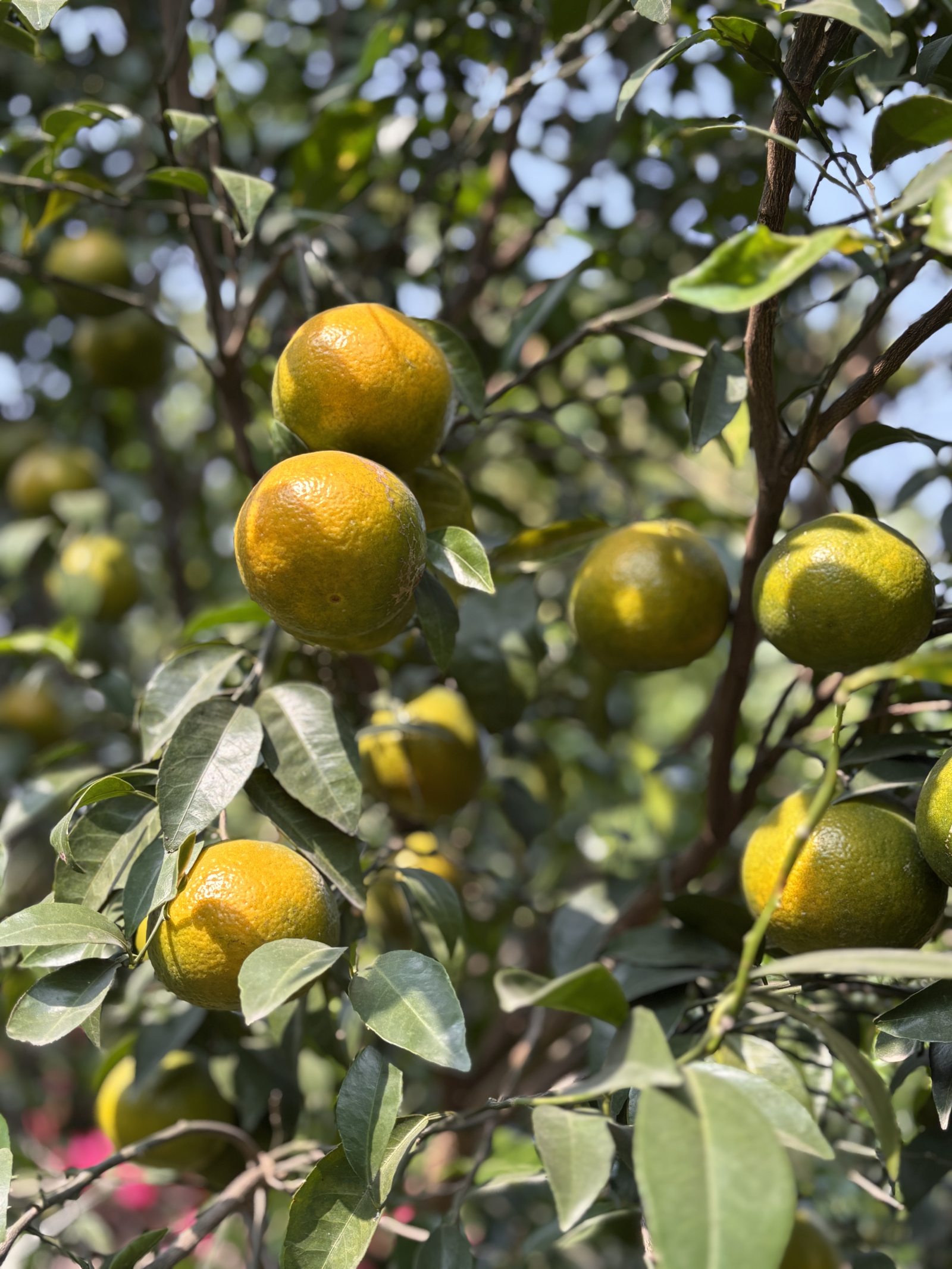
Kinnow, ready in January.
Quick answers
Questions, answered
How was Swechha Farm regenerated?
It began as five acres of scrub and bare ground with one tree in 2021. The land was shaped to follow its contours, water was laid in, huts were raised by hand in January 2022, and trees, an orchard and a food forest were planted. Today there are about five thousand trees.
When did the regeneration start?
The earliest photographs of the land are from September 2021, with earthworks in November 2021 and the first planting and huts in January 2022.
How many trees are there at Swechha Farm now?
About five thousand trees on five acres, including about 200 each of kinnow, amla, nimbu and moringa and about 25 mango.
The door
Come and
see it grow
Five acres in the Aravallis, ninety minutes from Delhi, and a different farm in every season. Dogs welcome.